


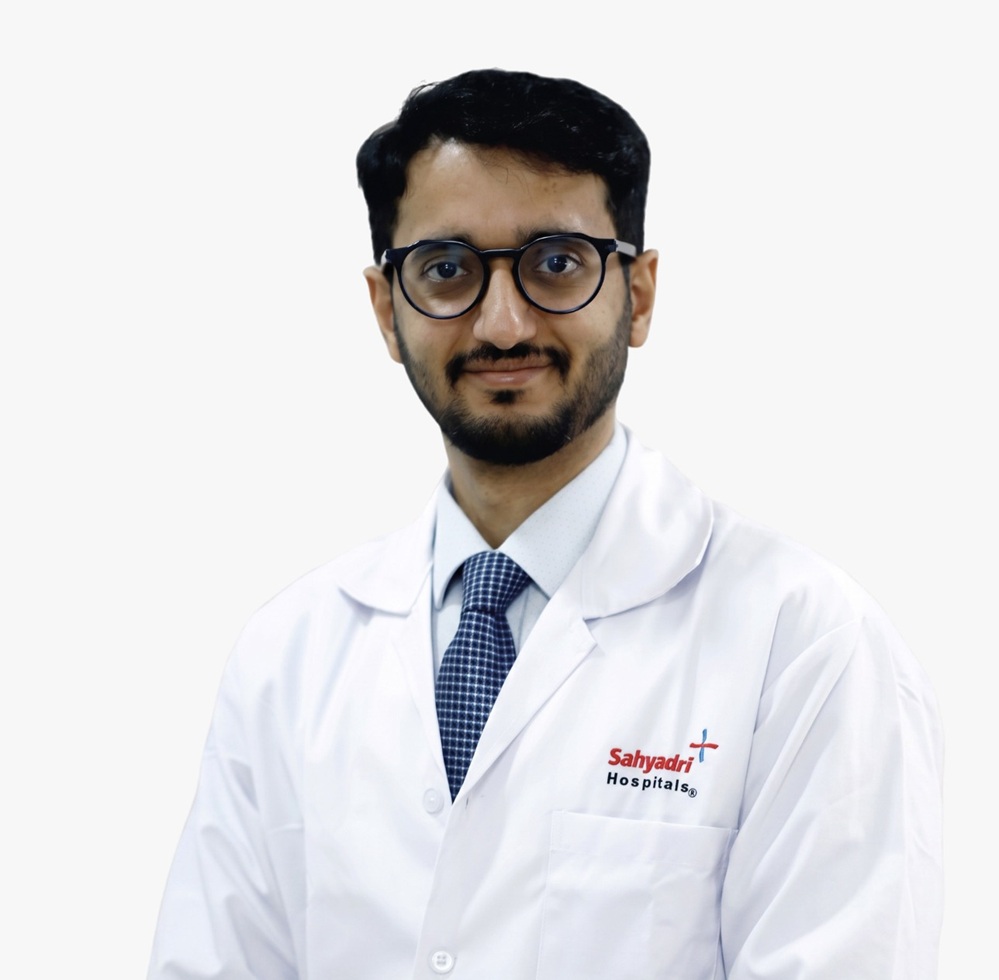
Nashik: A 43-year-old woman from Nashik, who had been experiencing recurrent abdominal pain, vomiting and jaundice for nearly three months, finally received a diagnosis after advanced Endoscopic Ultrasound (EUS) helped doctors detect previously undetected stones in her bile duct at Sahyadri Super Speciality Hospital, Nashik – A Network Hospital of Manipal Hospitals.
The patient had undergone minimally invasive surgery to remove her gallbladder due to gallstones in August 2024. However, she continued to experience episodes of abdominal pain and, in the three months before visiting the hospital, developed recurrent vomiting and jaundice. She consulted doctors at several hospitals in the city and underwent multiple investigations, including an MRI of the abdomen, but the reason for her recurring symptoms remained unclear.
Considering her medical history and ongoing symptoms, Dr. Dhaval Choksi, Consultant Medical Gastroenterology, Sahyadri Super Speciality Hospital, Nashik, decided to perform an EUS to get a closer view of the bile duct and surrounding structures. The procedure revealed stones in the bile duct that had not been detected during her earlier evaluations.
Jaundice is a symptom of an underlying condition and can occur due to problems involving the liver, bile ducts or pancreas. A 2024 study of 772 Indian patients with obstructive jaundice found that 58.8% of cases were benign, while 41.2% were malignant. Among the benign cases, bile duct stones were the most common cause of obstruction, accounting for 51% of cases.
Dr. Dhaval Choksi, Consultant Medical Gastroenterology, Sahyadri Super Speciality Hospital, Nashik, Said, “In this patient, the symptoms continued despite multiple investigations, including an MRI. Given her history and the recurrence of jaundice, we felt it was important to examine the bile duct more closely. EUS helped us detect the stones and establish what was causing her symptoms. We then proceeded with ERCP to remove them. This case also highlights that jaundice is a symptom and not a diagnosis, and identifying its underlying cause is important, particularly when it keeps recurring.”
The patient subsequently underwent Endoscopic Retrograde Cholangiopancreatography (ERCP), a minimally invasive procedure that allows doctors to access the bile duct and remove stones. The stones were successfully removed, following which her abdominal pain, vomiting and jaundice improved.
Mr. Sanjay Chawla, Cluster Director, Sahyadri Super Speciality Hospital, Nashik, said, “This case reflects the importance of timely diagnosis when a patient continues to experience symptoms despite undergoing routine investigations. The availability of advanced endoscopic procedures such as EUS and ERCP, along with clinical expertise, enabled the team to identify the problem and provide appropriate treatment.”