


A young Kerala vaidya practises Ayurveda as reverence, in the Moorkkanoor parampara
By Suresh Unnithan
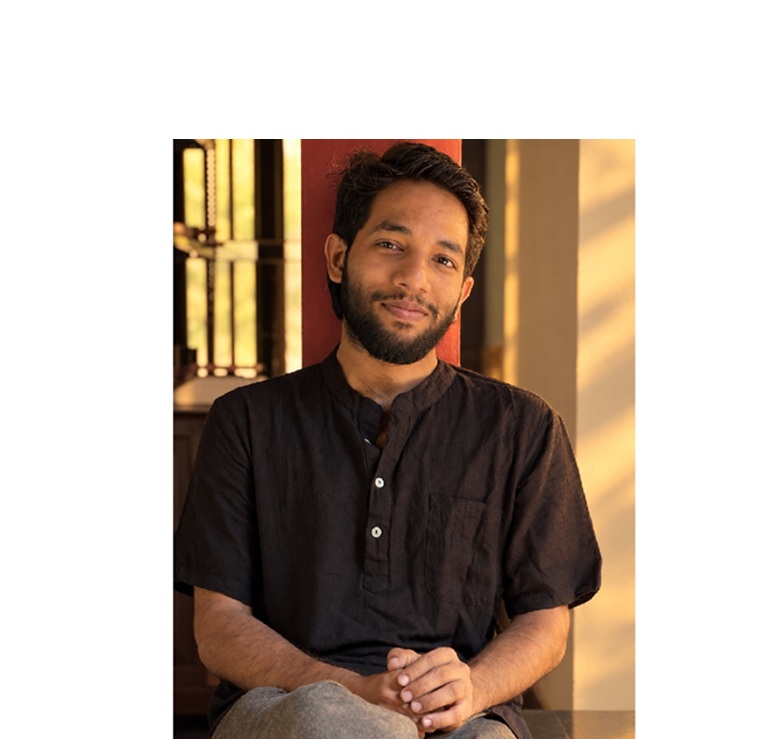
Some physicians acquire a science. A few seem born for it, and are then finished by the house that has guarded it. Akhil Moorkkanoor belongs to that rarer making. He did not arrive at Ayurveda and then look for a lineage to stand in. He belongs to the Moorkkanoor tradition — a parampara of Thrissur, Kerala, the house that has kept the line, and into which he was received. The degree followed. The depth came from the line. Still short of thirty, he already reads as the promise this tradition had sincerely begun to miss.
Both houses that have formed him stand in the same district. Moorkkanoor is his own parampara, of Thrissur. Ullanoor, from whom he has been learning vishavaidyam, is a Thrissur family too. The district has long held what Kerala once refused to split: the inward life, and the Ayurvedic reading of the body that lives it. He arrived into that double keeping already named, and the Moorkkanoor parampara did the rest. The Bachelor of Ayurvedic Medicine and Surgery set a modern seal upon an older apprenticeship. What the Moorkkanoor line placed in his hands cannot be certified. It is the patience to hear a body before naming it, and the refusal to treat a patient as an account waiting to be raised. A parampara is not a surname worn for colour. It is a way of seeing, handed on because it cannot be bought.
Prakriti and vikriti, agni and ama, the hour, the season, the small disobedience that ripens into disease — he lays them out as one who has kept company with the vidya of his house, not merely cleared an examination in it. And he lays them out in words a household can carry home. A science that cannot be understood will not be lived. A science priced beyond ordinary reach has already abandoned the people for whom it was composed.
Ask him what the science is, and he does not reach for a slogan. Ayurveda, he says, is the Veda of ayus — of life, and of the soul that inhabits it. It is as deep, and as resistant to summary, as life itself. A vidya of that order is not a skill to be picked up and hired out. It asks to be learned with respect, understood with humility, and practised with reverence. The sentence is quiet. It cuts. Reverence is the one quality a market does not know how to sell.
From that conviction the clinic takes its shape. Less aushadha, more chikitsa. Medicine is not scorned; it is denied the right to replace judgment. Food, conduct, sleep, the unquiet mind — these are not courtesies printed beneath a prescription. They are the treatment. A formulation is given when the case requires it. When the order of the day can restore the person, the day is trusted to do so. People arrive looking for relief and leave with a reason as well. In a season that has learned to package illness, the restraint feels almost tender. It is only medicine, restored to the person it was meant to serve — and restored in the manner the Moorkkanoor parampara of Thrissur still knows how to keep.
He works by the chariot of the Kathopanishad, and the figure is exact. The body is the ratha. The senses are the horses. The mind holds the reins. The intellect is the charioteer. The self is the traveller for whom the road exists. A vaidya who keeps that image does not dress a joint as if it had no owner, or a fear as if it stood outside the dosha. Loose reins, a drowsy charioteer, horses running at nothing: a great deal of what is now called disease begins there. He does not recite the verse for colour. He uses it as a way of seeing.
One learning in him is rarer still, and it is not a learning the Moorkkanoor house claims as its own. Vishavaidyam — Agada Tantra, Ayurveda’s own science of toxin and antidote — was never a marginal chapter. Serpent and spider, plant and mineral, the slow poison of a life out of joint: the Kerala vaidya of the old school did not sort them into separate trades. The knowledge moved from hand to hand, because an error in toxicology is not a forgivable error. That succession is now wearing thin. Colleges can name the branch. Few houses can still practise it.

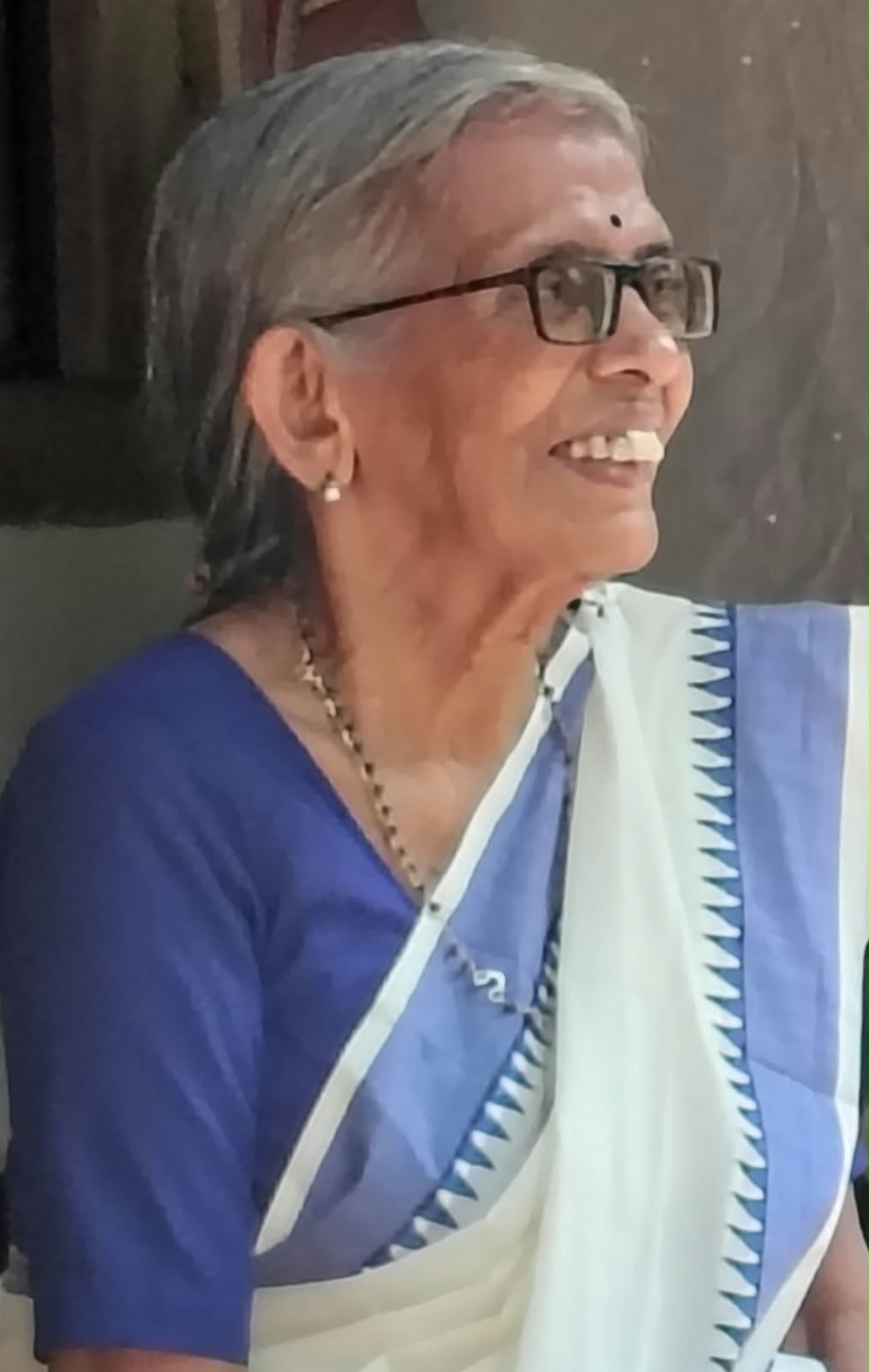
For that limb he went outside his own parampara, and not far. Ullanoor is the other Thrissur family, the house that still holds the poison-lore. He has been learning vishavaidyam from Ullanoor. The source there has not gone dark. Vaidyacharya Vimala Antharjanam, a living legend of the poison-lore, remains at Ullanoor — a teacher against whom a young vaidya may still measure what he believes he knows. He has not inherited a recollection of the science. He has been received into a living authority in it, and has submitted to learn it where the learning still has a hand. Two paramparas of the same district, and a Moorkkanoor heir willing to sit as a student in the other house: for a limb of Ayurveda that survives, in this form, nowhere else, and stands near its end, that is a rare mercy.
The sorrow around him is wider than one branch. The science of life is being thinned into a commerce conducted in the name of illness. A weekend of oils, a season of detox, a fear renewed by the month: the word endures, the vidya drains away. What began as a disciplined reading of a human being has become, in too many rooms, a method of charging one. He does not announce himself against that drift. Born to the Moorkkanoor parampara of Thrissur, schooled by it, and still within reach of the Ullanoor hand in vishavaidyam — that house, too, of Thrissur — he treats as bottomless a knowledge he holds to be as deep as life.
Those who rise from his room sometimes reach for the ancient names — the Ashwini Kumaras, Dhanwantari, a disciple, or something nearer a return. The truer sentence is the quieter one. He was born a vaidya of the Moorkkanoor line, in Thrissur. He mastered what that parampara still had to give, and went to Ullanoor, the other Thrissur family, for the poison-lore the age is losing. He practises as if the Veda of life were still a science, learned in respect and kept in reverence, and not yet a shop. In the present dilution of Ayurveda, that fidelity is already rare. It is the heir the science had been keeping.