


BENGALURU : Ahead of World Mental Health Day, ASICS is issuing a conservation warning for movement, as new global research reveals people report spending 86% of their waking day not moving.
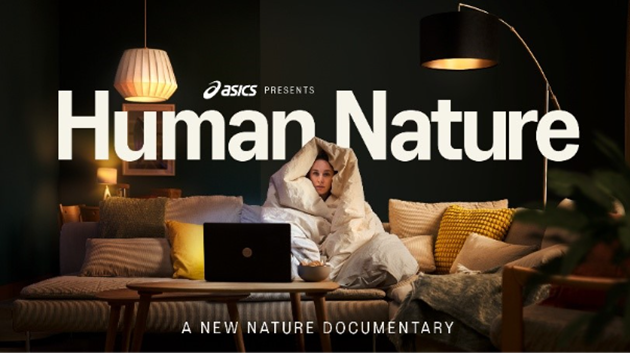
To highlight the issue, ASICS has released Human Nature, a new nature documentary narrated by the award-winning Sigourney Weaver. Turning the lens on humans, the short film explores how our modern-day habitats are quietly changing the way we move.
The global research , involving 34,000 people across 31 countries, found that more than half (53%) of adults report failing to meet recommended physical activity guidelines. To understand the scale of the issue, ASICS worked with experts to develop the world’s first Movement Conservation Status . Inspired by nature conservation and based on internationally recognised physical activity guidelines, it classifies movement levels as Active, At Risk or Endangered.
The findings reveal that almost one in four people (23%) have movement levels classified as Endangered, doing less than 30 minutes of exercise each week. By 2035, the proportion of adults with movement levels classified as At Risk or Endangered is projected to rise from 53% to 56% – equivalent to an estimated 2.3 billion adults across the countries studied.
Movement levels are linked to our mental state
People whose movement is classified as Endangered report significantly lower State of Mind scores (60/100 on average) than those whose movement is classified as Active (71/100). They also report feeling 23% less energised, 20% less composed, 17% less focused and 16% more stressed than those whose movement is classified as Active.
Young people are particularly at risk. More than half (57%) of 18–24-year-olds report they fail to meet recommended activity levels, with 92% saying they experience negative consequences as a result, including low mood, increased stress and poor sleep.
Modern life is designing movement out
The research suggests modern convenience is quietly designing movement out of everyday life. Today, we can eat, work, bank, shop, socialise and entertain ourselves without moving, and increasingly do. Nearly two-thirds of people (64%) say it is easy to spend an entire day barely moving because modern life is so convenient, while more than four in ten say they could comfortably not leave their home for three or more days.
And staying in has a cost. People who very often go a full day without leaving home have average State of Mind scores of 62/100, compared with 71/100 for those who never do – and are twice as likely to be moving at Endangered levels (40% vs 20%).
Technology is accelerating the trend. Forty-one per cent of people surveyed regularly complete errands online rather than in person, while 39% often socialise by phone or video instead of face-to-face. Among 18–24-year-olds, 41% now use AI to complete tasks they would previously have done themselves – the highest of any age group.
Just 15 minutes can help make a difference
But there is good news. Small amounts of movement can make a real difference, with ASICS research showing that just 15 minutes of movement can help deliver a measurable uplift in mental state.
David Raichlen, Professor of Biology and Anthropology at the University of Southern California, said: “We’ve built a world that makes movement optional. We can work, shop, socialise and be entertained without ever really moving – and while that’s convenient, our bodies and minds still depend on regular movement to stay healthy. The findings are a reminder that movement isn’t an added extra; it’s fundamental to how we feel, think and function. The encouraging thing is that it doesn’t take much to change: small, achievable moments of activity can make a real difference, and the challenge is to simply build them back into the world we live in now.”
A new nature documentary
Human Nature takes a playful look at humans in their increasingly comfortable and convenient modern-day habitats. Returning to nature documentary narration, Sigourney Weaver lends her distinctive voice to the short film, which explores how sofas, screens and convenience are quietly replacing everyday movement. With a twist on the traditional conservation documentary, Human Nature shows how modern life is changing the way we move — and reminds us why movement is in our nature.
Saurabh Sharma, Senior Director- Marketing, ASICS India, said, “Movement has always been a fundamental part of being human. For generations, our daily lives naturally required us to move, whether it was to work, meet people or simply get things done. But with modern lifestyle, movement has gradually become optional. Today, we can work, shop, socialise and entertain ourselves without leaving our homes.
Our research shows that this shift is changing not only how much we move, but also how we feel. At ASICS, our philosophy of ‘Sound Mind, Sound Body’ has always been rooted in the belief that physical movement and mental wellbeing are deeply connected. As our lives continue to evolve, we need to make sure movement does not become something we only do when we exercise. It needs to remain part of how we live. Even small moments of movement can make a difference, and that is what we want to encourage through our 15 Minutes to Thrive initiative this World Mental Health Day.”
This World Mental Health Day, ASICS is encouraging everyone to take 15 Minutes to Thrive, moving for just 15 minutes to help support body and mind.
—-