


By Suresh Unnithan
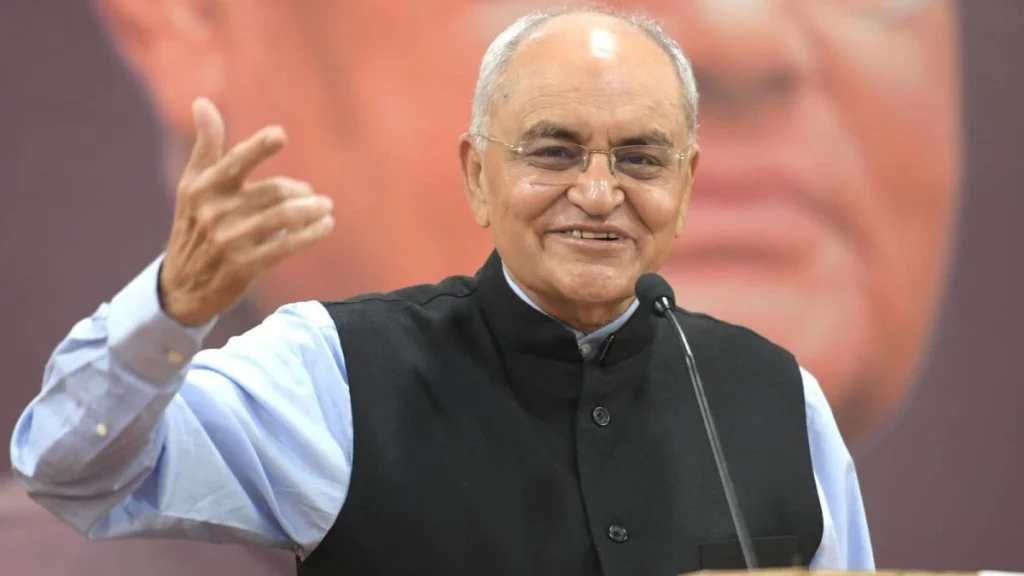
Balbir Punj, veteran journalist, distinguished author, and senior Bharatiya Janata Party (BJP) leader, passed away in New Delhi on April 18, 2026, at the age of 76. Born on October 2, 1949, in Lalowal, East Punjab, he is survived by his wife Shashibala Punj and two daughters. By any yardstick, Balbir Punj was a true human being—compassionate, principled, humble, and utterly free of arrogance.
I was closely associated with him for a few years from 1996 as a young journalist working under him at The Observer of Business and Politics, the pink daily published from New Delhi. Those years remain among the most formative of my career. Balbir Punj was my editor, yet he never imposed any sense of supremacy on his colleagues. Instead, he guided us with quiet insight and impeccable decorum. I still remember how he would sit with me late in the evening, patiently going through my drafts, not just correcting facts but helping me see the deeper layers of a story. “Journalism is not about shouting,” he would gently say, “it is about illuminating.” He helped me progress with a rare blend of encouragement and constructive feedback, always promoting talent without fanfare. Many young reporters in that newsroom carry similar memories—of an editor who spotted potential, nurtured it, and elevated the entire team through his own example of integrity and clarity of thought.
Punj’s journey in journalism began in 1971 with The Motherland. He served for over two decades at the Financial Express before joining The Observer of Business and Politics as Executive Editor from May 1996 to March 2000. His reporting and editing were marked by precision, balance, and a remarkable ability to cut through complexity with a clear, forward-looking vision. Colleagues often marvelled at how he could distil intricate economic and political developments into insightful pieces that educated both readers and fellow journalists alike.
Beyond the newsroom, Punj’s intellectual abilities shone brightly. A prolific writer and thinker, he authored influential books such as Tryst with Ayodhya: Decolonisation of India and Narrative ka Mayajaal. His columns, known for their scholarly rigour and fearless articulation of nationalist thought, shaped public discourse for decades. He brought depth and foresight to every issue he touched.
Punj’s transition to active politics was natural and deeply impactful. As a senior BJP leader, former National Vice President, convener of the party’s Intellectual Cell for a decade, and two-term Rajya Sabha MP (from Uttar Pradesh and later Odisha), he became an intellectual anchor for the organisation. Associated with the RSS from a young age, he was instrumental in guiding the party and its leadership on the right ideological and strategic path—offering counsel rooted in conviction, practical wisdom, and a profound understanding of Indian society.
In an era often marked by ego and polarisation, Balbir Punj stood out for his humanity and humility. He treated juniors, colleagues, and seniors with the same respect and warmth. His quiet encouragement, his insistence on ethical journalism, and his steadfast commitment to national ideals left an indelible mark on everyone who knew him.
The void left by his passing is profound. Yet the values he lived by—integrity, mentorship, clear vision, and principled leadership—will continue to inspire generations of journalists and political workers. Om Shanti.