


Noida: As Delhi-NCR continues to grapple with deteriorating air quality, medical experts are drawing attention to a far more concerning consequence of air pollution, its potential to cause lasting lung damage and increase the risk of lung cancer, even among individuals who have never smoked.
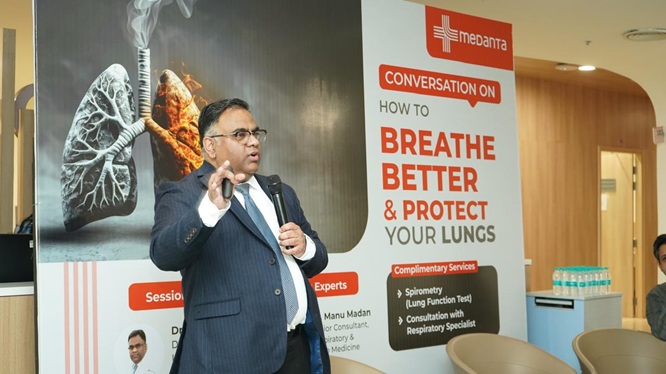
To mark November as Lung Cancer Awareness Month, Medanta Noida organised a special awareness initiative bringing together thoracic surgeons, respiratory medicine specialists and lung cancer survivors to highlight the growing public health implications of prolonged exposure to polluted air, the importance of recognising early warning signs and the role of timely diagnosis and treatment in improving patient outcomes.
While air pollution is commonly associated with coughing, eye irritation, breathlessness and exacerbation of respiratory illnesses, its long-term consequences extend well beyond these immediate symptoms. In 2013, the International Agency for Research on Cancer (IARC), the specialised cancer agency of the World Health Organization (WHO), classified outdoor air pollution and particulate matter in outdoor air pollution as Group 1 carcinogens, establishing that exposure to these pollutants can cause lung cancer in humans.
Of particular concern is fine particulate matter, or PM2.5—microscopic particles measuring 2.5 micrometres or less in diameter. These particles can bypass the body’s natural respiratory defences, penetrate deep into the lungs and reach the alveoli, where oxygen exchange takes place. Prolonged exposure can contribute to chronic inflammation, oxidative stress, cellular damage and biological changes that promote the development of cancer.
Speaking at the initiative, Dr. Belal Bin Asaf, Director, Thoracic Surgery, Institute of Chest Surgery, Chest Onco-Surgery & Lung Transplantation, Medanta Noida, emphasised the need to recognise air pollution as an established risk factor for lung cancer.
“Air pollution must no longer be viewed merely as a seasonal respiratory problem. It is an established human carcinogen with serious long-term health implications. While tobacco smoking remains the leading preventable cause of lung cancer, scientific evidence clearly demonstrates that prolonged exposure to polluted air, particularly fine particulate matter such as PM2.5, can increase the risk of lung cancer even among individuals who have never smoked.
“What makes air pollution particularly concerning is its pervasive nature. Millions of people are exposed to it in the course of their everyday lives, often without experiencing any immediate symptoms. The disappearance of winter smog does not necessarily mean that the cumulative health risks associated with prolonged exposure have disappeared,” said Dr. Asaf.
Highlighting the importance of early diagnosis, he added, “One of the greatest challenges in lung cancer management is that the disease may remain clinically silent during its early stages. A persistent or changing cough, coughing up blood, unexplained weight loss, persistent chest pain or progressive breathlessness should not be dismissed, irrespective of a person’s smoking history. Early diagnosis can significantly improve treatment prospects and, in appropriately selected patients, offer the possibility of cure through modern treatment approaches, including minimally invasive and robotic thoracic surgery.”
Beyond its association with lung cancer, prolonged exposure to polluted air is also linked to a broader spectrum of respiratory illnesses, including asthma, chronic obstructive pulmonary disease (COPD), impaired lung development in children and accelerated decline in lung function.
Dr. Manu Madan, Senior Consultant – Respiratory and Sleep Medicine, Medanta Noida, highlighted the importance of reducing exposure and recognising respiratory symptoms before they progress.
“Repeated exposure to high levels of air pollution can injure the respiratory system, aggravate existing lung diseases and adversely affect lung function over time. Children, older adults and individuals with pre-existing respiratory or cardiovascular conditions are particularly vulnerable.
“Persistent coughing, wheezing, chest tightness and breathlessness should not routinely be attributed to seasonal changes or allergies. Timely medical evaluation and appropriate lung function assessment, wherever indicated, can help identify underlying respiratory conditions and facilitate appropriate treatment,” said Dr. Madan.
The experts also highlighted several practical measures that individuals can adopt to reduce their exposure to air pollution:
• Monitor local Air Quality Index (AQI) levels and limit prolonged outdoor exposure and strenuous outdoor physical activity on severely polluted days.
• Use a well-fitting N95 or equivalent particulate-filtering mask when outdoor exposure is unavoidable during periods of high pollution.
• Consider appropriately sized HEPA-based air purifiers to reduce indoor particulate pollution.
• Avoid tobacco smoke, indoor biomass burning and other preventable sources of indoor air pollution.
• Seek timely medical attention for persistent or unexplained respiratory symptoms.
• Discuss eligibility for low-dose CT-based lung cancer screening with a medical specialist if at high risk.
The awareness initiative also featured lung cancer survivors who shared their personal journeys of diagnosis, treatment and recovery. Their experiences brought a human perspective to the discussion, reinforcing the importance of timely medical evaluation, advances in lung cancer treatment and the need to overcome the stigma that lung cancer is exclusively a smoker’s disease.
The initiative highlighted that lung cancer can affect anyone and that advances in diagnostic techniques, minimally invasive and robotic surgery, targeted therapies, immunotherapy and multidisciplinary cancer care have expanded treatment opportunities for patients.
While individual protective measures can help reduce exposure, the experts emphasised that they cannot substitute for sustained, large-scale efforts to improve air quality. Addressing air pollution requires coordinated action involving policymakers, healthcare professionals, communities and individuals.
Concluding the discussion, Dr. Asaf said, “Clean air should not be regarded as a luxury; it is a fundamental requirement for good health. The fight against lung cancer must extend beyond tobacco control to include environmental risk reduction, greater public awareness, timely diagnosis and access to appropriate treatment. Protecting the air we breathe is an investment in the health of current and future generations.”
Through this initiative, Medanta Noida reaffirmed its commitment to advancing lung health through public awareness, preventive healthcare, early diagnosis and comprehensive multidisciplinary management of respiratory diseases and lung cancer.
****