


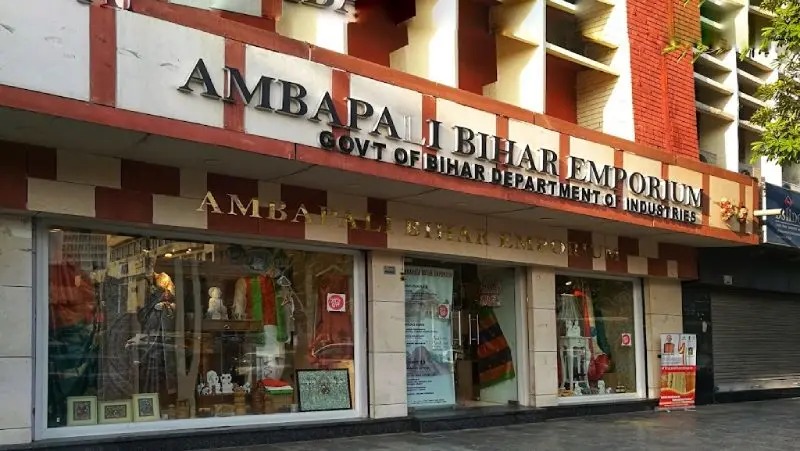
New Delhi’s bustling markets are home to products from every corner of India. Yet, among the many state emporiums lining Baba Kharak Singh Marg, one destination quietly tells the story of Bihar’s centuries-old craftsmanship. Ambapali Bihar Emporium, located at the State Emporia Complex, brings together some of Bihar’s finest handloom and handicraft traditions under one roof, making authentic products from the State easily accessible to residents of the national capital and visitors from across the world.
Stepping into the emporium is like taking a journey through Bihar’s cultural landscape. Shelves display the elegant texture of Bhagalpur Silk, walls come alive with vibrant Madhubani paintings, while showcases feature beautifully crafted Sikki grass products, traditional jewellery, home décor and handcrafted souvenirs that reflect the creativity of Bihar’s artisan communities.
Bhagalpur Silk: Bihar’s Handloom Pride
Among Bihar’s handloom products, Bhagalpur Silk occupies a special place. Woven by skilled artisans, the fabric is admired for its natural texture, durability and understated elegance. Produced using Tassar, Eri and Mulberry silk, Bhagalpur’s weaving tradition has earned national and international recognition, making the city synonymous with fine silk craftsmanship.
Each metre of Bhagalpur silk represents hours of meticulous work on handlooms. From preparing yarn and dyeing to weaving intricate patterns, every stage reflects the patience and precision of artisans who have inherited these skills over generations. The result is not merely a fabric but a work of art that carries the legacy of Bihar’s weaving traditions.
Bawan Buti: Weaving Stories into Fabric
Another remarkable handloom tradition of Bihar is Bawan Buti, known for its distinctive woven motifs inspired by nature, spirituality and everyday life. The delicate craftsmanship and fine detailing make every saree and fabric unique. Woven patiently on handlooms, Bawan Buti reflects the artistic excellence of Bihar’s weaving communities and continues to preserve a heritage that has flourished for generations.
Beyond Handloom: Bihar’s Handmade Heritage
Bihar’s identity extends beyond weaving. Madhubani Painting, Sikki Craft, Sujini Embroidery and Khatwa Appliqué together form a vibrant handmade economy that complements the State’s handloom sector.
Madhubani Painting, originating from the Mithila region, has become one of India’s most recognised folk art traditions. Characterised by intricate line work, vibrant natural colours and themes inspired by mythology, nature and everyday life, it now adorns textiles, home décor, stationery and contemporary lifestyle products.
Equally captivating is Sikki Craft, created from the naturally golden Sikki grass found in north Bihar. Skilled women artisans transform this humble natural fibre into baskets, jewellery boxes, decorative items and utility products with remarkable finesse. Every piece showcases precision, creativity and a deep understanding of traditional techniques passed down through generations.
Sujini embroidery and Khatwa appliqué further enrich Bihar’s textile heritage by combining storytelling with intricate needlework, adding artistic value to fabrics produced in the State.
The Beauty Lies in the Hands That Create It
What makes Bihar’s handmade products truly exceptional is not only their visual appeal but also the extraordinary effort behind every creation.
A Bhagalpur silk saree may take several days to weave. A Madhubani painting often requires countless fine brushstrokes executed with remarkable precision. A Sikki artisan carefully prepares the grass, coils each strand and shapes it entirely by hand. Every motif in a Bawan Buti fabric is woven thread by thread on a handloom.
These products cannot be replicated by machines because they carry the individual touch of the artisan. Slight variations in weave, colour and design are not imperfections—they are signatures of authenticity that distinguish handmade products from mass-produced goods.
Bringing Bihar Closer to the Nation
The presence of Ambapali Bihar Emporium in Delhi has created an important bridge between Bihar’s artisans and consumers across the country. The emporium enables people to purchase authentic products directly associated with Bihar’s traditional crafts while providing artisans with a recognised platform for showcasing their work.
Beyond the Bihar Emporium, visitors can also explore exhibitions and fairs such as Dilli Haat, SARAS fairs and other government-supported craft exhibitions, where artisans from Bihar periodically display and sell their products directly to consumers. These events provide valuable opportunities for traditional craftsmen to reach wider markets and interact directly with buyers.
A Legacy Woven with Skill
Every handloom fabric and handcrafted product from Bihar represents much more than an object of beauty. It embodies generations of inherited knowledge, countless hours of patient craftsmanship and the aspirations of artisan families whose livelihoods depend upon these traditional skills.
As consumers increasingly value authenticity, sustainability and handcrafted excellence, Bihar’s handmade products continue to gain appreciation across India and beyond. Whether it is the timeless elegance of Bhagalpur Silk, the intricate artistry of Bawan Buti, the vibrant imagination of Madhubani Painting or the eco-friendly charm of Sikki Craft, each creation tells a story of dedication, cultural pride and extraordinary human skill.
For anyone seeking an authentic piece of Bihar in the national capital, Ambapali Bihar Emporium offers more than handcrafted products—it offers an opportunity to experience the rich artistic heritage of a State where every thread, every brushstroke and every handcrafted creation reflects the enduring spirit of its artisans.