


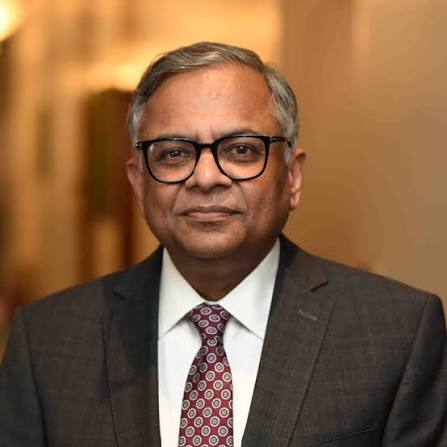
Mumbai: The Tata Sons board on Thursday approved a fresh five-year term for Natarajan Chandrasekaran as Executive Chairman, reversing the uncertainty that followed his announcement last month that he would not seek reappointment. Sources familiar with the deliberations said Chandrasekaran agreed to the board’s request to reconsider his decision.
The meeting in Mumbai was the first since August 12, when Chandrasekaran informed directors he would not offer himself for another term after his current tenure ends on February 20, 2027. He had cited the absence of unanimous support at the February 24, 2026 board meeting, where a proposal recommended by the Sir Dorabji Tata Trust, the Sir Ratan Tata Trust and the Nomination and Remuneration Committee failed to go through because one director withheld support. Six months later, with no resolution, he asked the board to begin succession planning.
Thursday’s reversal provides leadership continuity at a sensitive moment. Days earlier, the Reserve Bank of India rejected Tata Sons’ application to surrender its Core Investment Company registration. Classified as an Upper Layer NBFC, the holding company now faces a listing mandate it had sought to avoid, including by retiring more than ₹21,000 crore of debt. An IPO would require clarity on management stability.
Chandrasekaran, 63, joined TCS in 1987 and became the first non-Parsi chairman of Tata Sons in 2017 after the ouster of Cyrus Mistry. He was reappointed for a second five-year term in 2022. Under his watch the group expanded into aviation (Air India), semiconductors, batteries, digital platforms and electric mobility while resolving long-running shareholder disputes.
Reports indicate Tata Trusts chairman Noel Tata, a director on the Tata Sons board, voted against the reappointment. The resolution nevertheless carried by majority. Venu Srinivasan, another Trust nominee, is said to have supported both the extension and the decision to initiate listing steps. The Trusts together control about 66 per cent of Tata Sons; the board decisions will still require shareholder ratification.
The extension removes the immediate succession question that had unsettled employees, investors and partners. Larger issues remain: the group’s regulatory status, the shape of any listing, capital allocation across newer businesses, and the relationship between the Trusts and the operating board.
For now, the board has chosen continuity. Chandrasekaran, who has spent four decades inside the Tata system, will remain at the helm through a period that will test both governance and strategy at India’s largest conglomerate.