


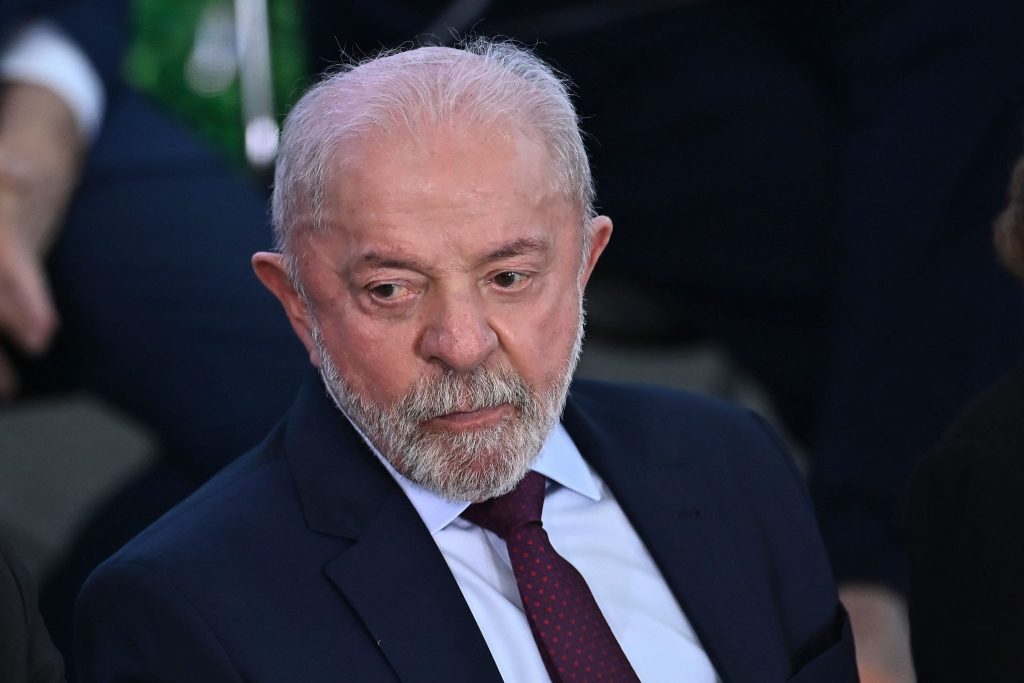
Dubai: Brazilian President Luiz Inácio Lula da Silva on Monday sharply criticized U.S. President Donald Trump’s proposal to take control of the Strait of Hormuz and levy a 20 percent transit fee on oil shipments, denouncing it as outright “piracy.”
Speaking at a regional summit, the veteran Brazilian leader warned that the move marks a dangerous return to colonial-era gunboat diplomacy. “This is not leadership; this is piracy in the modern age,” Lula said, drawing parallels to historical imperial practices that imposed tolls on weaker nations through military dominance.
The rebuke comes amid heightened tensions in the Persian Gulf. Trump’s proposal envisions U.S. forces assuming effective control of the strategic waterway to ensure “freedom of navigation” while charging tankers a substantial fee. Supporters in the Trump administration describe it as both a revenue tool and a deterrent against Iranian threats following recent U.S.-Iran exchanges.
However, critics across the Global South and beyond view the plan as an attempt to monetize a vital global commons and reassert unilateral American hegemony at a time when the world is shifting toward multipolarity.
The Strait of Hormuz, a narrow 21-mile-wide chokepoint between Iran and Oman, serves as the primary route for nearly 20 percent of global oil trade. Major exporters including Saudi Arabia, Iraq, the UAE, Kuwait, and Iran rely on it. Any imposed U.S. fee would raise energy costs for major importers such as India, China, Japan, and European nations, potentially triggering inflation, wider trade deficits, and economic strain in developing countries already facing multiple pressures.
Lula’s strong stance reinforces Brazil’s role as a leading voice for the Global South. His administration has consistently pushed for reforms in global governance through platforms like BRICS and the G20. The comments align with criticisms from Tehran, Beijing, and Moscow, which have labeled the proposal a violation of international maritime norms and a risk for military escalation.
Legal observers note that unilateral control over such a critical sea lane could conflict with the United Nations Convention on the Law of the Sea (UNCLOS), although the United States has a history of selective engagement with international legal frameworks.
The episode highlights contradictions within Trump’s “America First” approach. While pledging to avoid endless foreign entanglements, the plan could draw the U.S. into new conflicts and destabilize global energy markets. Developing nations can scarcely afford another artificial energy shock driven by great-power competition.
As markets remain volatile, the international community faces a critical question: whether Trump’s Hormuz initiative is negotiating rhetoric or a substantive policy shift. Lula’s “piracy” characterization may lack diplomatic polish, yet it underscores a core issue — treating essential international waterways as private toll roads threatens the rules-based order and global economic stability.