


From Our Correspondent
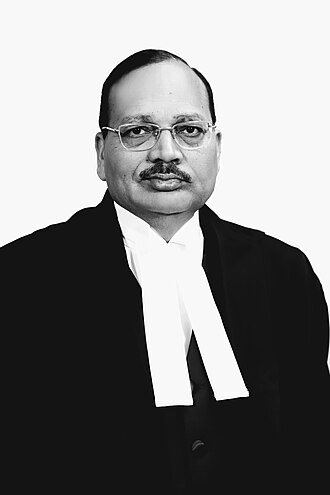
New Delhi: Chief Justice of India (CJI) Surya Kant’s oral observations during a Supreme Court hearing on May 15, 2026, have ignited widespread discussion across media, social platforms, and legal circles. While presiding over a bench with Justice Joymalya Bagchi, the CJI used strong analogies while addressing issues related to a lawyer’s plea for senior advocate designation.
The Context and Remarks
The bench was hearing a petition from a lawyer challenging the Delhi High Court’s process for granting senior advocate status. During the proceedings, the judges expressed concerns over certain conduct, including social media posts and potential misuse of legal processes. CJI Surya Kant reportedly stated:
“There are already parasites of society who attack the system and you want to join hands with them? There are youngsters like cockroaches, who don’t get any employment and don’t have any place in the profession. Some of them become media, some of them become social media, some of them become RTI activists, some of them become other activists, and they start attacking everyone.”
The remarks were made in the context of broader observations about persistent criticism of institutions, alongside concerns over fake law degrees and frivolous litigation. The bench allowed the petitioner to withdraw the plea.
Reactions and Criticism
The comments drew swift and sharp responses from several quarters. Senior journalist Rajdeep Sardesai questioned the implications for democratic discourse. Academicians and journalists, including Apoorvanand and Arfa Khanum Sherwani, expressed disappointment, arguing that the language was unbecoming of the highest judicial office and that questioning authority forms a cornerstone of democracy. RTI activists and civil society voices emphasized that mechanisms like the Right to Information Act serve as vital tools for transparency and accountability.
On social media, many users highlighted sensitivities around youth unemployment in India and viewed the analogy as dismissive of genuine grievances. Critics described the language as strong and argued it could discourage legitimate civic engagement and oversight of public institutions.
Some segments of public opinion and legal observers defended the underlying sentiment. They noted that the CJI’s frustration appeared directed at specific instances of alleged misuse—such as abusive social media campaigns, frivolous activism, or repeated filings—rather than a blanket condemnation of all unemployed youth, media professionals, or activists. Supporters argued that the judiciary, like other institutions, faces challenges from baseless attacks that can erode public trust.
The incident also coincided with the bench raising alarms over standards in the legal profession.
Judicial Ethics and Decorum in India
This episode has brought renewed focus on judicial ethics and decorum standards in India. Judicial ethics encompass the moral and professional principles that guide judges in upholding the integrity, independence, and impartiality of the judiciary. In India, these are primarily governed by self-regulatory frameworks rather than a single statute.
The foundational document is the Restatement of Values of Judicial Life, adopted by the Supreme Court in a full court meeting on May 7, 1997, and ratified by the Chief Justices’ Conference in 1999. It stresses that “Justice must not merely be done but it must also be seen to be done.” Key expectations include upholding public faith in the impartiality of the judiciary through dignified conduct, restraint, and avoidance of actions that could erode trust.
Complementing this are the Bangalore Principles of Judicial Conduct (2002), which outline six core values: Independence, Impartiality, Integrity, Propriety, Equality, and Competence and Diligence. Under Propriety, judges are expected to maintain high standards of conduct and remain patient, dignified, and courteous. Judicial conduct must reinforce public confidence both on and off the bench.
Supreme Court precedents further reinforce the need for judicial restraint and temperate language. Courts have observed that dignity in judicial orders and oral remarks is crucial. While judges may firmly address misconduct, such as abuse of process or attacks on institutional integrity, the expectation is one of moderation and sobriety. Oral observations, though not binding judgments, carry substantial public weight.
Is Such Language Expected from the Chief Justice?
This remains a fundamental question at the heart of the debate. Proponents of robust judicial expression argue that the CJI has a duty to defend the institution against perceived threats in live proceedings. Historical precedents show judges using pointed language on matters of public importance.
Conversely, many scholars and citizens contend that the office of the Chief Justice symbolizes the apex of constitutional authority, demanding exceptional restraint. Provocative metaphors, even when aimed at specific misuses, risk alienating citizens and appearing dismissive of societal issues like unemployment. Critics argue this may not fully align with the dignity, propriety, and temperate standards enshrined in the Restatement and Bangalore Principles.
The tension reflects broader challenges in India’s democracy: balancing institutional protection with empathetic communication, freedom of expression, and the right to dissent.
The remarks by CJI Surya Kant and the ensuing reactions underscore ongoing debates about the boundaries of criticism, the role of activism, and the standards of judicial ethics and decorum. No formal written order or contempt proceedings arose directly from these oral exchanges. As discourse continues, the episode serves as a reminder of the scrutiny faced by all pillars of democracy. Sustained public trust in the judiciary depends on its ability to exemplify the highest standards of ethics, decorum, and restraint it upholds for others—while addressing genuine threats to its functioning in a measured manner befitting a vibrant constitutional democracy.