


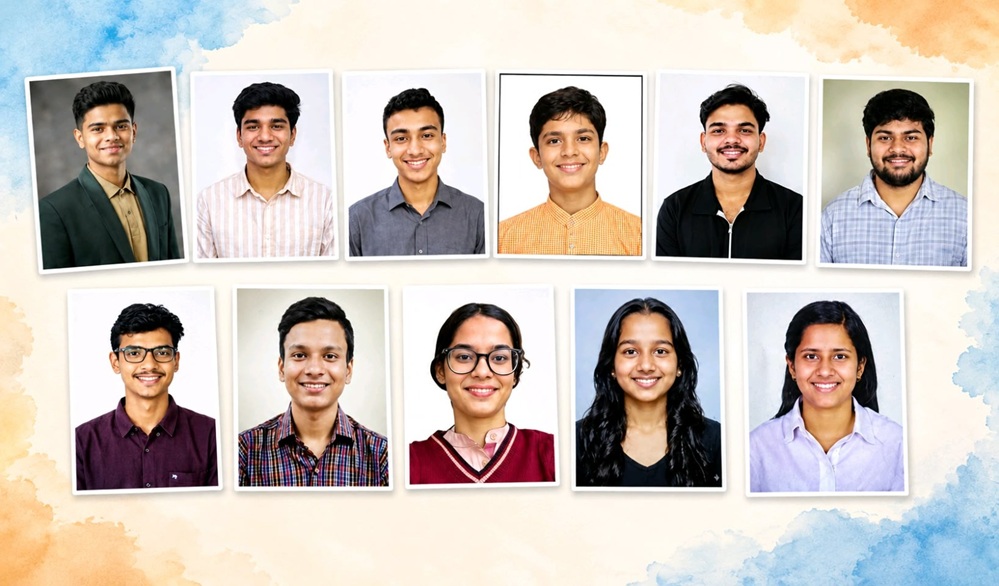
Delhi – From exploring humane ways to address human-wildlife conflict to reducing pollution from construction activities, supporting children with autism, improving access to education for visually impaired students and making sports more inclusive, seven teams from Delhi have made it to the national Top 40 of Samsung Solve for Tomorrow.
Avi Mohan Kumar Shuklaa, Yash Varshney, Aarna Gupta, Vidit Bhayana, Bhumi, Prachi, Aditya Rai, Sparsh Ruhela, Tej Singh Grover and Akshat Sarkar are among a new generation of young Indians looking at challenges around them and asking a simple question: can technology help solve them?
Samsung Solve for Tomorrow is Samsung’s flagship CSR innovation programme for young people aged 14 to 22. Through design thinking, mentorship and hands-on learning, the programme enables young innovators from across India to identify real-world challenges and develop potential solutions, helping them take ideas from the early stages towards prototypes.
Seven Solutions, Ten Young Innovators For Avi Mohan Kumar Shuklaa and Yash Varshney, both 17 and from Central Delhi, the challenge is human-wildlife conflict. Their team, InnoBotix, is exploring a humane early-warning approach that could help reduce risks for both people and wildlife.
In South Delhi, 17-year-old Aarna Gupta is developing AeroShield, a solution exploring how construction-site infrastructure could be used to reduce exposure to airborne pollutants. Her approach looks at how technology could potentially help address pollution-related challenges associated with construction activities.
In Health and Education, 15-year-old Vidit Bhayana from Central Delhi is developing VB SenseGuard, which explores how technology could identify early signs of sensory meltdowns in children with autism and support more timely intervention.
Bhumi and Prachi, both 15 and from South Delhi, are developing VisionAir, an affordable and reusable air-purification solution that explores the use of natural materials to improve air quality.
Aditya Rai and Sparsh Ruhela, both 17 and from East Delhi, are developing Equinox to address accessibility barriers faced by visually impaired students. Their solution explores a voice-first AI companion that could make digital learning resources easier to access.
In Sport & Tech, 16-year-old Tej Singh Grover from South Delhi is developing ThermoGuard, a wearable solution that explores how physiological and environmental conditions could be assessed to provide early warnings of heat-exhaustion risk.
Fourteen-year-old Akshat Sarkar from East Delhi is developing Squirtle, which explores how technology could help athletes who are deaf access sports coaching through Indian Sign Language.
Seven solutions. Ten young innovators. And challenges spanning the environment, health, education, accessibility and sports.
From construction sites to classrooms and sports fields, these solutions reflect how young people are looking closely at challenges around them and exploring how technology could help address them.
Their achievement comes as India’s innovation map itself is expanding. More than half of the national Top 40 teams in this year’s Samsung Solve for Tomorrow are from Tier 2 and Tier 3 cities, highlighting how young innovators from different corners of the country are bringing fresh perspectives to real-world challenges.
For Delhi, having seven teams and 10 young innovators among the national Top 40 reflects the breadth of challenges that young people are choosing to address. Their solutions span environmental concerns, accessibility, health, education and sports, demonstrating how innovation can begin with observing an everyday problem and exploring a technology-led way forward.
The innovators are currently at the ideation stage and will now receive mentorship and prototyping support as they work to test, refine and develop their solutions and compete for a place in the Top 20.
The Top 40 teams will collectively receive INR 8 lakh, while every team member will receive a Samsung laptop to support prototype development. They will also participate in a 10-day Innovation Bootcamp, where they will receive intensive mentoring from startup founders and industry experts at FITT-IIT Delhi. As part of the Bootcamp, the teams will also get an opportunity to visit Samsung R&D Institute India – Delhi, Samsung R&D Institute India – Noida, Samsung R&D Institute India – Bangalore, Samsung Design Delhi, and Samsung’s Regional Headquarters in Gurugram.
The teams will then compete for a place in the Top 20, which will receive further support to strengthen and advance their solutions ahead of the Grand Finale.
At the culmination of the programme, the four winning teams will collectively receive incubation grants worth INR 2 crore, along with incubation support from FITT-IIT Delhi, helping them take their solutions towards further development and potential commercialisation.
The growing participation of young innovators from across India points to a larger change in the country’s innovation landscape. Good ideas are not defined by geography. They can emerge wherever young people encounter a problem, question why it exists and decide to explore a different way of addressing it.
For Delhi’s ten young innovators, making the national Top 40 is a moment of recognition — and another sign that solutions rooted in everyday challenges can find a wider platform through Samsung Solve for Tomorrow.