


By Advocate Salini T S
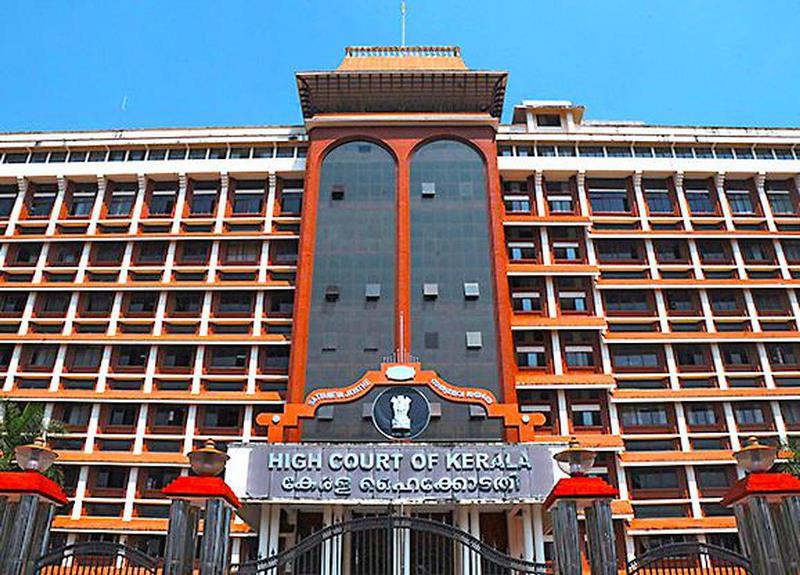
The Kerala High Court’s order on August 27, 2025, quashing the Thrissur Revenue Divisional Officer’s (RDO) decision to reclassify Lulu Group’s land in Ayyanthole, Thrissur, serves as a significant caution to both administrative authorities and corporate entities. The ruling, delivered by Justice Viju Abraham, highlights procedural lapses and reinforces the importance of adhering to statutory safeguards under the Kerala Conservation of Paddy Land and Wetland Act, 2008. Below is an analysis of why this order acts as a warning to both parties:
Procedural Compliance is Non-Negotiable for Administrators
The high court found that the RDO’s decision to exclude Lulu’s land from the paddy land data bank was made without obtaining mandatory reports from the Agricultural Officer and the Local Level Monitoring Committee (LLMC), as required under Rule 4(4e) of the 2008 Act. This lapse underscores that administrative bodies must strictly follow legal procedures, particularly in matters involving environmental and agricultural conservation. Bypassing these steps risks judicial intervention and reversal of decisions.
The court also criticized the reliance on inconsistent satellite reports from the Kerala State Remote Sensing and Environment Centre (KSRSEC) without corroborating evidence from agricultural authorities. It directed the RDO to obtain fresh, authentic reports, with the KSRSEC director personally supervising satellite imagery analysis. This emphasizes that administrative decisions must be grounded in reliable, transparent evidence to withstand scrutiny.
The court’s order to refund conversion fees paid by Lulu, pending the outcome of the fresh review, signals that financial transactions linked to improper administrative actions can be reversed. This holds revenue officials accountable for ensuring that decisions align with legal frameworks to avoid financial and legal repercussions.
Furthermore, the court’s directive to keep proceedings under Section 13 of the Act (for restoration of paddy land) in abeyance until a fresh decision is made reflects its commitment to protecting public interest, particularly the conservation of paddy fields and wetlands. Administrators are reminded to prioritize environmental laws over expediting commercial projects.
Compliance with Environmental Laws is Critical for Corporates
Lulu Group’s argument that the land was converted before the 2008 Act and should be treated as purayidam (residential land) was rejected due to evidence, including satellite imagery and agricultural reports, showing paddy cultivation until 2022. This serves as a warning to corporates that claims of prior land conversion will be rigorously scrutinized, and illegal reclamation or manipulation of land status will not be tolerated.
Risk of Project Delays and Financial Loss
The court’s decision to quash the RDO’s order and mandate a fresh review within four months has stalled Lulu’s mall project, which was expected to create 3,000 jobs. The refund of conversion fees and the uncertainty of the outcome highlight the financial and temporal risks corporates face when legal processes are not diligently followed. This underscores the need for thorough due diligence before acquiring land or initiating projects.
The court’s ruling reflects Kerala’s broader debate over balancing commercial development with agricultural and environmental conservation. Lulu’s chairman, M.A. Yusuffali, alleged political obstruction, but the court’s focus on procedural violations indicates that corporates must navigate legal frameworks carefully, regardless of economic promises like job creation.
A Broader Warning for Sustainable Development
The High Court’s order reinforces the principle that neither administrative haste nor corporate influence can override statutory protections for paddy lands and wetlands. For the administration, it is a reminder to uphold due process and prioritize environmental safeguards. For corporates, it signals the need for rigorous compliance with land use regulations and proactive engagement with legal requirements to avoid setbacks. The ruling also empowers local stakeholders, as seen in T.N. Mukundan’s successful challenge, highlighting that community activism can hold both authorities and corporates accountable.
This case, spurred by T.N. Mukundan’s petition, demonstrates that corporate projects, especially those involving ecologically sensitive lands, are subject to intense public and judicial scrutiny. Corporates must anticipate opposition from local stakeholders and environmentalists and ensure their projects align with legal and environmental standards to avoid litigation and reputational damage.
Kerala’s Alarming Environmental Decline
Kerala’s transformation from a verdant rice bowl to a concrete jungle is no accident—it’s a calculated plunder backed by data that shames its green rhetoric. Historical records paint a grim picture of decline. In 1974-75, the gross cropped area under rice spanned approximately 9 lakh hectares, but by 2015-16, it had plummeted to less than 2 lakh hectares—a staggering 78% loss. This trend accelerated over decades: from 1957-58 to 2022-23, the area under rice cultivation dropped from 7.66 lakh hectares to just 1.91 lakh hectares, marking a 75% reduction. Wetlands, the unsung heroes of flood control and biodiversity, fared no better. Between 1990 and 2011, Kerala’s wetland coverage shrank from 2.35 lakh hectares to 1.6 lakh hectares, a 32% erosion in just two decades. Over a broader 39-year span, the state hemorrhaged 7 lakh hectares of paddy fields alone, as reported in 2015. These figures aren’t mere statistics; they’re indictments of policies that reclassify protected lands as “developable” at the stroke of a pen, fueling urbanization and corporate expansion.
Conclusion
The Kerala High Court’s order is a dual warning: it cautions administrators against procedural shortcuts and corporates against assuming that economic clout can bypass environmental laws. Both must operate within the legal framework to ensure sustainable development, particularly in a state like Kerala, where paddy fields and wetlands are critical to ecological and socio-economic stability.
*The author is a Lawyer in the High Court of Kerala