


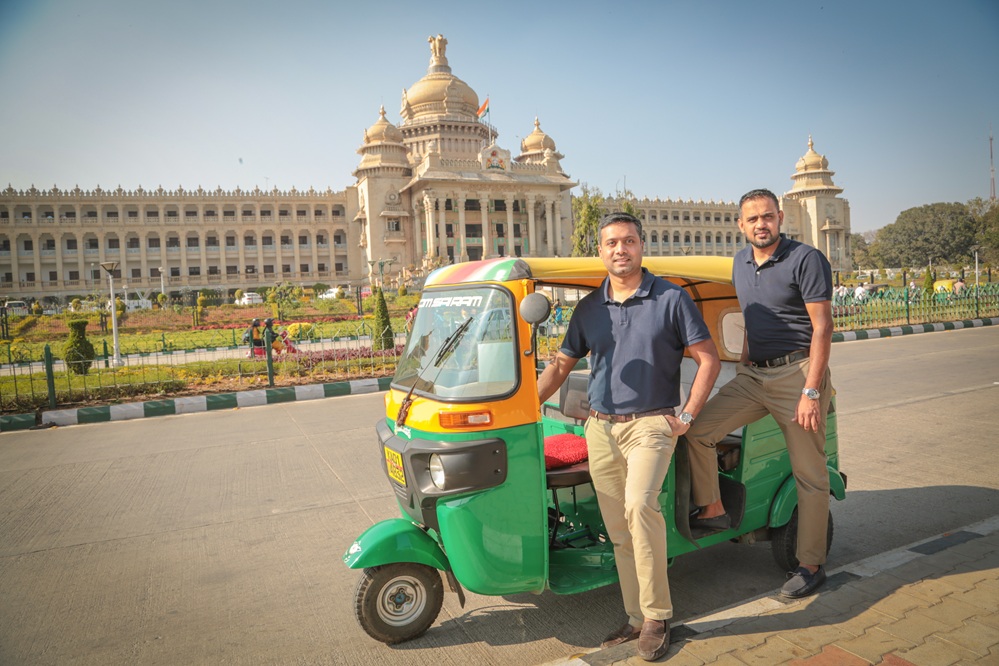
Bengaluru — Immersion India, a Bengaluru-based experiential learning company founded in 2017, today announced a stronger focus on its outcome-led India immersion programmes for international business schools, universities and corporate leadership teams.
The portfolio combines curriculum-linked programme design, curated access to enterprises and institutions, facilitated reflection, and end-to-end in-country delivery across India’s major economic centres and selected tier-two contexts.
The program comes as employers and education institutions confront a rapid reset in the capabilities leaders need. The World Economic Forum estimates that 39% of workers’ core skills will change by 2030; 63% of employers identify skills gaps as a major barrier to transformation, while 85% plan to prioritise upskilling. Immersion India’s programmes focus on capabilities that are hardest to acquire from content alone: judgement under ambiguity, analytical thinking, cultural intelligence, systems thinking and decision-making in unfamiliar environments.
“AI has made information abundant. It has not made judgement automatic,” said Vineeth Thomas, Founder & Managing Partner, Immersion India. “An immersion should not be a corporate safari. It should begin with a serious learning question, place participants inside a live operating environment, and end with a more informed way of seeing and deciding.”
The global appetite for such learning is growing. UNESCO says 7.3 million higher-education students now study outside their home countries, more than three times the number in 2000. In the United States alone, 298,180 students studied abroad for academic credit in 2023/24, while more than 444,000 took part in some form of global educational experience. The shift is not simply towards more travel, but towards shorter, applied and outcome-oriented formats that connect academic frameworks with real-world complexity.
India provides an unusually rich setting for that shift. It combines digital public infrastructure with deep local variation; world-scale technology and service capabilities with infrastructure constraints; rapid entrepreneurship with affordability and inclusion; and public policy with private enterprise. NASSCOM estimates that India is home to more than 1,700 Global Capability Centres, generating US$64.6 billion in annual revenue and employing over 1.9 million professionals, one example of the scale at which global business, technology and talent intersect in the country.
From itinerary to learning architecture
Immersion India positions itself as an academic learning partner rather than a travel organiser. Learning objectives are agreed with the participating institution before the itinerary is designed. Each programme is then built around the relevant questions, organisations, geographies and stakeholder perspectives, with structured preparation, field engagement, reflection and synthesis. Participants may engage with entrepreneurs, corporate leaders, policymakers, researchers, startups, manufacturing facilities, innovation hubs and social enterprises.
The portfolio includes
Academic immersions linked to university and business-school curricula, with learning outcomes defined jointly with faculty and programme directors.
Executive and leadership programmes focused on judgement, innovation, digital transformation, sustainability and leading through ambiguity.
India strategy and regional learning journeys for corporations, trade bodies and delegations exploring market entry, operating models and partnerships across Bengaluru, Mumbai, Delhi and selected tier-two or rural contexts.
“India is not one case study. It is hundreds of them colliding in real time,” said Anand Joseph, Founder & Partner, Immersion India. “Digital infrastructure, entrepreneurship, manufacturing, policy and inclusion interact here at a scale few markets can reproduce. Our role is to convert that complexity into a coherent learning journey, not a sequence of corporate visits.”
Since 2017, Immersion India has delivered experiential learning programmes for leading global institutions. In the last two years alone, the company has partnered with over 31 universities, hosting close to 1,140 participants from the United States and Europe.
Immersion India plans to deepen partnerships with universities, business schools and corporations while expanding the range of cities, sectors and operating environments represented in its programmes. Its longer-term ambition is to make India an essential classroom for the next generation of global leaders.