


By Suresh Unnithan
India has formally terminated its nearly 25-year military presence at Tajikistan’s Ayni Airbase, a foothold established in 2002 and now fully relinquished by late October 2025. For India, Ayni was more than an airfield—it was a strategic insurance policy, its only overseas military base, designed to deter Pakistan, support Afghanistan, monitor China, and secure northern approaches. Its loss is widely viewed as a profound strategic reversal.
Strategic Foundations of the Ayni Presence
India initiated operations at Ayni in 2002 with precise objectives. The base allowed India to gain strike capability against Pakistan without overflying hostile airspace. It provided backdoor access to Afghanistan, enabling the supply of arms, funds, and medical aid to the Northern Alliance fighting the Taliban. The opportunity arose in the post-9/11 window when Tajikistan, fearing Taliban spillover after the U.S.-led invasion toppled the regime in Kabul, invited India to upgrade the Soviet-era facility while American focus remained on Afghanistan. Ayni also served as a safe hub for crisis operations, most notably facilitating the 2021 airlift of Indian nationals and allies from Kabul when direct flights were impossible. Strategically, it enabled India to check China by monitoring Xinjiang via the nearby Wakhan Corridor, tracking the China-Pakistan Economic Corridor (CPEC), and countering Beijing’s Belt and Road Initiative (BRI) expansion. Crucially, Ayni delivered early warning and intelligence on terrorist movements, drug trafficking, and potential spillover threats from the Af-Pak region into India via Pakistan or Pakistan-occupied Kashmir (PoK). It enhanced real-time intelligence on jihadi groups and supported India’s “Connect Central Asia” policy.
Infrastructure and Operational Role
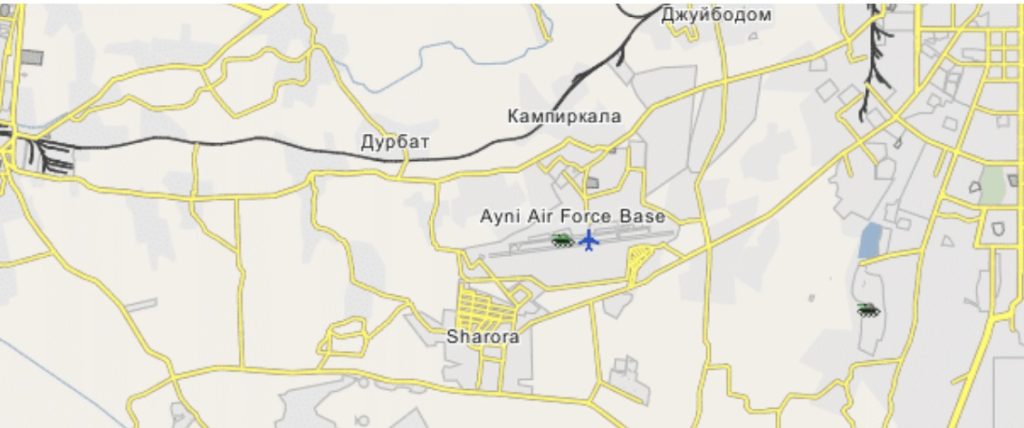
Located just 15 km west of Dushanbe and adjacent to Afghanistan’s Wakhan Corridor, Ayni was transformed by India at a cost of approximately $100 million. Upgrades included extending the runway to 3,200 meters, building hangars, and enhancing refueling and maintenance infrastructure. At its height, the base accommodated up to 200 Indian personnel, Indian Air Force (IAF) helicopters, and occasional deployments of Su-30MKI fighter jets. It functioned as a vital logistics and medical evacuation center, bypassing Pakistani airspace for regional operations and enabling rapid strike capability—Su-30MKIs based at Ayni could reach Peshawar, a key Pakistani airbase and logistics hub near the Afghan border, in under 10 minutes. This created a credible second-front option against Pakistan beyond India’s western border.
Historical Context and Tactical Advantage
During Pakistan’s support for the Taliban regime from 1996 to 2001, India lacked direct land access to Afghanistan. Ayni, along with the smaller nearby Farkhor base (used as a field hospital), became India’s conduit for covert and overt support to anti-Pakistan elements, particularly the Northern Alliance. After the Taliban’s fall in 2001 and the rise of a pro-India government in Kabul, Tajikistan—still wary of instability—welcomed India’s investment. Ayni thus evolved into India’s first and only full-fledged overseas airbase, strengthening its ability to project power into Afghanistan and Central Asia without Pakistani permission.
The Withdrawal Decision
The bilateral lease agreement expired in 2022 following Tajikistan’s notification in 2021. India chose not to renew, initiating a phased withdrawal of personnel and equipment that concluded in late October 2025. Tajikistan officially attributed the decision to reduced strategic relevance after the Taliban’s 2021 seizure of Afghanistan. However, experts emphasize significant external pressure from Russia and China, the dominant powers in Central Asia. As a member of Russia’s Collective Security Treaty Organization (CSTO), Tajikistan prioritized alignment with Moscow and Beijing, both of whom view foreign military bases in the region as encroachments on their spheres of influence. India’s role was effectively sidelined.
The exit represents a major setback for India’s ambitions in Central Asia—a region critical for energy corridors, counterterrorism, and balancing great-power rivalry. The decision undermines India across multiple domains.
Direct Impacts on India
The loss of Ayni erodes India’s sole operational overseas military foothold, eliminating rapid deployment options into Central Asia and a critical observation post for threats from Pakistan and Afghanistan. India now faces extended supply lines and greater reliance on alliances, reducing operational flexibility and weakening deterrence. For instance, airstrikes on targets like Peshawar would now require navigating hostile Pakistani airspace, compromising speed and surprise.
Border security risks have heightened significantly. Ayni’s proximity to the Wakhan Corridor made it a frontline asset for monitoring cross-border insurgencies, Taliban activities, and potential spillovers that could threaten India’s northern and western borders. Without this vantage point, intelligence gathering and early-warning capabilities against terrorist infiltrations or Pakistan-backed proxy threats are severely degraded. This vulnerability is particularly acute along the Line of Control (LoC) and in Jammu and Kashmir, where rising Sino-Pakistani cooperation already strains defenses. India may need to divert resources to bolster domestic border security, increasing costs and the risk of escalatory incidents.
In response, India is pivoting to soft power and diplomatic alternatives, emphasizing economic engagement through initiatives like the International North-South Transport Corridor (INSTC) to sustain ties with Central Asia. While limited access to the nearby Farkhor airbase remains, it lacks Ayni’s strategic depth and infrastructure. This shift exposes weaknesses in India’s “Neighborhood First” policy, heightening the risk of encirclement by adversarial alliances. To compensate, India is accelerating partnerships with the United States, QUAD nations, and others—though these cannot immediately offset the loss of hard military presence.
The withdrawal also amplifies broader national security concerns, fueling fears of encirclement by China and Pakistan. It may drive India to diversify arms procurement and deepen joint military exercises with Western allies. Exploring new basing options in the Arabian Sea or Southeast Asia is under consideration, but such alternatives will take years to develop, leaving a temporary but exploitable security vacuum.
Regional Repercussions
For Russia and China, India’s exit strengthens their dominance. Russia may assume control of Ayni to reinforce its military footprint in Central Asia, while China benefits from reduced Indian scrutiny near Xinjiang, advancing its BRI objectives and containing New Delhi’s regional influence.
For Tajikistan and Central Asia, enhanced Russian and Chinese aid may help manage Afghan border threats, but it risks fostering over-dependence, limiting diversified partnerships. The region could witness intensified rivalries among India, Russia, and China, disrupting stability, energy flows, and counterterrorism cooperation.
In essence, India’s withdrawal from Ayni signals a compelled strategic retreat, ceding ground to Moscow and Beijing while compromising New Delhi’s core interests in border security, regional influence, and strategic autonomy. Although bilateral ties with Tajikistan continue in trade and development, this development underscores the urgency for India to innovate in its foreign policy. Without bold compensatory measures, the void left by Ayni will continue to expose India’s northern flanks and diminish its standing in the evolving geopolitics of Central Asia.