


By Suresh Unnithan
As of now, India’s economy continues to confront severe turbulence. The rupee is fluctuating uneasily near the ₹95 per US Dollar mark, underscoring persistent fragility rather than stability. While headline growth projections remain respectable, the ground reality reveals mounting pressures on the external sector, rising debt burden, and a worrying gap between political priorities and fiscal imperatives. For readers reflecting this weekend, the message is clear: short-term electoral calculus cannot indefinitely substitute for long-term economic stewardship.
Rupee Under Siege: Oil, Outflows, and Trade Headwinds
This week’s currency movements have once again highlighted India’s vulnerability to global forces. Trading around ₹95 to the dollar, the rupee ranks among the weakest major emerging market currencies in 2026 so far. The primary culprit remains crude oil, which has surged past $120 per barrel amid renewed geopolitical tensions. With India importing roughly 88% of its crude requirements, the oil shock is feeding directly into higher import bills, widened trade deficits, and imported inflation.
Adding to the strain are sustained foreign capital outflows. Foreign Institutional Investors (FIIs) have pulled back significantly this year, creating a shortfall in dollar inflows precisely when the country needs them most. Compounding the challenge are trade frictions, including elevated US tariffs on select Indian goods, which have dented export momentum and foreign exchange earnings.
The Reserve Bank of India has stepped in repeatedly to smooth volatility, preventing a sharper collapse. Market consensus this week suggests the rupee may consolidate in the ₹92–₹95 band in the near term. Yet few analysts are breathing easy. Any escalation in West Asia or fresh global risk aversion could quickly test this fragile equilibrium.
Debt Trajectory: The Slow-Burning Crisis
While the currency grabs headlines, the deeper concern lies in the government’s balance sheet. Total outstanding liabilities of the Centre are projected to reach around ₹197 lakh crore by end-March 2026 (Revised Estimates), climbing further to over ₹214 lakh crore by March 2027. These are staggering absolute numbers, even if deficit-to-GDP ratios appear broadly “managed.”
Rising interest obligations are already crowding out productive capital expenditure. High oil prices threaten additional subsidy burdens, while several states show signs of fiscal stress. With massive borrowing programmes lined up, any slippage in revenue or spike in expenditure could push yields higher and tighten financial conditions further.
Critics argue that the political class has been overly focused on electoral engagements and welfare announcements, often at the expense of urgent structural measures. Disinvestment has lost momentum, tax base broadening remains incomplete, and expenditure efficiency continues to lag. Grand infrastructure rhetoric makes for powerful campaign material, but without matching revenue efforts, it only adds to the long-term debt overhang.
Growth: Resilience or Complacency?
Despite these headwinds, India is still projected to be among the fastest-growing major economies. Real GDP growth for FY 2025-26 is estimated between 6.8% and 7.4% by domestic agencies, with the IMF broadly in the 6.5–7.3% range. Foreign exchange reserves remain healthy at around $690-700 billion, offering roughly 11 months of import cover and a vital buffer for the RBI.
These strengths are real and should not be dismissed lightly. Yet they also risk breeding complacency. Downside risks to growth forecasts are rising — particularly if oil prices stay elevated. Private investment remains subdued in several sectors, SME units are grappling with higher input costs, and consumption demand shows uneven recovery. Export competitiveness has taken a hit, and the much-discussed demographic dividend demands far more purposeful skill development and labour reforms than currently visible.
The Political-Economic Disconnect
Perhaps the most troubling aspect as we head into the weekend is the apparent mismatch between economic challenges and governance priorities. With multiple electoral cycles influencing decision-making, long-gestation reforms in energy security, export diversification, land and labour markets, and fiscal consolidation often get deprioritised. Narrative management and short-term populism deliver immediate political returns but weaken the economy’s ability to absorb future shocks.
India possesses formidable fundamentals: a young population, a large domestic market, a robust services sector, and digital public infrastructure. Realising the vision of a developed India by 2047 requires bridging the gap between rhetoric and execution.
Outlook for the Week Ahead
The coming week and months will test the resilience of both policymakers and markets. Continued RBI vigilance, prudent liquidity management, and diplomatic efforts to secure energy supplies will be crucial. On the domestic front, any credible signals of accelerated reforms or fiscal discipline could help restore confidence.
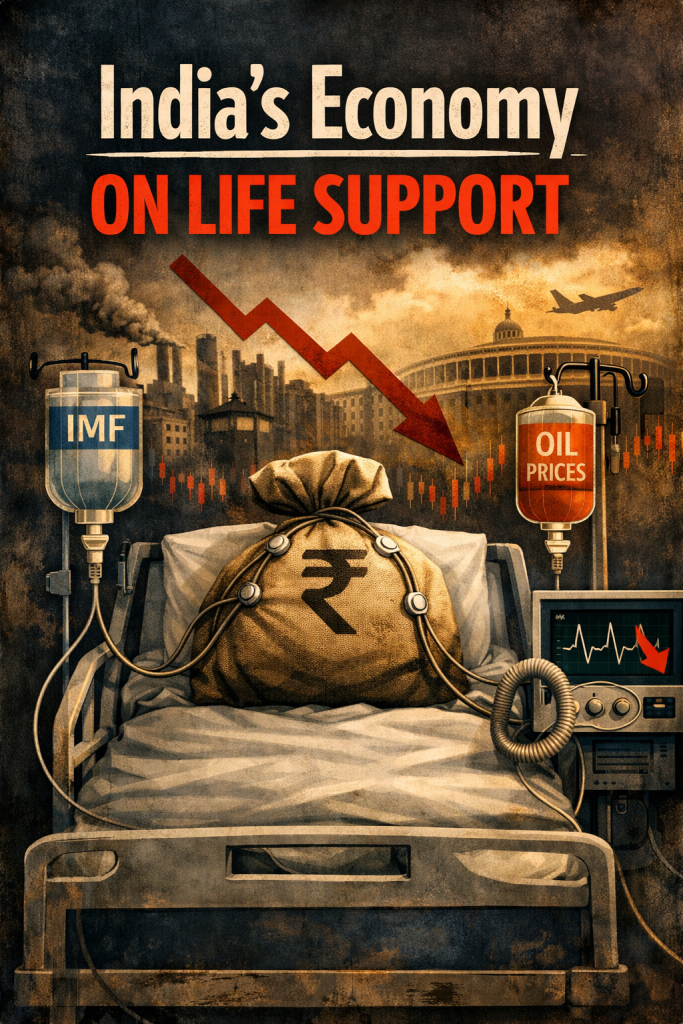
The patient is not yet terminal, but it is undeniably in intensive care. Global factors — oil geopolitics, trade wars, and capital flow volatility — are largely beyond India’s control. What is within control is the quality of domestic policy response and political will.
This weekend, as families across the country discuss rising fuel and household costs, policymakers in New Delhi must ask themselves a harder question: Are we treating symptoms or addressing the disease? India’s economic future depends on shifting from electoral mode to reform mode—and the clock is ticking.
The coming quarters will determine whether current volatility becomes a temporary phase or a prolonged period of underperformance with lasting consequences for jobs, incomes, and national aspirations. Prudence, foresight, and courage are needed now more than ever.