


By Suresh Unnithan
Pro-government Indian media outlets have been widely reporting claims that Iran has granted safe passage to Indian-flagged vessels through the strategically vital Strait of Hormuz. These accounts describe the development as a significant diplomatic achievement, linking it to recent high-level telephone conversations between India’s External Affairs Minister and his Iranian counterpart. The discussions reportedly held multiple times in recent days—including one late Tuesday—cantered on maritime safety, the welfare of Indian seafarers, and India’s energy security concerns. Sources cited in these reports suggested that Iran had informally assured safe transit for Indian ships, even as commercial traffic through the strait remains severely disrupted in the wake of US and Israeli military strikes on Iran.
However, these assertions remain unconfirmed by Iranian authorities and come with important qualifications. Conflicting accounts have emerged: while some Indian government sources have affirmed that Iran would allow Indian-flagged tankers to pass—citing assurances conveyed through diplomatic channels—an Iranian source outside the country has explicitly denied the existence of any formal agreement on the matter. Tehran has consistently maintained that vessels wishing to transit the strait must obtain prior approval from Iranian forces, with non-compliant ships at risk of being targeted by the Islamic Revolutionary Guard Corps (IRGC). Restrictions appear to be directed primarily at vessels associated with the United States, Europe, Israel, and their allies, and isolated incidents of attacks on non-compliant ships have continued, including a recent strike on a Thai-flagged vessel.
As of March 12, 2026, the overall status of the Strait of Hormuz remains highly volatile. Maritime traffic has slowed dramatically since Iran’s effective closure or heavy restriction of the passage in response to the escalating regional conflict. Hundreds of tankers and cargo ships are currently anchored or waiting in the Persian Gulf or Gulf of Oman, with many vessels attempting risky transits by operating in “dark mode” (disabling AIS tracking systems). No official public statement from Tehran has endorsed blanket safe passage for Indian vessels, though selective easing based on diplomatic assurances appears to be in play for certain nationalities.
For India specifically, the government reported on March 11-12 that 28 Indian-flagged ships carrying 778 seafarers (predominantly Indian crew) remain affected in the Persian Gulf region. Of these, 24 vessels with 677 crew are positioned west of the strait (inside the Gulf), while four vessels with 101 crew are east (outside). Earlier estimates during the crisis placed the number higher—up to 37-38 ships and over 1,100 crew—but the latest official figures reflect some adjustments or partial movements. The Ministry of Ports, Shipping and Waterways continues to monitor the situation closely, with contingency measures such as potential naval escorts under active consideration. No widespread detentions or boardings of Indian ships have been reported to date, though the safety and welfare of the crew remain a top priority amid the tense environment.
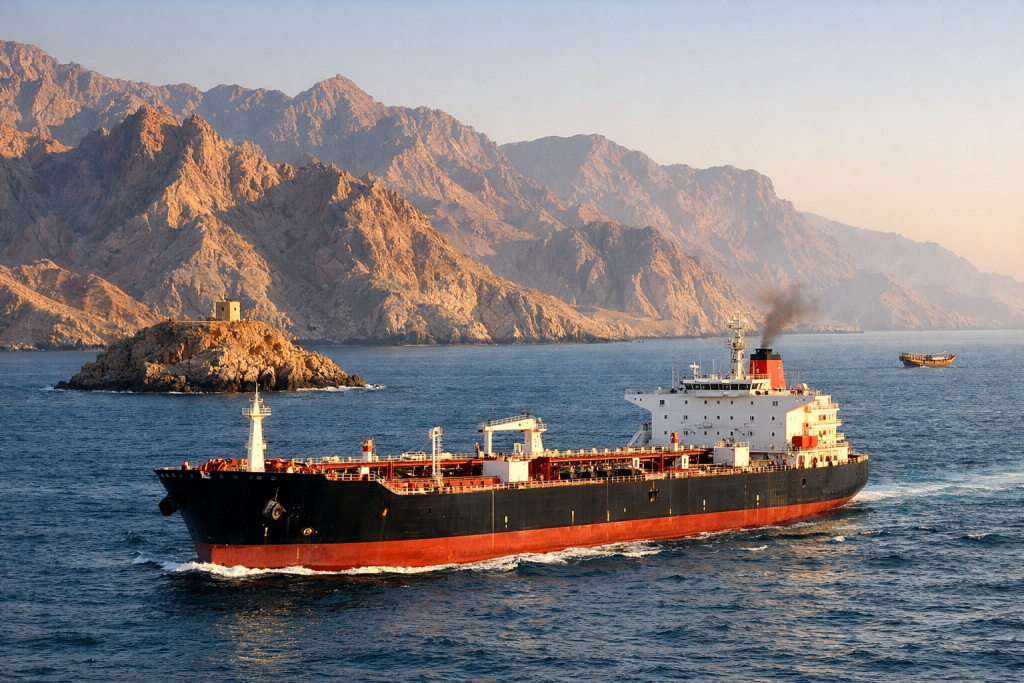
A positive development occurred yesterday: a Liberia-flagged Suezmax tanker, carrying approximately 135,335 metric tonnes of crude oil from Saudi Arabia’s Ras Tanura terminal, successfully docked at Mumbai Port on March 11 after transiting the strait. The vessel, captained by an Indian mariner and reportedly operating in “dark mode” for portions of the journey, represents one of the first India-bound crude arrivals since the restrictions intensified, signalling that limited traffic may be resuming under specific conditions or risk-mitigation measures.
The broader consequences of a sustained Iranian blockade of the Strait of Hormuz would be severe for India’s energy security. The strait facilitates roughly 20-25% of global seaborne oil trade and a substantial share of liquefied natural gas (LNG) shipments. India historically routes 40-50% of its crude oil imports (mainly from Iraq, Saudi Arabia, UAE, Kuwait, and Qatar) and a large portion of its LNG through this chokepoint. A prolonged closure could push global oil prices sharply upward—potentially to $100+ per barrel or higher in worst-case scenarios—driving inflation, widening the current account deficit, and raising costs across fuel, fertilizers, power, and everyday consumer goods.
India has taken proactive steps to reduce vulnerability. Government sources indicate that approximately 70% of crude imports are now sourced or routed through non-strait pathways or from diversified suppliers, with procurement expanded to nearly 40 countries (including significantly increased volumes from Russia following US waivers). Strategic petroleum reserves are being drawn upon to cushion short-term disruptions, and spot purchases of LNG from alternative origins are being arranged. For cargoes originating in the Gulf, the primary alternate sea route involves diverting around Africa’s Cape of Good Hope, which adds 10-14 days to each voyage, increases fuel consumption, and substantially raises freight costs. Limited pipeline bypass infrastructure exists—such as Saudi Arabia’s East-West Pipeline and the UAE’s Habshan-Fujairah line, with combined spare capacity of around 2-3 million barrels per day—but this remains far insufficient to offset a complete Hormuz shutdown.
Cost escalations are already evident and poised to worsen if the situation persists. Maritime war risk insurance premiums have risen dramatically—frequently by 500-1000% or more—with many insurers now providing only voyage-specific quotes that can add millions of dollars per transit in high-risk scenarios. Freight rates have surged to multi-year highs due to vessel scarcity, longer routing, and elevated perceived risks, while bunker fuel prices climb in parallel. These additional expenses flow directly to Indian importers, increasing landed costs for crude, LNG, and petroleum products, with widespread knock-on effects on refining margins, export competitiveness, and domestic inflation.
In summary, while media speculation frames safe passage for Indian ships as a diplomatic success, the lack of official Iranian confirmation and the persistence of regional risks call for measured optimism. With 28 vessels and 778 crew still affected and initial successful arrivals like the recent Mumbai tanker offering some reassurance, India’s diversified sourcing strategy provides a meaningful buffer. Sustained diplomatic engagement, vigilant monitoring, and continued supply-chain adaptation will remain critical to protecting India’s energy security in this fluid and precarious geopolitical environment.