


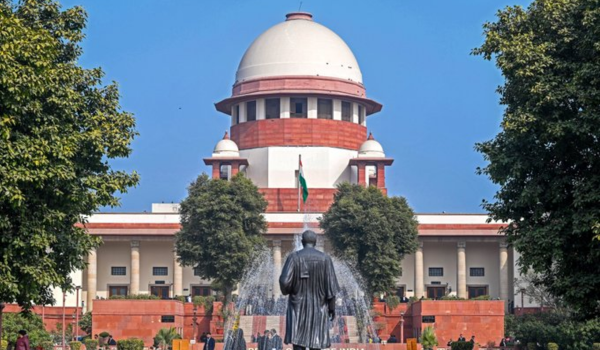
New Delhi: A plea seeking recall of the Supreme Court’s split verdict on the law that governs appointment of the Chief Election Commissioner and Election Commissioners was mentioned on Thursday before Justice Dipankar Datta, who asked the applicant to place it before the Chief Justice of India. The application says Justice Satish Chandra Sharma, the other judge on the Bench, did not disclose that his son is standing counsel for the Election Commission.
The September 23 verdict did not decide whether the Chief Election Commissioner and Other Election Commissioners (Appointment, Conditions of Service and Term of Office) Act, 2023, is valid. It split on a prior question: should that challenge go to a Constitution Bench. Justice Datta held that no such reference was required and recorded prima facie doubts about the selection panel, in which a Union Cabinet Minister nominated by the Prime Minister replaced the Chief Justice. He said a Minister could not be expected to defy the Prime Minister, that the arrangement failed the “perception test,” and that the Leader of the Opposition’s role was largely ornamental. Justice Sharma disagreed, held that a substantial question of constitutional interpretation was involved, and favoured a Bench of at least five judges under Article 145(3). Both judges directed that the papers be placed before the Chief Justice.
The recall plea, moved by petitioners including Dr Jaya Thakur and Naman Sherstra, says that fact was never put to the parties. It states that Siddharth Sharma has been standing counsel for the Election Commission before the Madhya Pradesh High Court since July 10, 2024, that the Bench heard the matter on five occasions, and that Justice Sharma neither disclosed the engagement nor recused. The applicants say they learnt of it from reports published on September 25, checked the High Court record, and now argue that the link creates a reasonable apprehension of bias. They seek recall of Justice Sharma’s opinion and a fresh hearing. They do not ask for Justice Datta’s separate opinion to be wiped out.
Justice Datta, as lead judge on the Bench that delivered the split, declined to deal with the application himself and told the applicant to mention it before the Chief Justice. That is the ordinary route. The September 23 order is already with the Chief Justice for constitution of a larger Bench, and a plea that one half of the split is vitiated has to be listed by the same office.
The practical effect is delay. The 2023 law remains in force. Appointments already made under it are untouched. A final word on whether Parliament could remove the Chief Justice from the panel, and hand the executive a standing majority of two against the Leader of the Opposition, is now further off.
A recall is not the likely end. The Court rarely erases a reasoned opinion on an allegation of non-disclosure, particularly where the son’s retainer is before another court and the Commission is not the principal contestant in the same way as the Union. What is more probable is that the Chief Justice lists the bias application before a different Bench, or folds it into the larger-Bench exercise and has the reference question heard afresh. Either course keeps the validity of the Act undecided for months. The plea will test disclosure, not yet the statute. The statute waits.
****