


From Our Correspondent
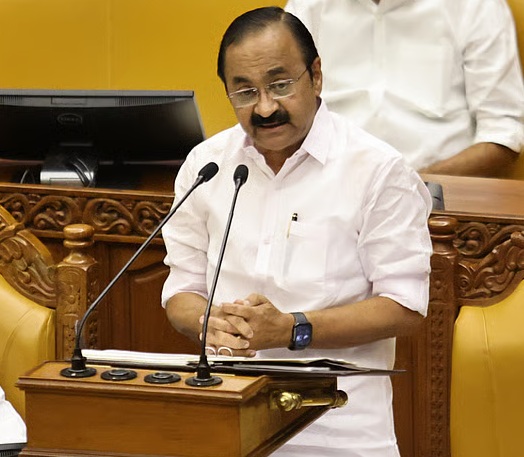
Thiruvananthapuram: Chief Minister V.D. Satheesan, who also holds the Finance portfolio, presented the United Democratic Front (UDF) government’s first revised Budget for 2026-27 in the Kerala Legislative Assembly today. The budget comes against the backdrop of significant fiscal stress, including a public debt of approximately ₹5.07 lakh crore, accumulated liabilities of around ₹87,012 crore, and committed expenditures (salaries, pensions, and interest) consuming about 77% of revenue receipts. Despite these constraints, the government has prioritised welfare continuity, infrastructure push, and long-term economic revival through targeted public spending.
The revised Plan Outlay has been adjusted downward from ₹35,750 crore to ₹30,370 crore due to a revenue shortfall of about ₹20,500 crore in central grants. Yet, the budget maintains robust allocations for key social and developmental sectors, signalling the new government’s commitment to people-centric governance while laying foundations for “Puthuyuga Keralam” (New-age Kerala). No new major taxes were announced, with focus instead on rationalisation, resource mobilisation, and efficiency.
Highlighting Public Spending: Welfare and Social Security at the Core
Public spending remains a cornerstone, with substantial outlays directed towards social security and vulnerable sections. The government has earmarked ₹14,500 crore for social security pensions, continuing the ₹2,000 monthly pension for beneficiaries. Additional measures include ₹1,000 monthly cash assistance for women in the care economy, increased honorariums for Anganwadi workers (by ₹1,000), ASHA workers (to ₹12,000), literacy instructors, and noon-meal workers. Free KSRTC travel for women and transgender persons has been allocated ₹600 crore.
In healthcare, total allocation for Medical Care and Public Health stands at ₹2,076.02 crore. A flagship initiative is the ‘Oommen Chandy Arogya Suraksha’ (health insurance) scheme, offering up to ₹25 lakh coverage per family, with an initial ₹10 crore allocation. Other spends include ₹100 crore for Kerala Health and Life Sciences City, upgrades to medical colleges, mobile testing labs, and support for diabetes care in children.
Education sees ₹1,477.57 crore in general education spending, alongside new initiatives like ₹100 crore for Kerala Knowledge Valley, collaborations with foreign universities, and skill development programmes.
Infrastructure and Economic Development: Major Allocations
Infrastructure receives significant public investment to drive growth. The Public Works Department gets the highest sectoral allocation at ₹5,952.29 crore, supporting roads and bridges. Transport sector allocation is ₹1,578.83 crore.
The standout announcement is Mission Samudra, a ₹400 crore programme to transform Kerala’s 600-km coastline into a global maritime hub. This includes integration of ports, inland waterways, and logistics, with supporting allocations such as ₹50 crore for the Southern Kerala Economic Corridor, ₹100 crore for the Rare Earth and Critical Minerals Corridor, and plans for Vizhinjam as a green port. Additional infra pushes include aviation growth (₹200 crore mentioned in reports), film city in Kochi (₹100 crore), and tourism (₹325.36 crore).
Rural Development gets ₹2,138.80 crore, while Agriculture and Allied Sectors receive ₹1,534.98 crore, including support for rubber at ₹250/kg, dairy, fisheries (₹200.93 crore), and cashew. Industry allocation is ₹1,115.48 crore, with ₹100 crore for a Kerala MSME Growth Scheme targeting 10,000 new enterprises. SC Sub Plan: ₹2,979.32 crore; Tribal Sub Plan: ₹859.48 crore. Water Supply and Sanitation: ₹895.59 crore; Energy: ₹1,284.75 crore; Irrigation and Flood Control: ₹559.39 crore.
Land Reforms 2.0, including land banks, faster conversions, and pattayams for coastal and hilly residents, aims to unlock economic potential without heavy new spending.
Challenges and Outlook
The budget acknowledges inherited fiscal challenges but positions public spending as an investment in human capital and growth engines like maritime economy, knowledge sectors, and MSMEs. Critics may point to the high debt servicing burden, but proponents highlight the welfare-infrastructure balance and reforms like Invest Keralam for private participation.
In summary, Kerala’s revised 2026-27 Budget, with its focused public expenditure exceeding thousands of crores in key areas, seeks to navigate immediate constraints while building a resilient, inclusive future. Total revenue receipts are projected around ₹1.69 lakh crore, with expenditure carefully calibrated for sustainability. As the UDF government’s maiden fiscal document, it sets the tone for governance emphasising transparency, welfare, and visionary development.
