


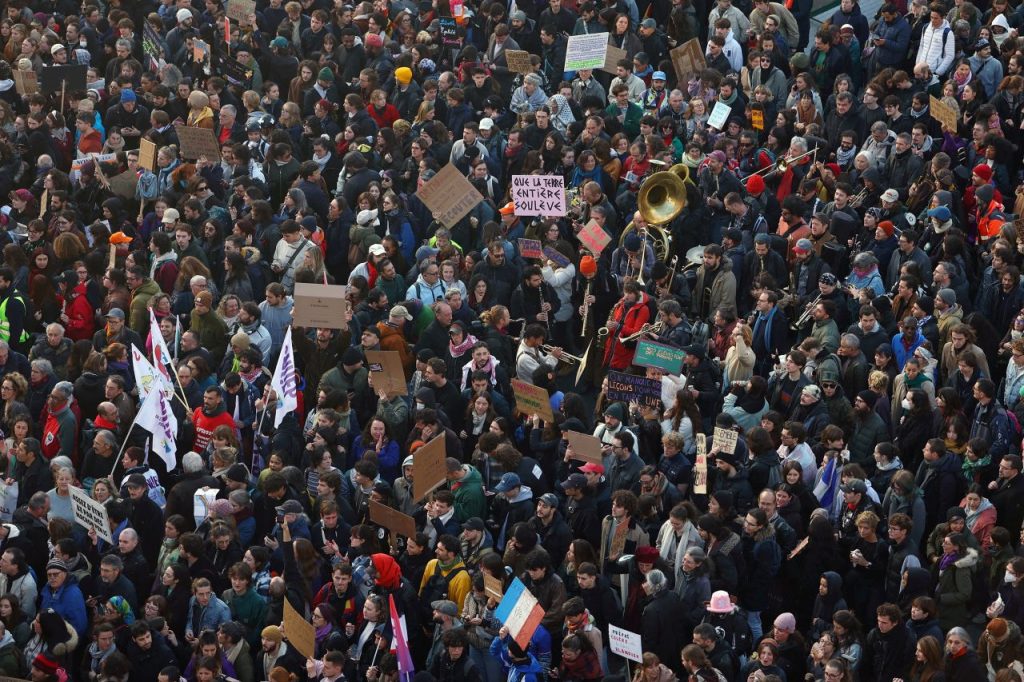
Paris: Around 600,000 people took to the streets across France on Thursday in the largest single day of demonstrations since a wave of unrest began in September, according to an initial estimate by the French Interior Ministry reported by BFM TV.
The turnout marked a clear escalation of protests that started with high-school students highlighting poor conditions in schools and universities and later expanded to include trade unions, workers, retirees and others angered by stagnant wages, rising living costs and underfunded public services. The hard-left CGT union put the figure far higher, at nearly 1.6 million nationwide, including an estimated 350,000 in Paris alone.
Five major unions called the day of action, demanding immediate pay rises, better pensions and more resources for schools, hospitals and other services. The CGT pressed for a 10 percent increase in the minimum wage; the CFDT sought a rise of at least €100 net per month. Student groups continued to call for substantially higher education spending and improvements to overcrowded and poorly maintained facilities.
The marches largely remained peaceful under a heavy police presence of some 70,000 officers. Still, incidents occurred in several cities. In Lyon, a car was set on fire amid clashes involving radical groups; near Toulouse a school was damaged by fire. Skirmishes and the use of tear gas were also reported in places including Nantes and Marseille. Authorities later noted that the overall level of disorder was lower than on the particularly violent day of protests on 17 October, when more than 2,000 shops were looted and public buildings attacked.
Public-sector participation was significant though not total. Roughly 16 percent of teachers walked out, nearly one-third of higher-education institutions faced disruption, and almost 10 percent of state civil servants joined the strike. Transport largely continued, with most high-speed TGV trains running, though some regional services and tourist sites—including the Eiffel Tower—closed or operated with reduced capacity.
The demonstrations place fresh pressure on Prime Minister Sébastien Lecornu’s government as it struggles to pass a budget through a divided parliament amid high public debt and weak growth. Lecornu responded by announcing he would convene a “social conference” with unions and employers early the following week. The unrest also coincides with the start of the campaign to succeed President Emmanuel Macron, who is constitutionally barred from seeking another term; the far right currently leads opinion polls.
Thursday’s numbers exceeded earlier peaks in the current cycle—around 550,000 on 17 October and lower figures on subsequent weekends—suggesting the movement retains momentum even on a weekday. Whether the planned social talks produce concrete concessions on wages and services, or further days of action follow, will shape the political and economic outlook in the months ahead.