


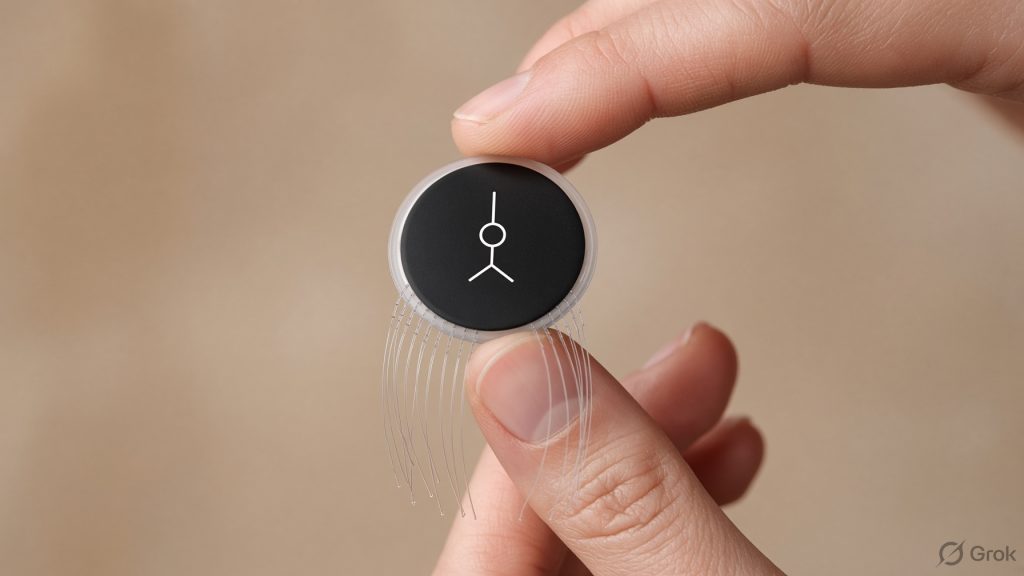
Neuralink has announced that the U.S. Food and Drug Administration had authorised the LINK Pivotal Study, the first pivotal clinical trial of an implantable brain-computer interface in the United States. The trial will test the safety and effectiveness of the company’s N1 implant in adults with severe paralysis caused by amyotrophic lateral sclerosis (ALS).
The clearance advances Neuralink beyond its earlier feasibility studies. More than 30 participants in the United States, Canada and the United Kingdom have already received the implant and together accumulated thousands of hours of real-world use. They have controlled computer cursors and keyboards, communicated with family, studied, created and played games solely through neural signals. LINK is designed to produce the more rigorous evidence typically required for a future marketing submission. It will measure functional gains in daily independence while tracking long-term safety and device reliability at multiple clinical sites.
ALS progressively destroys motor neurons, often leaving patients unable to move their arms or hands while cognitive function remains intact. The N1 implant is placed in the motor cortex by Neuralink’s R1 surgical robot. It records the neural patterns linked to intended hand movements; participants then learn to convert those signals into control of digital devices. Enrolment is open for eligible U.S. adults who have little or no useful arm function because of ALS. Candidates undergo screening and brain imaging and must have a consistent caregiver. The device remains investigational: authorisation to run the trial is not approval to market or widely distribute the implant.
For patients, the practical stakes are clear. Earlier ALS participants have already shown they can type and interact with technology without physical movement. A pivotal trial widens the opportunity to test whether those abilities hold under formal endpoints and over longer follow-up. Company statements have referenced a planned cohort of roughly 20 participants, with primary measures assessed within the first months, though full protocol details are expected on ClinicalTrials.gov.
The announcement arrives amid expanding but still cautious brain-computer-interface research. Other systems are under study, and open questions persist about long-term durability, signal stability, surgical risk and access. Neuralink has also pursued speech-related work and holds Breakthrough Device designations for certain indications; those designations can accelerate review but do not equal clearance. The company thanked existing participants, families, clinicians and regulators, noting that broader availability will depend on the data LINK generates.
In short, the trial moves Neuralink from early safety checks toward the evidence package needed for potential commercialisation in the ALS population. Positive results are not assured—pivotal studies can expose limitations that smaller trials miss. Yet for people whose disease has taken their hands and voice while leaving their minds intact, the opening of a U.S. pivotal study is a concrete expansion of possibility. Enrolment has begun, and the next phase of evidence collection is under way.