


By Suresh Unnithan
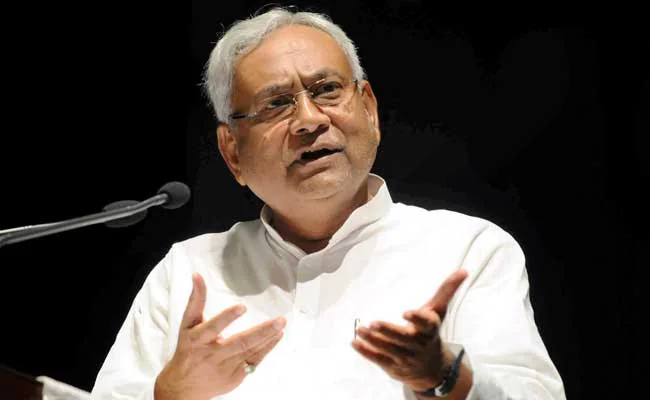
Bihar Chief Minister Nitish Kumar took oath as a Rajya Sabha member on April 10, 2026. His voice was steady but frame frailer than the man who once commanded the state’s destiny for over two decades. Administered by Vice President C.P. Radhakrishnan in a low-key chamber ceremony, the event was attended by heavyweights from both JD(U) and BJP – Union Minister JP Nadda, Lalan Singh, and even deputy CMs Samrat Choudhary and Vijay Sinha. Yet beneath the ritual bonhomie lay a seismic shift: Nitish, Bihar’s longest-serving Chief Minister, was formally stepping onto the national stage while preparing to vacate the Patna throne he had occupied through ten tumultuous terms.
By April 14 – today – the endgame is unfolding. Nitish has already held what sources call his “last cabinet meeting,” and his resignation as CM is imminent, possibly as early as this evening or tomorrow. The NDA, which swept the 2025 Bihar polls under his leadership just four months ago, is poised to install a new Chief Minister – most likely BJP’s Samrat Choudhary, paving the way for the saffron party’s first-ever CM in the state. The man nicknamed “Sushasan Babu” for his development rhetoric and prohibition gambit is walking away from the very laboratory where he engineered caste arithmetic, infrastructure leaps, and endless alliance flips.
On the surface, Nitish’s exit looks graceful – a veteran acknowledging he has “completed much of his work in Bihar” and now wants to focus on “national responsibilities,” as he told reporters before boarding the flight from Patna to Delhi. But scratch the veneer, and the move reeks of classic Nitish realpolitik laced with quiet desperation. For years, the BJP had chafed under his veto power in the coalition. After the 2025 landslide, whispers grew louder: Amit Shah’s strategists wanted a more pliable face in Patna, one unburdened by Nitish’s mercurial ego and history of midnight betrayals. The Rajya Sabha ticket, offered unopposed in March, was less a reward than a gilded cage – a constitutional nudge to force him out of the Legislative Council (from which he resigned on March 30) and, eventually, the CM’s chair. Critics within the opposition and even some JD(U) voices call it Modi-Shah’s long-delayed revenge on the man who twice dumped the NDA when it suited him.
Yet Nitish Kumar has never been one to play victim. At 75, with a career spanning socialist roots, anti-Congress alliances, and multiple dalliances with both Lalu Prasad Yadav’s RJD and the BJP, he is the ultimate political chameleon. Is this Delhi shift the opening gambit in a larger endgame? Insiders in the capital are already speculating. Nitish arrives in New Delhi not as a spent force but as a free agent with a formidable caste network still intact in Bihar and a national profile that opposition parties cannot ignore. He has left behind a JD(U) that remains a crucial NDA partner but now risks being reduced to a junior appendage under a BJP CM. The party’s working president, Sanjay Jha, accompanied him to the oath-taking, signalling that Nitish retains control of the organisational levers.
The bigger question haunting Lutyens’ Delhi: is Nitish plotting a grand alliance redux? His past flirtations with the INDIA bloc – the very coalition he abandoned before the 2025 polls – suggest he never truly burned those bridges. With the 2029 Lok Sabha polls looming and murmurs of fatigue within the ruling dispensation after two terms of Modi dominance, Nitish could position himself as the elder statesman capable of stitching together a non-Congress, non-BJP front. A “federal front” of regional satraps – Mamata Banerjee, Arvind Kejriwal, even a chastened Akhilesh Yadav or a pragmatic Chandrababu Naidu – might find in him the one leader who understands the arithmetic of anti-incumbency better than anyone. Revenge, after all, is a dish best served from the Rajya Sabha benches, where he can critique central policies without the daily grind of Patna’s law-and-order files.
Critics, however, see delusion rather than destiny. Nitish’s health has visibly declined; his reliance on aides during the oath-taking ceremony was evident. Bihar’s ground reality remains unforgiving – caste faultlines are sharpening, youth migration continues unabated despite his much-touted schemes, and prohibition has bred its own black economy. Handing Bihar to the BJP on a platter may have been his only realistic option to avoid an internal revolt or worse, an outright split in JD(U). By moving to Delhi, he escapes immediate accountability for the state’s mounting challenges while preserving the myth of indispensability. Yet history shows Nitish’s “big games” often end in smaller chairs: from potential kingmaker to junior partner, from CM to mere MP.
As Nitish settles into his new Rajya Sabha seat, the real test begins. Will he use the Upper House as a pulpit to rebuild his national stature and orchestrate a late-career resurrection? Or is this the dignified fade-out of a man who outlasted every rival only to be outmanoeuvred by the very alliance he helped sustain? In Bihar, the transition feels less like a handover and more like a quiet conquest by the BJP. In Delhi, the old fox is once again rewriting the script – or so he hopes. The coming months will reveal whether this is Nitish Kumar’s final masterstroke or the beginning of his political twilight. One thing is certain: in Indian politics, no resignation is ever truly final, and no alliance is ever truly dead. The man who made “Paltu” a byword for pragmatism knows that better than most.