


Gurugram: Doctors at Paras Health Gurugram have successfully treated a 72-year-old man suffering from liver cancer and severe benign prostatic hyperplasia (BPH), an age-related enlargement of the prostate gland, through a single minimally invasive angiographic procedure. The case highlights how image-guided treatments are expanding options for patients with complex medical conditions who cannot undergo conventional surgery.
The patient, a resident of Srinagar, had been dealing with severe urinary problems for over two years, including painful urination, extreme urgency, and frequent night-time urination up to eight to ten times daily. Despite prolonged medical treatment, prostate surgery was ruled out due to chronic liver disease and cirrhosis, which significantly increased the risks associated with general anesthesia. Following a recent diagnosis of liver cancer at Paras Health Srinagar, he was referred to the hospital group’s Gurugram unit for advanced interventional care.
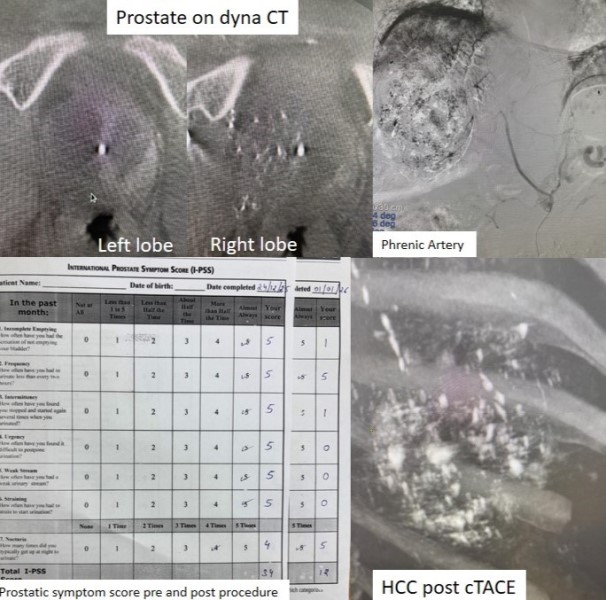
While preparing the patient for trans-arterial chemoembolization (TACE), a minimally invasive procedure that delivers targeted chemotherapy directly to a liver tumor through blood vessels, doctors identified a grossly over-distended bladder on imaging. This finding indicated a critical bladder neck obstruction due to prostate enlargement. As angiographic access to the blood vessels had already been established, the interventional radiology team took a clinical decision to address both conditions during the same session.
After completing TACE for the liver cancer, the team proceeded with prostatic artery embolization (PAE), a procedure in which blood flow to the enlarged prostate is reduced by blocking specific arteries. This causes the prostate to gradually shrink, relieving pressure on the urinary passage and improving symptoms without the need for open surgery.
Dr. Abhay Kapoor, Director – Interventional Radiology, Paras Health Gurugram, said, “The clinical challenge in this case was not just treating two conditions, but doing so safely in a patient who could not tolerate surgery or anesthesia. Image-guided interventions enabled us to manage liver cancer and relieve severe urinary obstruction through the same vascular route, minimizing risk while delivering meaningful symptom relief within days.”
The combined procedure lasted approximately three hours. The patient was admitted on 23rd December 2025, underwent the intervention the following day, and was discharged on the third day after his liver function parameters stabilized. At follow-up on 1st January, his International Prostate Symptom Score (IPSS), a standard measure of urinary symptoms, had reduced sharply from 34, indicating severe symptoms, to 12 within seven days, an improvement seen earlier than the usual two to three weeks expected after PAE.
The patient experienced no procedural complications and was discharged in stable condition with antibiotic cover. Doctors do not anticipate any complication related to the prostate procedure. Clinicians noted that such outcomes reflect the growing role of angiographic and percutaneous techniques in managing conditions such as liver cancer and age-related prostate enlargement, particularly in elderly and medically complex patients who are not suitable candidates for open surgery.
Building on this clinical approach, Paras Health Gurugram continues to strengthen its interventional radiology and minimally invasive care capabilities, with a focus on managing complex, multi-morbidity cases through precision-led, image-guided therapies. Its multidisciplinary care model integrates expertise across oncology, urology, hepatology, and interventional radiology to design individualized treatment pathways. Through sustained investment in advanced technology and clinical expertise, the hospital remains committed to improving outcomes and quality of life for patients with complex medical needs.