


By Geetha V P
Brazil has always been football’s greatest story. Five World Cup titles (1958, 1962, 1970, 1994, 2002) make the Seleção the most successful nation in history. They are the only country to appear in every tournament since 1930, and their yellow shirt has come to symbolise Jogo Bonito — the beautiful game played with joy, creativity and individual brilliance. From Pelé’s teenage genius in Sweden to the majestic 1970 side that many still call the greatest ever assembled, Brazil has repeatedly redefined what is possible on a football pitch.
Yet even legends must evolve. After a 24-year wait for a sixth star, the current Brazil national team under Carlo Ancelotti is undergoing a profound and necessary transformation. The old reliance on pure individual flair and moments of magic — while thrilling — sometimes left the team vulnerable when organisation and consistency were required. Ancelotti, the most decorated club coach in history and the first foreign manager to lead Brazil at a World Cup, has introduced a more structured, balanced and European-style approach without extinguishing the samba spirit.
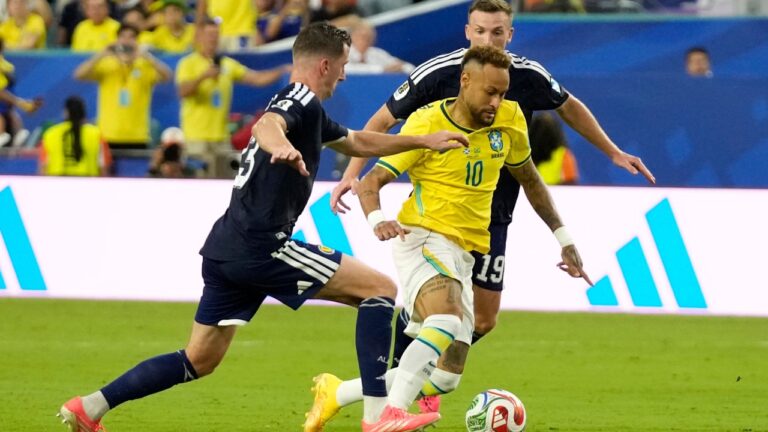
This is not about abandoning Brazil’s identity. It is about giving that identity a stronger framework. The dazzling dribbles and instinctive genius of players like Vinícius Júnior are now supported by tactical discipline, high pressing, compact defensive shape and intelligent midfield control. The team operates with clearer plans — A, B and C — rather than depending solely on individual inspiration to rescue matches. Full-backs push with purpose, midfielders shield and progress the ball, and the forward line interchanges fluidly. The result is a side that is tactically complete, physically robust and mentally resilient.
History shows why this evolution matters. The glorious 1970 team combined genius with organisation and won every match. The 2002 side, led by a reborn Ronaldo, blended flair with ruthless efficiency to lift the trophy. But in more recent decades, Brazil sometimes struggled when opponents sat deep or when individual brilliance was neutralised. The 1-7 semi-final trauma of 2014 and quarter-final exits in 2018 and 2022 were painful reminders that talent alone is no longer enough in modern international football.
Ancelotti’s Brazil learns from those lessons while honouring the past. The mythological “fear factor” of previous generations may have evolved, but in its place stands something more formidable: a reputation built on substance. Opponents no longer face a chaotic carnival of talent; they face a well-drilled machine capable of grinding out results or exploding into life. This unpredictability within structure is perhaps more dangerous than raw flair alone.
The squad depth reinforces this new identity. Europe-based stars bring tactical intelligence and physical conditioning, while exciting young talents integrate seamlessly. Set-piece execution has sharpened, game management has improved, and the collective mentality — team over individual — creates the togetherness sometimes missing in earlier eras. This is a group built for the long haul of a major tournament.
As Brazil prepares for the 2026 World Cup on North American soil, the pieces are in place for a deep run — and perhaps the end of the long drought. Ancelotti has given the Seleção a blueprint that respects its glorious history while equipping it for the demands of the present. The beautiful game has not been lost; it has been refined and strengthened.
Five stars already shine on the Brazilian badge. Under Carlo Ancelotti, this new-look Seleção carries both the weight of legacy and the tools to add a sixth. The kings are evolving — and they are ready to reign again.