


By Suresh Unnithan
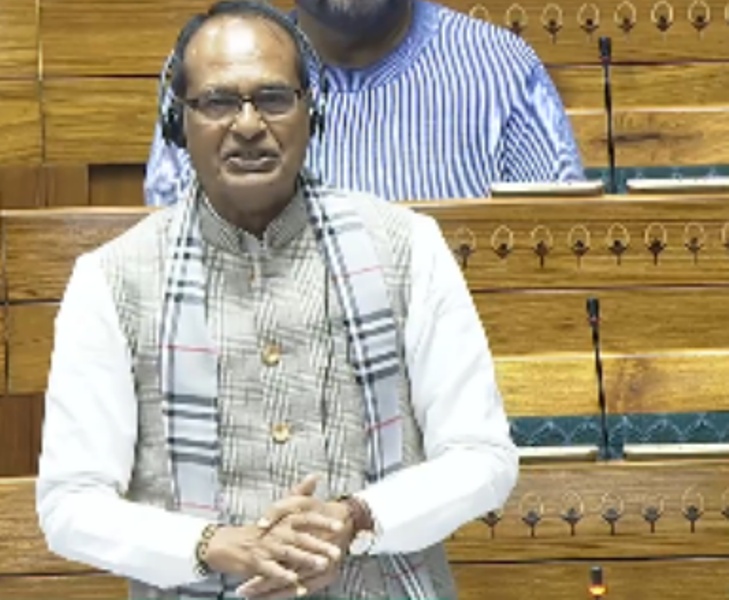
The Narendra Modi government’s introduction of the Viksit Bharat – Guarantee for Rozgar and Ajeevika Mission (Gramin) (VB-G RAM G) Bill, 2025 in the Lok Sabha on December 16, 2025, has unleashed a storm of protests. This legislation repeals the iconic Mahatma Gandhi National Rural Employment Guarantee Act (MGNREGA) of 2005 and replaces it with a framework promising 125 days of annual wage employment for rural households. While Rural Development Minister Shivraj Singh Chouhan hailed it as an upgrade aligning with “Viksit Bharat @2047” and realizing Gandhi’s vision of Ram Rajya, opposition parties erupted in fury over the deliberate removal of Mahatma Gandhi’s name, branding it an ideological assault on the Father of the Nation’s legacy.
The bill’s provisions appear progressive at first glance: extending guaranteed days from 100 to 125, prioritizing water security, rural infrastructure, livelihoods, and climate resilience; aggregating works into a national “Viksit Bharat National Rural Infrastructure Stack”; institutionalizing convergence via gram panchayat plans; and retaining unemployment allowances and central wage notifications. Chouhan emphasized higher Modi-era spending (over ₹8.53 lakh crore versus UPA’s ₹2.13 lakh crore) and a ₹1.51 lakh crore allocation, claiming it empowers villages toward self-reliance.
Yet, beneath the rhetoric lies a more troubling reality. Critics, including Congress leaders Priyanka Gandhi Vadra and Rahul Gandhi, argue the bill fundamentally dilutes MGNREGA’s rights-based, demand-driven ethos. The original Act was universal and flexible, with the Centre funding 100% of wages and most materials, scaling budgets to actual demand. The new bill shifts to supply-driven “normative allocations” set centrally, potentially capping funds and excluding needy areas. It introduces a 60-day “pause” during peak agricultural seasons, ostensibly to ensure farm labor availability—but effectively reducing effective guarantees. Funding ratios tilt toward states (up to 40% burden), straining fiscally weak governments amid pending dues and wage delays that already plague MGNREGA workers.
These changes risk weakening the safety net for India’s rural poor, who rely on it during distress. Persistent issues like delayed payments (often months-long), leakages, and underutilization have worsened under the current regime, with person-days generated declining in recent years despite claims of higher spending. Inflation-adjusted comparisons show UPA investments were substantial, and Modi’s tenure has seen bureaucratic hurdles, Aadhaar exclusions, and politicized implementation—issues the new bill’s tech-heavy “modernization” (AI audits, GPS monitoring) may exacerbate rather than resolve.
The most explosive element, however, is the erasure of Gandhi’s name. Opposition MPs stormed the Well of the House holding Gandhi’s portraits, with Priyanka Gandhi calling it Modi’s “deep hatred” for Gandhian ideals and the poor’s rights. K.C. Venugopal accused the government of hypocrisy, while Shashi Tharoor deemed it an “assault on the spirit” of the program. The acronym “VB-G RAM G” subtly evokes “Ram Rajya,” a term Gandhi used for equitable justice but increasingly co-opted by Hindutva narratives. This isn’t isolated: similar renamings of Nehru-era institutions reflect a pattern of diminishing Congress legacies while imprinting BJP’s ideological stamp.
But why provoke such backlash now? Herein lies the cynicism. By foregrounding Gandhi’s name removal, the government has masterfully shifted focus from the bill’s substantive dilutions—centralization, reduced guarantees, fiscal burdens on states—to a symbolic culture war. The predictable outrage dominates headlines, allowing core concerns like weakened worker rights, potential underfunding, and threats to federalism to fade into the background. It’s a classic diversion tactic: ignite a controversy over heritage and ideology to deflect scrutiny from policy flaws that could harm millions in rural India.
This strategy aligns with broader governance patterns. Amid economic slowdowns, farmer distress, and unemployment critiques, stirring emotive debates on history and symbols rallies the base while fragmenting opposition. As Ashok Gehlot noted, it reveals a “petty mindset.” Even within the NDA, murmurs of unease suggest electoral risks in rural strongholds where MGNREGA remains a lifeline.
Parliamentary chaos ensued, with adjournments and demands for standing committee review. Yet, the bill’s rushed introduction—without wider consultation—underscores urgency to rebrand a Congress flagship as Modi’s “Viksit” vision ahead of key elections.
In conclusion, the VB-G RAM G Bill may promise more days and durable assets, but its hidden costs—eroded rights, centralized control, and ideological overreach—threaten rural India’s resilience. By weaponizing Gandhi’s name removal to spark diversionary controversy, the government evades accountability for potentially dismantling a proven safety net. True progress toward Viksit Bharat demands inclusive, rights-affirming policies, not symbolic erasures that divide while distracting from the real struggles of the poor. If this bill passes unchecked, it won’t just rename a scheme—it risks rewriting the compact between the state and its most vulnerable citizens, all under the guise of development.