


By Suresh Unnithan
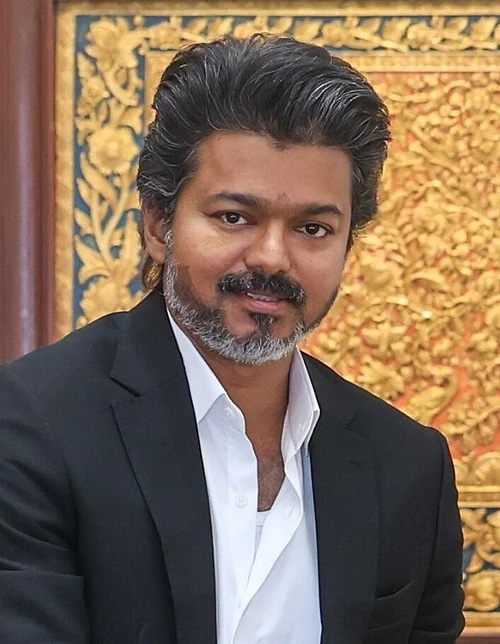
In the vibrant political arena of Tamil Nadu, C. Joseph Vijay, fondly called Thalapathy by his legions of fans, has stepped into a new role that transcends his cinematic legacy. Sworn in as Chief Minister on May 10, 2026, Vijay has used his first three weeks in office to signal a profound commitment to reforming politics from within. Far from the usual fanfare of power, he has chosen deliberate simplicity: arriving at the Secretariat in his personal car, sustaining himself with home-cooked meals, residing in his own unpretentious house, and instructing his MLAs to avoid draining public funds for personal luxuries or cavalcades. His early governance moves reflect this sincerity—ordering the closure of 717 TASMAC liquor shops near schools, colleges, places of worship, and bus stands to protect youth and families; fulfilling the promise of 200 units of free electricity to households on day one; launching a special anti-drug task force and a dedicated women’s protection force; and initiating review meetings on state finances with a vow to publish a transparent White Paper. These actions underscore Vijay’s genuine intentions: to reform a broken system by prioritising public welfare and refusing to live off public money for personal needs. In doing so, he challenges the entrenched culture where many leaders enter politics from modest backgrounds only to accumulate wealth and embrace lavish lifestyles at the taxpayer’s expense.
Vijay’s approach is rooted in a clear philosophy—that public office is a platform for service, not self-enrichment. Having built his fame through roles depicting justice and integrity on screen, he now appears determined to translate that into reality. By explicitly stating he will not touch public money for his personal requirements, Vijay sets himself apart from the norm. Too often, politicians who once lived as ordinary citizens—sons of farmers, clerks, or daily wage earners—transform into figures of opulence once in power. They justify fleets of luxury vehicles, extravagant renovations of official residences with imported furnishings, frequent foreign trips costing crores, and oversized security details as essential perks. Public funds, extracted through taxes from struggling citizens, get diverted to sustain these lifestyles while basic infrastructure crumbles and essential services lag. Vijay’s rejection of this pattern sends a powerful message: genuine reform begins with personal example, freeing up resources for the people rather than padding elite comforts.
This commitment finds a strong resonance in India’s own history through the exemplary life of Lal Bahadur Shastri, a towering figure of simplicity and integrity. Born into poverty in 1904, Shastri rose through the ranks of the freedom struggle under Mahatma Gandhi’s influence, enduring imprisonment and hardship without seeking personal gain. As India’s second Prime Minister from 1964 to 1966, during a period of war with Pakistan and severe food shortages, Shastri displayed extraordinary moral courage. He famously appealed to the nation to observe one meal-less day every week to conserve food grains for the needy—and strictly followed this in his own home, where his family lived with utmost frugality. Shastri refused to exploit official privileges; he even took personal loans to meet family needs like purchasing a car rather than burdening the public exchequer. His leadership focused relentlessly on the welfare of soldiers and farmers, encapsulated in the immortal slogan “Jai Jawan Jai Kisan.” When he passed away in 1966 in Tashkent, he left behind no personal wealth, properties, or legacies of luxury—only a shining example of ethical governance. Shastri’s life stands as a powerful Indian beacon, proving that a leader can command national respect through sacrifice and service rather than splendour. Vijay’s early decisions echo this legacy, using personal restraint to build public trust and channel resources toward social protections and transparency, much like Shastri directed efforts toward national self-reliance.
On the global stage, Vijay’s model draws even sharper parallels with leaders who embraced radical austerity to drive meaningful reform, highlighting how personal simplicity can become a catalyst for broader change. José Mujica, President of Uruguay from 2010 to 2015, remains one of the most inspiring examples of this philosophy in modern times. A former Tupamaro guerrilla who survived 13 years of harsh imprisonment, including solitary confinement, Mujica entered office with a deep-seated belief in equality. Upon becoming president, he rejected the opulent presidential palace and chose instead to live in his modest farmhouse on the outskirts of Montevideo, where he personally tended to his flower garden and vegetable patch alongside his wife. He drove a battered 1987 Volkswagen Beetle, maintained minimal security consisting of just two officers and his three-legged dog, and donated nearly 90 percent of his presidential salary to charity, housing projects for the poor, and support for small entrepreneurs. Mujica’s governance was marked by progressive yet pragmatic reforms: he legalised marijuana to undermine illegal cartels and generate revenue for social programs, advanced same-sex marriage, raised the minimum wage significantly, and expanded access to education and healthcare while keeping a firm grip on fiscal responsibility. His austerity was not symbolic theatre but a genuine tool for reform, proving that by refusing to live lavishly on public money, leaders can redirect focus and funds toward citizens’ real needs. Vijay’s insistence on home-cooked meals, personal vehicles, and rejection of cavalcades mirrors Mujica’s approach, underscoring a shared vision that authentic political reform demands leaders who live among the people rather than above them.
Equally compelling is the revolutionary example set by Thomas Sankara, the charismatic leader of Burkina Faso from 1983 to 1987. Rising to power through a military coup at the young age of 33, Sankara quickly transformed into one of Africa’s most visionary and austere statesmen. He immediately slashed government salaries, including his own, banned first-class air travel and luxury imports for all officials, sold off the government’s fleet of Mercedes-Benz cars, and required ministers and civil servants to use modest Renault vehicles or bicycles. Sankara lived humbly in a simple home, wore locally made clothing, and rejected all forms of personal extravagance. He mobilised the entire nation for self-reliance, launching massive literacy campaigns that dramatically reduced illiteracy, nationwide vaccination programs that saved thousands of children’s lives, land reforms to empower peasants, and aggressive efforts toward food sovereignty and infrastructure development through citizen participation. His famous declaration that “he who feeds you, controls you” drove policies aimed at breaking cycles of dependency. Though his transformative rule was tragically cut short by assassination in 1987 amid internal and external opposition, Sankara’s legacy endures as a symbol of how rejecting elite privileges on public money can unleash rapid social progress. Vijay’s swift actions—such as curbing liquor proliferation near sensitive sites to protect vulnerable populations and establishing women’s safety mechanisms—reflect a similar urgency and people-first mindset, highlighting his genuine drive to reform politics by prioritising citizen welfare over personal comfort.
What elevates Vijay’s early tenure is the cautionary signal it sends to political leaders across India and the world. In democracies where public money is meant to serve the collective good, too many enter politics with humble origins only to emerge wealthy and entitled. They convert official bungalows into palaces adorned with imported luxuries, maintain fleets of high-end vehicles with massive security details, and indulge in foreign trips that drain crores from the exchequer. This betrayal of public trust diverts funds that could otherwise build robust schools, equip hospitals, improve irrigation, or create sustainable jobs. Vijay’s model, illuminated by the shining examples of Shastri’s principled frugality, Mujica’s humble dedication, and Sankara’s revolutionary restraint, warns that such practices are increasingly unsustainable. An awakened citizenry is watching and comparing: leaders who preach sacrifice but practise excess risk losing credibility in an era demanding authenticity.
Though only three weeks have passed, Vijay’s focus on transparency and immediate welfare suggests a path of sustained reform. His celebrity-driven rise amplifies this message, inspiring voters to hold all representatives to higher standards. By highlighting these global and Indian icons of simplicity, Vijay reminds us that true leadership has always thrived on integrity rather than indulgence.
In essence, Thalapathy Vijay is actively seeking to reshape the very nature of power. His genuine intentions to reform politics by rejecting life on public money position him as a bridge between on-screen heroism and real-world change. As he navigates Tamil Nadu’s challenges, the legacies of Shastri, Mujica, and Sankara serve not just as comparisons but as beacons reinforcing his path. For politicians clinging to luxury funded by taxpayers, the message is unmistakable: the era of unchecked entitlement is under scrutiny. The people are watching, and in this unfolding drama, simplicity and service may well define the future of governance.