


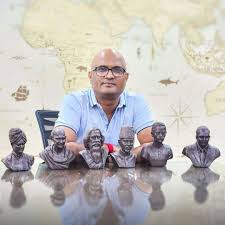
By Naresh Kumar Kumawat Director, Matu Ram Art Centres
When we talk about wellness, we measure it with healthy meals, daily movement, hydration goals, or sleep schedules. But, there is another essential for wellbeing. One that silently shapes our emotional state every single day.
And that is art.
The simplest of things could subtly change people’s mood and mental clarity, because the spaces we surround ourselves with matter. They affect the way we think, feel and function in the society we live in.
So, it is safe to say that while diet nourishes the body and exercise strengthens physical health, art is something equally important that takes care of the spirit within.
While living in a fast-paced world dominated by speed, screens and overstimulation, surrounding oneself with art could be bigger than any luxurious lifestyle. And art could be found everywhere, even in the smallest of objects.
Art as an Emotional Anchor
When talking about art, it is necessary to establish that its impact goes far beyond creativity. Art has always been associated with expression, but its impact goes far beyond creativity. There are several studies and therapeutic practices that show that people engaging with art can find their stress reducing and emotional regulation improving. It could be either by creating something or simply experiencing an art form, and it will encourage mindfulness.
The reason behind people feeling calmer in thoughtfully curated spaces is due to the stimulation from colour, textures, forms and visual harmony. All of these elements affect the nervous system subtly but in significant ways. During chaotic daily routines, things like soft lighting, meaningful artwork, or music with emotional resonance can offer a sense of grounding to an individual.
The Psychology of Beautiful Spaces
Mental wellbeing is directly related to the interior environments. It can directly affect the mood or stress level of an individual. Where aesthetically pleasing environments can bring calmness and focus, sterile, cluttered or emotionally disconnected environments can increase stress levels.
This is why hospitals are increasingly integrating artwork into patient rooms, and offices are investing in creative interior design. And not only that, even the homes with personal artistic touches give more comfort than those with perfectly polished interiors, because ‘Art’ humanises space.
Most importantly, art doesn’t have to mean expensive gallery pieces. Art is everywhere. It could be a wall filled with family photos or children’s drawings, creating emotional warmth in the homely spaces. Elements like handwoven textiles and ceramics collected during trips could also transform the entire vibe of the room.
Creativity Is a Human Need
When talking about modern wellness, the conversations often surround topics such as ‘what to eat’, ‘what supplements to take, or ‘what routines to follow’.
But Art diverts that attention towards creation and emotional engagement.
People may believe that sketching, pottery, dancing, singing, writing, photography, painting, or sculpting are simply hobbies. But no, they are not just pastimes; they are deeply human acts.
These are the creative expressions that allow people to process their emotions, which sometimes words fail to express. Art doesn’t judge, it offers an outlet.
This is why art therapy has become such an important mental health practice, so that individuals can safely explore anxiety, grief, trauma or stress in less intimidating ways.
A More Holistic View of Wellness
Maybe when thinking about the future of wellness, it’s necessary to focus on enriching the senses and not only just optimising the body. Art is the reminder that wellbeing is not just about living longer, but living deeply. It helps individuals feel connected, reflective, inspired and emotionally alive. It is as essential as any other nourishment for human life.