


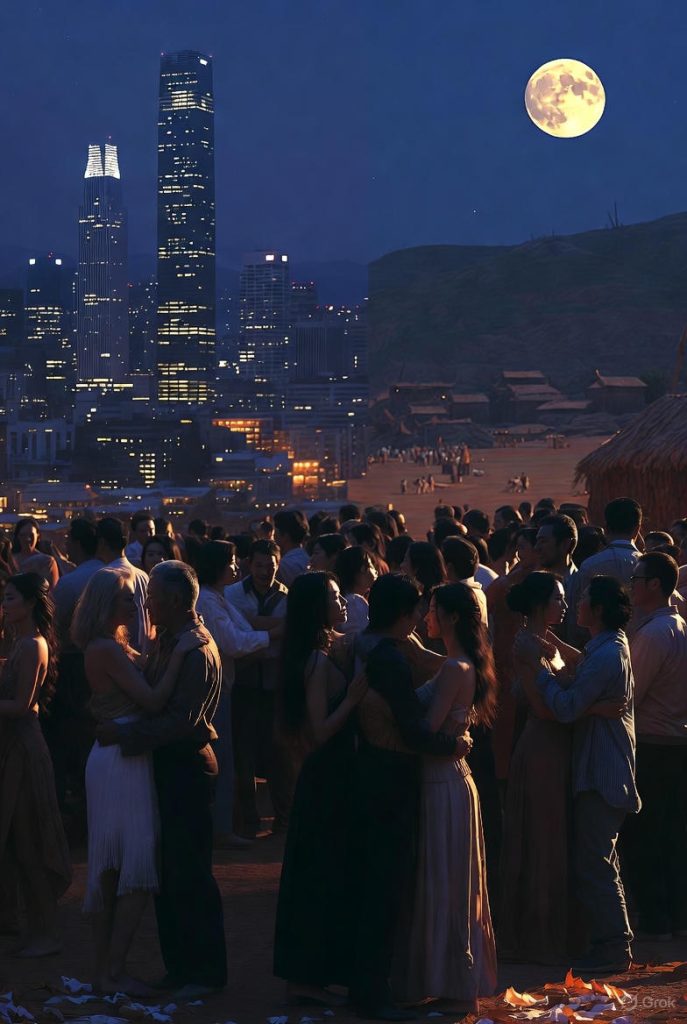
By Suresh Unnithan
Close your eyes and feel it for a second: the sudden thunder of your pulse, skin igniting under another’s touch, breath catching as molten pleasure surges from the base of your spine to the crown of your head. For one suspended moment the mind goes quiet; anxiety, ambition, even the sense of self dissolve in a white-hot rush of ecstasy. Time stops. You are pure aliveness, fused to another human being in a way that feels older than language itself. No drug, no achievement, no spiritual epiphany matches the raw voltage of that peak.
That is sex. Not a polite bodily function, not a means to an end, but the single most powerful reward evolution ever built into the human animal.
And yet, here we are in 2025, living in glass towers that pierce the clouds, editing embryos, commanding artificial minds, and streaming the entire sum of human knowledge to a slab of metal in our pocket, while the same species that conquered fire and split the atom still treats its greatest natural pleasure as something shameful, dangerous, and vaguely criminal. We blush at the word “orgasm” in mixed company. We ruin lives over a sext or a consensual fling. We let teenagers drown in hardcore pornography yet pretend they must be protected from a biology textbook diagram. We have turned paradise into a crime scene.
How did the one experience that makes us feel most alive become the one we are most determined to police, punish, and pretend doesn’t exist?
That is the paradox we are about to unpack. We will travel back to the moment nature handed us this magnificent gift, watch in slow motion as culture wrapped it in iron chains of guilt and control, linger in the last corners of the earth where people still make love without apology, and finally stare unflinchingly at the absurd double life we lead today, gorging on sexual imagery in secret while clutching our pearls in public.
By the time we reach the end, one thing will be clear: embracing the full, shameless joy of sex is not decadence. It is the most revolutionary act of sanity a modern human can perform.
The Evolutionary Design: Pleasure Engineered by Nature
Picture our ancient ancestors roaming the savannas, where survival hinged on quick wits, strong bonds, and prolific reproduction. Evolution didn’t leave sex to chance; it supercharged it with pleasure to ensure we’d keep doing it, even in harsh times. During those heated moments, the brain unleashes a cocktail of chemicals: dopamine surges like a gambler’s high, urging you onward; oxytocin floods in, creating that warm, unbreakable “love hormone” glow that cements partnerships; endorphins act as natural opioids, blotting out pain and anxiety in a blissful haze. Vasopressin kicks in for men, fostering loyalty, while serotonin and prolactin wrap it all in a contented afterglow. One climax can deliver more feel-good power than a runner’s high or a gourmet meal—nature’s way of saying, “Do this again, and often.”
This over-the-top reward system wasn’t overkill; it was genius. Humans who craved sex had more babies. Those who bonded deeply after the act raised healthier offspring, sharing food and protection in tight-knit groups. Women who experienced regular orgasms saw subtle fertility boosts, thanks to rhythmic contractions that aid conception. Men who felt post-sex affection stuck around, investing in their young. In this raw, evolutionary dance, pleasure wasn’t optional—it was the engine of survival. There was no room for shame; sex was as natural as breathing, a vibrant force driving the species forward without a hint of moral baggage.
But as humans clustered into larger groups, something shifted. The same drives that fueled bliss could spark chaos: jealousy-fueled fights, resource-draining rivalries, orphaned children in a world without safety nets. Evolution responded by layering in social brakes—subtle psychological tools like possessiveness and reputation sensitivity—to channel those urges into stable pairs and cooperative tribes. Over millennia, these instincts morphed into cultural norms, where unchecked desire became a threat to order. Modern taboos are the echoes of those ancient adaptations, amplified in our crowded, anonymous world. Yet they often backfire, stifling the very ecstasy that makes life worth living.
From Celebration to Control: The Historical Turning Point
Fast-forward to the dawn of civilization, and the story gets more dramatic. For hundreds of thousands of years, in small bands of hunters and gatherers, sex flowed freely, woven into rituals and daily life. Cave art from 30,000 years ago bursts with phallic symbols and fertile figures, celebrating sexuality as a life-giving magic. Puberty wasn’t hushed; it was marked with communal initiations, where elders guided the young into sensual awareness. Same-sex explorations, multiple partners, and even ritual group encounters strengthened social ties, easing tensions in close-knit groups. Virginity? Hardly a virtue—it was just a phase before joining the vibrant cycle of connection.
Then came the agricultural revolution around 10,000 BCE, a seismic shift that rewrote everything. Fields replaced foraging, surpluses piled up, and suddenly wealth could be hoarded and inherited. Paternity became paramount: a farmer needed to know his sons, not someone else’s, would till his land. Women’s bodies, once symbols of communal abundance, turned into guarded assets. Adultery morphed from a minor ripple into a grave betrayal, punishable by death in some codes. Marriage hardened into a contract, enforcing exclusivity to secure lineages and alliances.
This control spread like wildfire through empires and trade routes, embedding itself in laws and lore. What started as economic pragmatism blossomed into a full-blown moral crusade, where sex outside narrow bounds was deemed disruptive, even dangerous. By the time cities rose, the forbidden fruit was firmly planted—tempting, but laced with guilt.
The Indigenous Counter-Example: Sex Without Shame
Amid this global tide of restriction, pockets of freedom endured, offering tantalizing glimpses of what could be. Indigenous societies, unscarred by plow and property, often embraced sex as a joyful thread in the fabric of life. Take the Mosuo people of southwestern China, living around the shimmering Lugu Lake in matrilineal clans where women hold the reins of family and inheritance. Here, sex isn’t tethered to marriage or monogamy; it’s a fluid expression of affection and desire, free from jealousy or possession.
Mosuo women, from their teens onward, invite lovers into private “flower rooms” for nights of passion, with no strings attached beyond mutual enjoyment. These “walking marriages” or tisese relationships can last a night or a lifetime, but there’s no cohabitation, no shared property—just visits under the moonlit sky, filled with laughter, intimacy, and ecstasy. Men return to their mothers’ homes at dawn, helping raise sisters’ children in a web of communal care. Jealousy? Rare, as exclusivity isn’t expected; instead, emotional bonds form naturally, without the pressure of ownership. Children belong to the mother’s line, erasing paternity worries and fostering a society where sex enhances harmony rather than fracturing it.
This isn’t libertine chaos—it’s thoughtful liberation. Mosuo elders teach consent and respect from youth, weaving sexuality into festivals and folklore as a celebration of life’s vitality. Same-sex connections flow without stigma, and multiple partners are seen as enriching, not immoral. The result? Astonishingly low rates of sexual violence, divorce-like splits, or domestic strife. Women glow with autonomy, men with purpose in their extended families. Compared to our world of hidden affairs and therapy sessions, Mosuo’s approach feels like a breath of fresh mountain air—vivid proof that sex can be blissful without the burden of taboo.
Similar vibrancy echoes in other cultures: the Canela of Brazil with their ritual extramarital unions that strengthen village ties; the Trobriand Islanders, where premarital sex is encouraged as a path to maturity; the Minangkabau of Indonesia, matriarchal giants who integrate sensuality into art and daily rituals without a whisper of shame. In these worlds, nudity might spark a smile, not a scandal; desire is discussed openly, like weather or harvests. Restrictions exist—practical ones, like avoiding sex during hunts or menses for spiritual reasons—but they’re not laced with eternal guilt. Instead, sex pulses as a positive force, binding communities in shared joy.
The Hidden Costs of Repression
Now, contrast that with our “advanced” realms, where taboos cast long shadows. Sexual guilt doesn’t just quiet bedrooms; it ripples outward, fueling aggression in societies with the strictest norms, where rape and domestic violence spike amid bottled-up frustrations. Men raised to view desire as weakness often erupt in anger or entitlement when faced with rejection, turning personal pain into public harm. The brain’s thwarted reward system seeks outlets elsewhere, leading to surges in addictions like alcohol, gambling, or endless scrolling—compensations for the ecstasy denied.
On the flip side, those who embrace satisfying, consensual sex reap profound benefits. They report fewer sick days at work, their minds sharper and more creative from reduced stress. Couples who keep the flame alive, openly and without shame, see their relationships endure, with divorce rates plummeting when desire is nurtured as a core bond. Overall life satisfaction soars, as the body’s natural highs translate to emotional resilience and day-to-day joy. In essence, repression doesn’t civilize us—it corrodes us, while healthy expression builds stronger, happier humans.
The Great Modern Hypocrisy
And here’s where the plot thickens into outright farce. In 2025, our screens overflow with sensuality: pornography generates revenues dwarfing entire nations’ economies, dating apps buzz with billions of swipes chasing connection, teenagers absorb thousands of explicit images before their first real touch. Medications like Viagra fly off shelves, sex toys form a multibillion-dollar empire, and platforms like OnlyFans out-earn Hollywood blockbusters. We’re swimming in sexual stimulation—yet we feign shock at a nipple slip or a politician’s tryst.
Schools push abstinence curricula that link sex to doom, ignoring its delights. Parents clutch pearls over basic education, while their kids sneak peeks online. We devour the forbidden in shadows, then parade virtue in the light. This split personality isn’t harmless; it breeds dysfunction, from body-image epidemics to a loneliness crisis amid hyper-connectivity.
Toward a Sex-Positive Future
What if we flipped the script? Envision a world where sex education starts early, not with warnings but with wonder—teaching consent, pleasure, and health as essentials, like reading or math. Contraception and STI checks become routine healthcare, stripping away fear. Laws decriminalize consensual adult choices, from polyamory to kink, focusing on harm prevention over moral policing. Workplaces evolve too, with policies supporting balance: generous leave for new parents, privacy protections, and cultures that value well-rounded lives.
Media could lead the charge, portraying sex as playful communication, not conquest or sin—stories of diverse bodies finding joy, not just airbrushed ideals. The payoffs would be revolutionary: plummeting teen pregnancies from informed choices, fewer assaults through empowered boundaries, resilient marriages built on honest desire, less burnout as natural stress relief flows freely. Even broader ills, like isolation-fueled extremism, might fade as people connect deeply and blissfully.
The Hypocrisy of “Advanced” Societies
We call ourselves civilized, yet we remain terrified of the very force that creates life and sustains love. We preach purity in public while binge-watching orgies in private. We destroy lives over consensual desire while ignoring the misery caused by enforced celibacy and shame. We have split the human being in two: the respectable mask and the secret animal, and we pay for that split with loneliness, violence, and quiet desperation.
The most “advanced” societies are, on the question of sex, the most primitive. We possess the knowledge, the medicine, and the wealth to make sexual wellbeing a universal reality, yet we choose inherited fear over evidence-based joy.
Until we finally admit that the pursuit of sexual pleasure is not a moral failing but a biological birthright and a social good, we will continue to be rich in technology and poor in humanity. The forbidden fruit was never the sex itself. The forbidden fruit was the knowledge that we could enjoy our bodies without shame and still build a world worth living in.