


By Suresh Unnithan
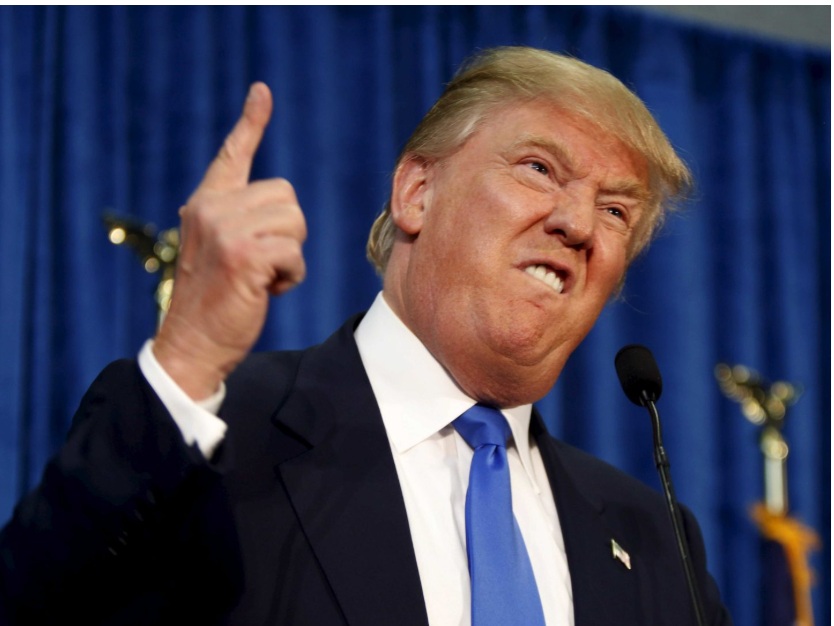
Donald Trump’s tantrums against India reveal a pattern of petulant bullying, factual distortion, and transactional arrogance that undermines the dignity of a sovereign nation and exposes the hollowness of his self-proclaimed “friendship” with Prime Minister Narendra Modi. Far from the strategic partner he occasionally claims India to be, Trump has repeatedly treated the world’s largest democracy as a punching bag—slapping it with insults, threats, and self-aggrandizing lies—while New Delhi’s response has too often been muted, diplomatic niceties, or outright silence. This oversoftness raises troubling questions about India’s strategic resolve in the face of unprovoked verbal aggression.
Trump’s Insults: A Litany of Disrespect
Trump’s latest outburst came just days ago when he reposted a commentator’s rant on birthright citizenship, lumping India with China as a “hellhole on the planet.” He amplified claims that migrants from these countries exploit U.S. laws, bring families over, and crowd out “white men” from high-tech jobs in California.Scroll
This was no isolated slip. In 2025, Trump derided India’s economy as “dead,” dismissing it alongside Russia while announcing steep tariffs (25%, later threatened at 50%) on Indian imports. He accused India of high tariffs, buying Russian oil at discounted rates, and profiting from global chaos—phrases dripping with contempt for a nation whose GDP growth has consistently outpaced many Western economies.NDTV
During tensions over Operation Sindoor—India’s 2025 military response to a terror attack in Pahalgam—Trump repeatedly claimed personal credit for halting what he called a near-nuclear war between India and Pakistan. He boasted of saving “30 to 50 million lives,” preventing the death of Pakistan’s Prime Minister Shehbaz Sharif, and even suggested he used trade and tariffs as leverage to force a ceasefire. India has consistently rejected any notion of U.S. mediation or coercion, emphasizing direct bilateral dynamics and its own sovereign actions. Yet Trump has repeated this narrative dozens of times, turning India’s assertion of self-defense into a stage for his ego.Deccanherald
Trump has shown favoritism toward Pakistan, ignoring India in key diplomatic contexts. Recent talks on the Iran conflict were hosted or facilitated in Islamabad, with Pakistan positioning itself as an intermediary—while India appeared sidelined despite its significant stakes in regional stability and energy routes like the Strait of Hormuz. This fits a broader pattern: Trump has long hyphenated India and Pakistan in ways New Delhi has worked for decades to avoid, undermining India’s “de-hyphenation” policy.
These are not mere gaffes. They form a consistent attitude of disrespect—reducing a vibrant, rising power contributing massively to global innovation to a caricature of failure and exploitation. Trump conveniently forgets (or ignores) that Indian-origin talent has been pivotal to America’s success: engineers and scientists powering NASA missions, entrepreneurs driving Silicon Valley, and IT professionals fueling the U.S. tech boom. Indian Americans have founded or led companies like Google (under Sundar Pichai) and contributed disproportionately to patents, startups, and economic growth. Labeling their homeland a “hellhole” or “dead economy” is not just inaccurate—it’s ungrateful and ahistorical.
India’s Overly Soft Response: Silence as Strategy or Weakness?
The Modi government’s handling of these provocations has drawn sharp domestic criticism. When Trump called India a hellhole, the Ministry of External Affairs issued a measured statement calling the remarks “inappropriate” and in “poor taste”—a polite slap on the wrist rather than a robust defense of national pride. On the “dead economy” jibe and tariffs, responses focused on highlighting India’s strong GDP growth (e.g., 7.8% in one quarter) as a factual rebuttal, but avoided direct confrontation. On Operation Sindoor claims, India has rejected mediation narratives but has not matched Trump’s volume or bombast.The Guardian
Critics rightly ask: Why the persistent softness? India’s strategic calculus appears driven by pragmatism—preserving defense deals, tech cooperation, the Quad framework against China, and massive bilateral trade. Modi has often highlighted personal rapport with Trump, responding warmly to positive overtures while staying largely silent on insults. Opposition voices, including from Congress, have slammed this as putting personal or party image above national dignity, accusing the government of failing to “stare down” bullying.
Yet silence risks signaling weakness. In international relations, unchecked rhetoric can embolden further aggression. Trump’s “America First” transactionalism demands reciprocity, not deference. By not pushing back more forcefully—through public rebuttals, calibrated trade responses, or diplomatic isolation of such narratives—India allows a false equivalence between its achievements and Trump’s caricatures to linger. Indian brains are not “taking” American jobs; they are building American success. India’s economy is not “dead”; it is one of the world’s fastest-growing major economies despite global headwinds.
The Hypocrisy and Pettiness of Trump’s Attitude
Trump’s outbursts betray deep hypocrisy. He rails against Indian “tariffs” while weaponizing U.S. tariffs as blunt instruments of coercion. He decries outsourcing yet benefits from the very global talent pool (including Indians) that sustains U.S. innovation. His closeness to Pakistan—evident in crediting Islamabad’s leaders and sidelining India in Iran-related talks—ignores Pakistan’s track record on terrorism, the very issue that triggered Operation Sindoor. This is not principled foreign policy; it is erratic, ego-driven diplomacy that treats allies as subordinates and adversaries as deal-making opportunities.
India’s contributions to the U.S. are undeniable: H-1B visa holders and Indian diaspora remittances, entrepreneurship, and R&D have bolstered American competitiveness far more than Trump acknowledges. Dismissing India as a hellhole erases this reality while stoking nativist resentment that harms both nations.
Time for Stronger Pushback
Trump’s attitude toward India is not that of a friend but of a bully who spares no occasion to diminish a rising power that refuses to bow to his whims. His tantrums—hellhole, dead economy, self-appointed savior of Operation Sindoor—reveal insecurity masked as bravado, ignorance of facts, and a transactional worldview that undervalues long-term strategic partnerships.
India’s silence, while diplomatically disciplined, has fueled perceptions of excessive softness. National interest demands pragmatism, but it also requires defending sovereignty and self-respect. A more assertive rebuttal—publicly celebrating Indian contributions to NASA and Silicon Valley, firmly countering mediation myths, and linking trade responses to respect—would serve India better without derailing ties.
Trump’s rhetoric diminishes not just India but the mutual benefits of the relationship. It is high time New Delhi called out this pattern with the clarity and strength it deserves. India is no hellhole or dead economy—it is a civilizational power charting its own course. Trump’s tantrums say far more about his pettiness than about India’s reality.
* Inputs From Nanditha Subhadra