


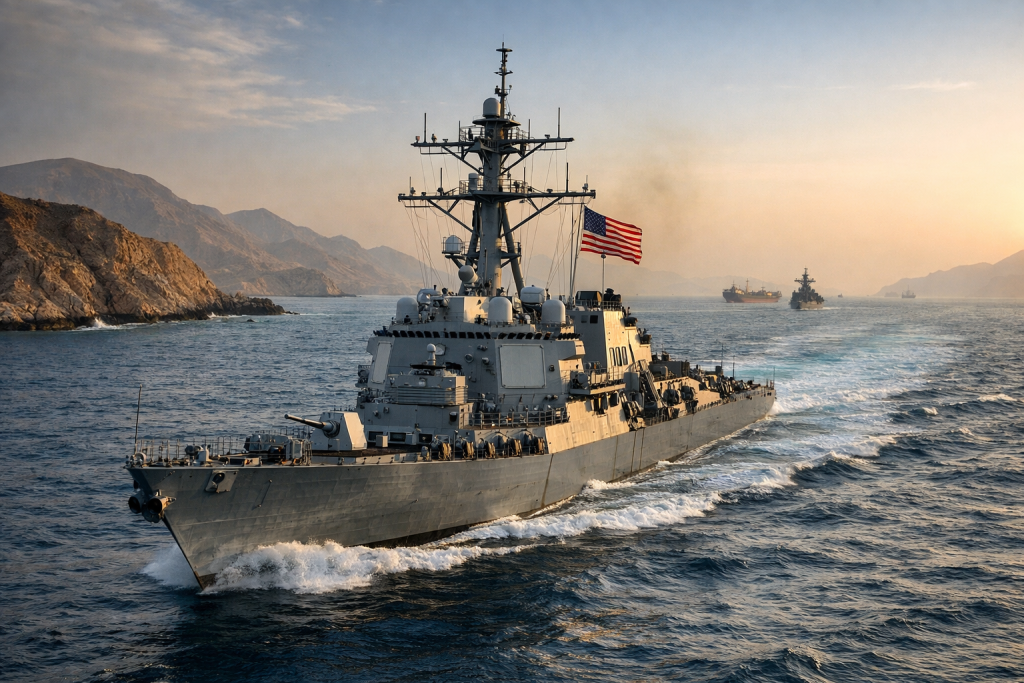
WASHINGTON/BANDAR ABBAS : U.S. forces conducted precision strikes on missile launch sites and Iranian mine-laying boats in southern Iran on Monday, destroying two Islamic Revolutionary Guard Corps (IRGC) vessels and damaging a surface-to-air missile battery, U.S. Central Command announced.
The operation, described as a defensive action to protect American troops and aircraft, targeted threats near the strategic port city of Bandar Abbas, home to Iran’s main naval base.
“U.S. forces conducted self-defense strikes in southern Iran today to protect our troops from threats posed by Iranian forces,” said Tim Hawkins, CENTCOM spokesperson. “Targets included missile launch sites and Iranian boats attempting to emplace mines. U.S. Central Command continues to defend our forces while using restraint during the ongoing ceasefire.”
According to U.S. officials, two Iranian boats were observed laying mines in the Strait of Hormuz, while a nearby surface-to-air missile site had locked onto American warplanes. In response, U.S. Navy aircraft carried out the strikes, sinking both vessels and neutralizing the missile installation.
Iranian state media reported that four people were killed in the attack, though the full casualty count remained unclear. Fars News Agency, citing state television, said the strikes hit areas close to Bandar Abbas naval facilities.
The incident comes amid a tense, weeks-long ceasefire between the United States and Iran. Two U.S. officials, speaking on condition of anonymity, emphasized that the limited strikes do not signal the end of the truce. “The strikes are over for now,” one senior official told Fox News.
The Strait of Hormuz, through which roughly 20% of global oil trade passes, has been a flashpoint for weeks. U.S. intelligence reportedly tracked increased IRGC activity, including attempts to mine key shipping lanes, raising fears of disruption to international energy supplies.
Military analysts noted the precision of the U.S. operation, which appeared carefully calibrated to avoid broader escalation. No civilian infrastructure was reported hit, and the strikes were limited to military targets directly involved in hostile actions.
In Tehran, Iranian officials condemned the strikes as “unprovoked aggression” and a violation of the ceasefire agreement. However, they stopped short of announcing immediate retaliation, suggesting both sides may still be seeking to contain the conflict.
The U.S. has maintained a significant naval presence in the region, including the aircraft carrier USS Eisenhower strike group, to safeguard freedom of navigation in the Gulf.
Global oil prices reacted sharply to the news, with Brent crude rising more than 3% in early trading as traders assessed the risk to shipping routes.
This marks the latest direct military exchange in a protracted period of shadow conflict between the two nations. While diplomatic channels remain active, the events in Bandar Abbas underscore how fragile the current ceasefire truly is, with both nations balancing deterrence and de-escalation.
The Pentagon said it continues to monitor the situation closely and remains prepared to take further action if American forces or allies face additional threats.