


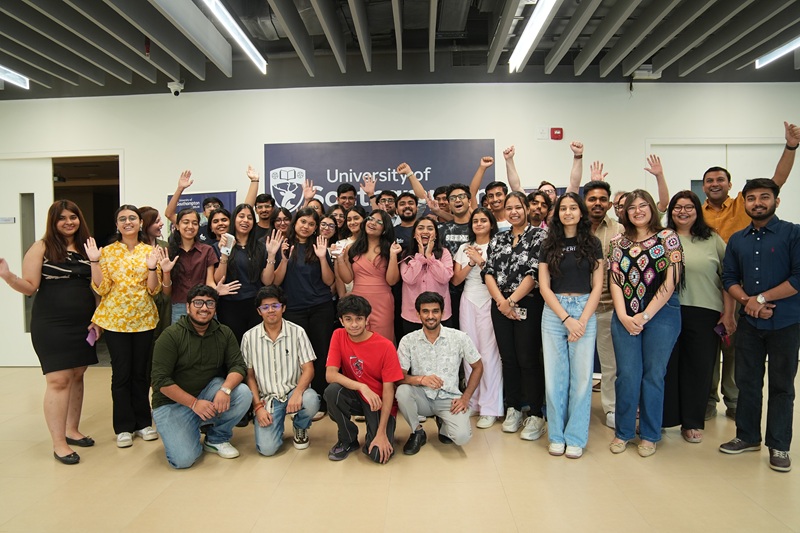
University of Southampton Delhi students explored how innovation, entrepreneurship and collaboration can be used to address social challenges at the first Social Impact Bootcamp of the year.
Designed as an immersive three-day learning experience, the bootcamp encouraged students to move beyond conventional classroom learning and engage directly with real-world issues affecting communities. Through a combination of workshops, collaborative exercises and mentorship-led sessions, participants were challenged to think critically about social impact and develop solutions capable of creating meaningful and sustainable change.
The programme commenced with interactive discussions focused on understanding social challenges and identifying opportunities where innovation could make a tangible difference. Students worked in teams to exchange ideas, analyse problems from multiple perspectives and explore how entrepreneurial thinking can be applied to create positive outcomes for society. As the sessions progressed, participants transformed initial concepts into structured solutions, balancing creativity with practicality and community relevance.
Throughout the bootcamp, students received guidance from mentors and facilitators who supported them in refining their ideas, strengthening their problem-solving approaches and developing scalable models. The experience fostered teamwork, resilience and adaptability while providing participants with valuable exposure to the process of building solutions that respond to genuine societal needs.
The initiative was further enriched through the support of Enactus UK & Ireland, including the participation of Amy Brereton, CEO, Enactus UK & Ireland, whose engagement offered students valuable insights into social entrepreneurship and the power of purpose-led innovation. The bootcamp concluded with participating teams presenting their solutions before a panel, demonstrating the progress made over the three-day programme.
Team EcoSteps emerged as the winners with their idea of making sustainability participatory rather than passive. Their modular kinetic flooring system captures micro-energy generated from everyday footsteps and transforms it into visible, measurable impact.
Meanwhile, Team Amara secured the runners-up position with an innovative sustainable construction solution that converts plastic waste and industrial by-products into durable, low-cost composite bricks.
Both teams impressed the judges with their innovative thinking, clarity of vision, and strong commitment to creating positive social impact.
Professor Eloise Phillips, Academic Provost, University of Southampton Delhi, said, “The Social Impact Bootcamp reflects our vision of empowering students to become active contributors to society. By encouraging them to combine innovation with purpose, we are helping nurture future leaders who can identify challenges, develop solutions and create meaningful impact in the communities around them.”
More than a competition, the Social Impact Bootcamp served as a platform for students to build confidence, collaborate across disciplines and discover the potential of innovation as a force for good. The success of the inaugural edition marks an important step in fostering a culture of purpose-driven leadership, entrepreneurship and social responsibility within University of Southampton Delhi Campus community.