


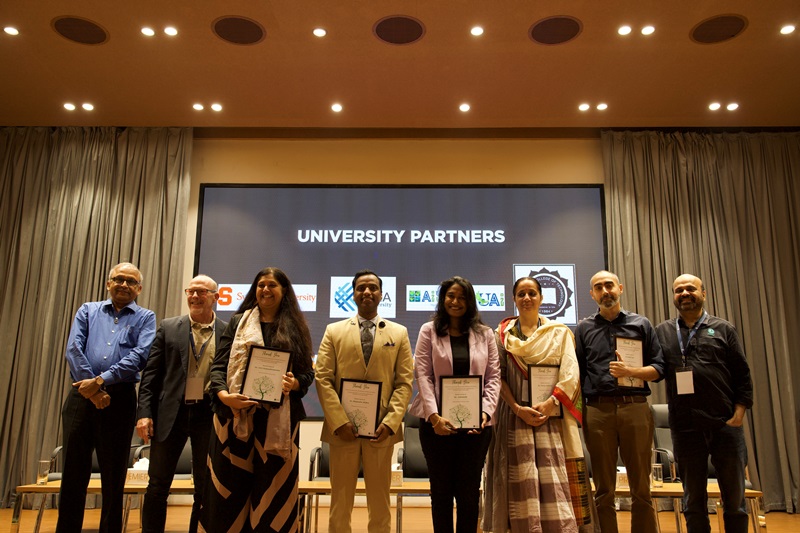
COIMBATORE: The future of innovation was on full display as the impressive KRUU Student Summit 2025 concluded its two-day residential innovation bootcamp at the Kumaraguru College of Technology (KCT) campus1. Dubbed a “Creation Lab,” the event rejected traditional presentations in favour of 40+ student-developed solution concepts 2—including early-stage models, demonstrations, and mock-ups—crafted by 200 of the brightest high school students from across India and select international locales.
The Summit, an initiative by KRUU (a network serving over 470,000 students), showcased a fundamental shift that is gaining momentum across the Indian academic landscape: a move towards learning that emerges through inquiry, reflection, and purposeful creation, rather than rote delivery. This approach strongly aligns with the growing trend in higher education, notably at key Indian & global institutions to increasingly award academic credits for project-based learning and hands-on, innovation-driven work.
The Creation Lab: Building Real Ideas
The event’s distinctive strength lay in its cross-disciplinary mentorship model. Students were guided not only by STEM experts but also by mentors from Art, Psychology, and Entrepreneurship, broadening the way they think, question, and build. This model emphasizes Project-Led Learning, enabling students to collaborate and develop critical problem-solving skills through curated projects.
The keynote was delivered by Devdutt Pattanaik (Author & Mythologist) and other notable speakers included Anita Ratnam (Classical Dancer & Entrepreneur).
“India’s classrooms need entrepreneurship—a new perspective via project-based learning,” said Anil Srinivasan, Founder, KRUU and Rhapsody. “We paired students with mentors like Srivi to refine their narrative, Vivek to validate their business models, and applied theatre experts to instil empathy. They didn’t just learn how to build; they learned why and for whom.”
The 200 participants, selected from a competitive pool, were guided by 20+ experts to transform raw ideas into viable, functional solutions. A dominant thread across the three project tracks—Art, Entrepreneurship, and STEM—was the emphasis on real-world problem solving, critical inquiry, and creating meaningful, future-ready solutions.