


By Suresh Unnithan
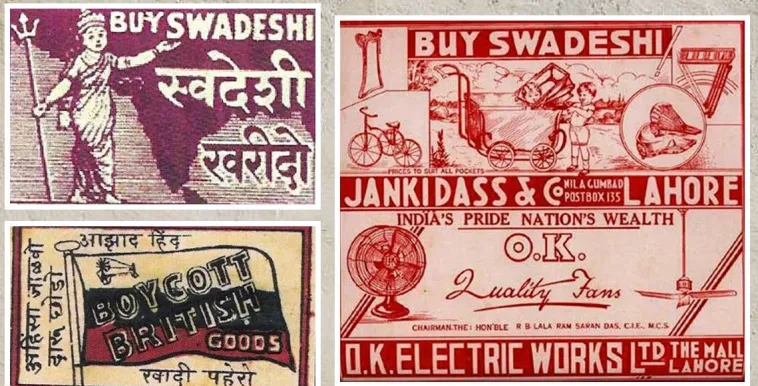
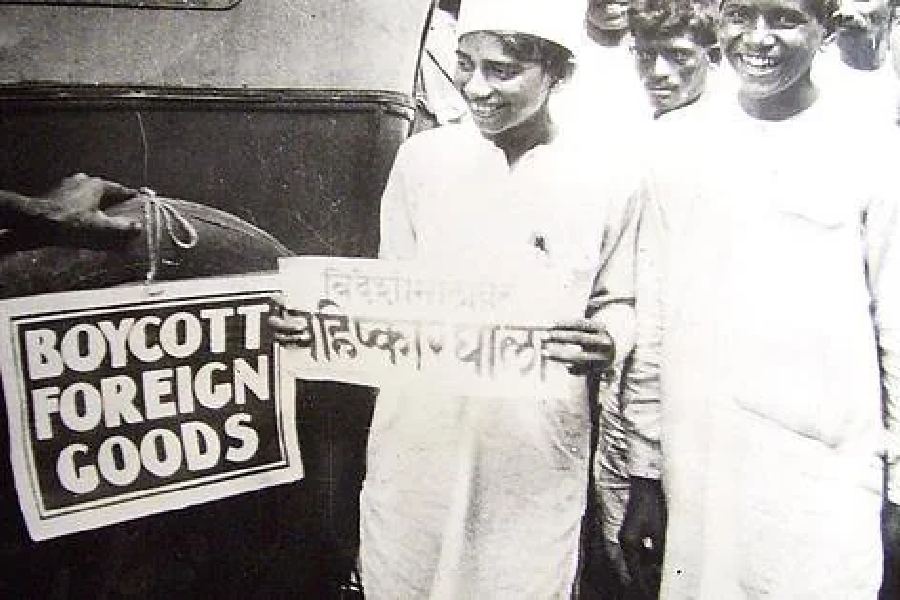
In the September 28, 2025, episode of Mann Ki Baat—his 126th since taking office—Prime Minister Narendra Modi amplified the call for Swadeshi, urging every Indian to “buy one Khadi item on Gandhi Jayanti” and make the festive season a celebration of “Vocal for Local.” This plea, echoing the 1905 Swadeshi Movement’s boycott of foreign goods to nurture indigenous industries, gains urgency after 11 years of BJP governance amid global trade headwinds like US President Donald Trump’s August 2025 tariffs. These reprisals, adding 25% duties on non-exempt Indian exports in response to India’s Russian oil buys (up 20% year-on-year to 2 million barrels per day), threaten ₹6.7 lakh crore in annual U.S. trade (17% of India’s exports), potentially slashing volumes by 70% in sectors like textiles and apparel, endangering 5-7 million jobs per projections.
Why this renewed push now? Modi’s address frames Swadeshi as a bulwark against such economic tremors, offsetting projected ₹1.67-2.51 lakh crore export losses while stabilizing 7%+ GDP growth and curbing rupee depreciation (potentially 5%). With the BJP’s membership standing at over 180 million as of the latest official claims—building on the 180 million figure from the 2019 drive and subsequent enrollments, making it the world’s largest political party—this cadre, including 240 Lok Sabha MPs, over 1,500 MLAs, and 21 NDA chief ministers, could lead by example. Yet, the true game-changer lies in nationwide adoption: if India’s 1.43 billion people fully embrace Swadeshi, the economic dividends could be transformative, slashing the ₹22.6 lakh crore projected merchandise trade deficit for FY 2024-25 by up to 50%, boosting GDP by 2-3 percentage points, and addressing chronic unemployment while revitalizing rural economies.

India’s Trade Vulnerabilities: Deficits in the Spotlight
India’s $4.1 trillion economy in FY 2024-25, growing at 7%, faces a structural merchandise trade imbalance where imports reached ₹60.2 lakh crore (up 6% year-on-year), dwarfing exports at ₹37.6 lakh crore (up 4.5%). This yields a ₹22.6 lakh crore deficit (up 8%), with the April-August 2025 cumulative gap already at ₹10.2 lakh crore (up 1.5%). Key culprits include crude oil imports at ₹12.5 lakh crore (21% share, up 10%), electronics at ₹7.1 lakh crore (12% share, up 15%), and gold at ₹4.7 lakh crore (8% share). Such dependencies drain foreign exchange, weaken the rupee to ₹84 per USD, and fuel 5-6% inflation, with imported oil alone contributing 2-3 percentage points to CPI.
While services exports provide a ₹20.9 lakh crore surplus, narrowing the current account deficit to 1.2% of GDP, merchandise woes persist. Swadeshi addresses this by promoting domestic alternatives, potentially reclaiming 10-20% of the ₹60.2 lakh crore import bill (₹6-12 lakh crore annually) as per NITI Aayog estimates, thereby curbing forex outflows by ₹5.8-11.7 lakh crore and injecting vitality into micro, small, and medium enterprises (MSMEs) that employ 110 million.
BJP-Led Swadeshi: A Cadre-Driven Catalyst
The BJP’s over 180 million members, representing about 12.5% of India’s population, drive $350-400 billion in annual private final consumption expenditure (PFCE), mirroring national per capita spending of around $1,950 from a total $2.8 trillion PFCE pool. Of this, 10-15% (₹2.9-5 lakh crore) typically flows to imported goods like electronics, apparel, and fast-moving consumer goods (FMCG). A full Swadeshi shift by this cadre could redirect ₹2.5-3.5 lakh crore domestically, with additional ₹20,900 crore from leader-led initiatives—such as Uttar Pradesh’s ₹83,600 crore annual procurements pivoting 20% to local sources, or the party’s 10,000+ yearly events injecting ₹41,800 crore into MSMEs.
These direct savings, amplified by Reserve Bank of India (RBI) multipliers of 1.5-2 times, could boost GDP by ₹3.8-5.4 lakh crore while creating 1-1.5 million jobs (at a 2.5x job multiplier). Overall, this cadre-level adoption might trim the trade deficit by 12% (₹2.7 lakh crore in forex savings), stabilize the rupee by 2-3%, and reduce inflation by 0.5-1%. Environmentally, it cuts embedded emissions in imported goods by 20-30% from shipping, aligning with India’s 2070 net-zero goal, while socially empowering 50 million women-led self-help groups (SHGs) with a ₹83,600 crore rural income boost through textiles and food processing.


Nationwide Swadeshi Embrace: Monumental Economic Impacts
If Swadeshi permeates the entire nation—beyond BJP’s vanguard—the impacts scale exponentially. Full adoption could substitute 30-50% of imports (₹18-30 lakh crore), halving the ₹22.6 lakh crore deficit and swelling foreign reserves (currently $700 billion or ₹58.5 lakh crore) by ₹83,600 crore-₹1.7 lakh crore. This forex influx would appreciate the rupee by 5-10%, slashing import costs and taming inflation to 3-4%, while export competitiveness surges as domestic capacity expands under schemes like Production Linked Incentive (PLI), potentially doubling electronics output to ₹83,600 crore by 2027.
GDP growth could accelerate to 9-10%, adding ₹33.4-50.1 lakh crore annually through multipliers: every $1 shifted from imports lifts GDP by $1.5-2, fostering a virtuous cycle of investment and consumption. Critically, this addresses unemployment, pegged at 8-10% nationally (with youth rates at 15-20% per CMIE data), by generating 20-30 million jobs over five years. Manufacturing and MSMEs, absorbing 60% of new labor, would thrive—textiles alone could add 5 million positions via Khadi revival, while agro-processing creates 10 million rural gigs, reducing urban migration.
Rural economies, home to 65% of Indians and contributing 46% to GDP but plagued by 12% underemployment, stand to gain most. Swadeshi prioritizes local handicrafts, organic farming, and village industries, channeling ₹83,600 crore-₹1.25 lakh crore into rural value chains. For instance, boosting Khadi and handlooms (currently ₹41,800 crore market) to ₹1.7 lakh crore could uplift 10 million artisans, while local FMCG substitution enhances farmer incomes by 20-30% through direct procurement. This decentralizes growth, narrowing urban-rural divides: rural GDP per capita ($1,200 or ₹1 lakh) could rise 15-20%, with SHGs and cooperatives amplifying women’s participation (already 25% of rural workforce). Overall, it fosters inclusive development, reducing poverty by 5-10 percentage points and bolstering food security amid climate vulnerabilities.
Sino-Indian Trade Recalibration and Global Ripples
Trump’s tariffs—yielding 50% effective barriers on non-exempt goods—undermine India’s “China+1” appeal, making alternatives like Vietnam (10% tariffs) more attractive and stalling $100 billion+ (₹83,600 crore+) US investments. This could widen India’s ₹82,900 crore FY 2024-25 deficit with China (exports ₹12,000 crore, imports ₹94,900 crore), as cheaper Chinese goods flood in, projecting a 15% electronics import spike. However, Swadeshi counters this: nationwide adoption reduces China reliance (40% of electronics imports) by 20-30% (₹16,700-₹29,200 crore), promoting alternatives via pacts with Australia and Russia.
Positively, Modi’s September 2025 meeting with Xi Jinping—the first in seven years—signals a “tactical thaw,” reopening border passes like Lipulekh and Shipki La for ₹4,200-₹83,600 crore added flows, while eased Chinese curbs on fertilizers and rare earths aid diversification. Yet, risks from Line of Actual Control (LAC) tensions and Pakistan ties limit depth; unchecked, deficits could hit ₹1 lakh crore by FY 2026, adding 1-2% to inflation. Nationwide Swadeshi, however, enables a balanced pivot: short-term China engagement offsets U.S. losses (₹16,700 crore), but long-term de-risking trims overall deficits by 5-7%, positioning India in trilateral dynamics.

Navigating Challenges for a Swadeshi Future
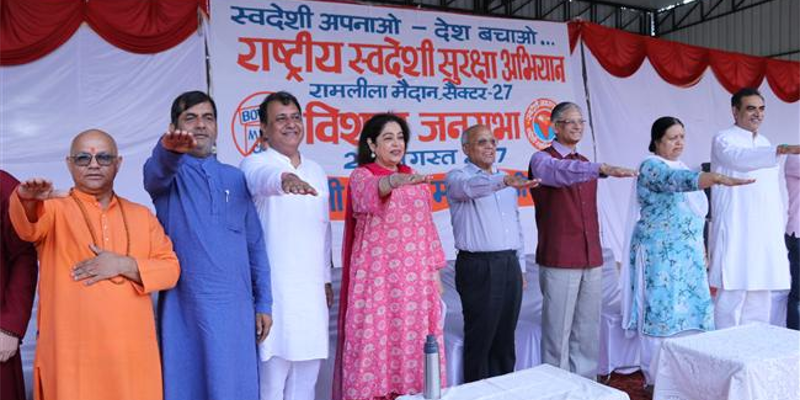
Implementation hurdles include supply gaps in high-tech sectors (requiring ₹41,800 crore investments in semiconductors) and cultural inertia toward foreign brands. Yet, precedents from “Make in India” (halving electronics import growth to 12% since 2014) inspire confidence. Operationalizing via apps for Swadeshi pledges, nationwide melas, and compliance audits for leaders could drive uptake.
In essence, Modi’s tariff-fuelled Swadeshi revival could transform global threats into domestic triumphs. BJP’s over 180 million members could spark the fire and if full national embrace can potentially erase deficits, ignite 20-30 million jobs to combat unemployment, and inject ₹83,600 crore-₹1.25 lakh crore into rural revitalization. As Gandhi’s ethos meets modern mandates, Swadeshi isn’t just a policy—it’s India’s pathway to equitable, self-reliant prosperity.