


Pune, Maharashtra : As India seeks to build a more resilient, sustainable and competitive agricultural economy, one challenge remains both urgent and under-addressed: women constitute a significant share of the agricultural workforce yet continue to face structural barriers in accessing land rights, markets, finance, technology, institutional platforms and leadership opportunities. Closing these gaps is no longer a matter of social inclusion alone; it is an economic imperative that will shape the future of India’s agri-food systems.
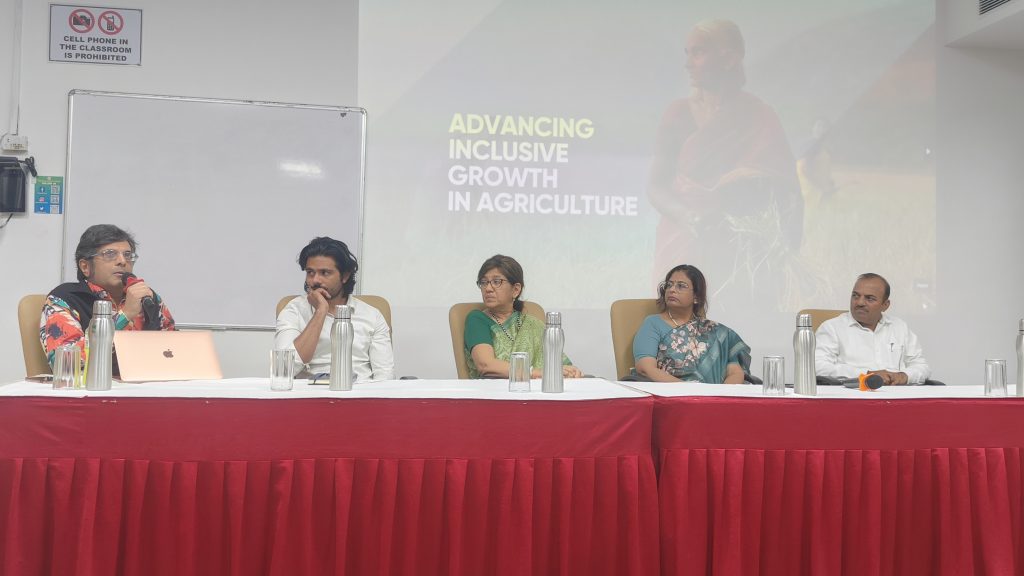
The urgency of this agenda is reflected globally. The United Nations has designated 2026 as the International Year of the Woman Farmer, recognising the pivotal role women play in ensuring food security, climate resilience and rural prosperity. Against this backdrop, Corteva Agriscience convened a high-level roundtable in Pune on “Enabling 2 Million Women in India’s Agricultural Value Chain”, bringing together policymakers, agricultural leaders, academia, development practitioners, financial institutions, industry representatives and farmer organisations to examine pathways for advancing women-led agricultural transformation at scale.
The roundtable discussion was moderated by Prof. Rohit Tiwari, Professor, FLAME University, and featured a distinguished panel comprising Mrs. Vandana Chavan, former Member of Parliament, Rajya Sabha; Ms. Asha Sridhar, Corporate QA Head, Suhana Masale; Dr. Sudin Baraokar, AI Quantum Scientist and Advisor; Mr. Karan Sinha, Maandesi Foundation; and Dr. Shantaram Gaikwad, General Manager, Govind Foundation. Drawing on diverse expertise across public policy, agribusiness, technology, rural entrepreneurship, and community development, the panel explored actionable pathways for strengthening women’s participation, leadership, and enterprise development across the agricultural value chain. The discussion underscored the importance of fostering cross-sector collaboration to unlock the full potential of women-led agricultural transformation.
The discussion focused on a fundamental shift: from labour to leadership, from participation to ownership, and from subsistence to enterprise. Participants highlighted that enabling women to emerge as entrepreneurs, institutional leaders and decision-makers can strengthen productivity, improve rural incomes, accelerate climate-smart agriculture and create more inclusive and traceable value chains.
Deliberations explored key enablers for change, including strengthening women-led Farmer Producer Organisations (FPOs), improving access to formal markets, expanding digital and agri-tech adoption, enhancing financial inclusion and building sustainable rural institutions capable of driving long-term impact.
Dr. Preeti Sawairam, Dy Director of Agriculture (Seeds), Dept. of Agriculture, Government of Maharashtra, said, “Maharashtra has one of India’s strongest ecosystems of women’s collectives, self-help groups, Farmer Producer Organisations and agricultural institutions. As the world prepares for the International Year of the Woman Farmer, the next phase of agricultural transformation will depend on how effectively we move women from informal participation into formal leadership, enterprise ownership, market integration and technology-enabled agriculture. Initiatives that strengthen women-led FPOs, improve access to finance and digital advisory services and build sustainable value chains are central to making agriculture more productive, resilient and future-ready.”
Vandana Chavan, former Member of Parliament, Rajya Sabha said, “India’s agricultural future cannot be built on productivity alone; it must be built on participation, ownership and leadership. The United Nations’ recognition of 2026 as the International Year of the Woman Farmer reinforces a global truth: women are indispensable to food security, climate resilience and rural prosperity. The ambition to enable 2 million women in agriculture represents a structural economic shift from labour to leadership, from subsistence to enterprise and from informal contribution to formal value creation. When women gain access to markets, technology, finance and institutional voice, the benefits extend far beyond households; they strengthen rural incomes, value chains and the long-term competitiveness of India’s agri-economy.”
The roundtable featured a rich exchange on the policy, institutional, and ecosystem interventions needed to accelerate women-led agricultural transformation. Discussions highlighted the importance of strengthening women-led Farmer Producer Organisations (FPOs), expanding access to agri-tech and digital advisory services, enhancing market linkages and value addition, and investing in skilling, entrepreneurship, soil health, climate-smart agriculture, and institution-building. Participants emphasised that meaningful progress will require coordinated action across policy, technology, finance, capacity building, and public-private partnerships.
Enabling women farmers is increasingly being recognised as one of the most consequential investments India can make towards building a more inclusive, climate-resilient, and future-ready agricultural economy. The discussions reinforced that scaling women’s participation in agriculture is not a standalone social objective but a strategic pathway to strengthening rural livelihoods, improving value chains, accelerating sustainable development, and enhancing the long-term competitiveness of India’s agri-economy.