


From erratic rainfall and water shortages to growing pressure on ecosystems and natural resources, communities across India are increasingly feeling the impact of climate change. World Environment Day 2026 serves as a reminder that meaningful climate action begins at the local level.
Across India, Anandana – The Coca-Cola India Foundation, along with its partners, is supporting grassroot initiatives that help communities manage resources more responsibly and adapt to environmental challenges. Here are five ways Anandana is contributing to climate action through community-led solutions:
1. Helping Farmers Build Climate Resilience Through Project Unnati
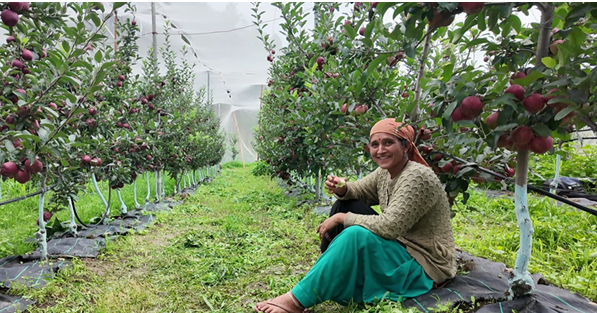
Changing weather patterns have made farming more challenging, increasing the need for practices that use water and land efficiently. Through Project Unnati, Anandana – The Coca-Cola India Foundation, together with on-ground partners, is helping fruit farmers improve productivity through scientific orchard management, drip irrigation and ultra-high-density plantation techniques. Since 2011, Project Unnati has been supporting farmers in cultivating crops such as apple, mango, orange, grapes, litchi, coffee and sugarcane. Over the years, it has empowered nearly four lakh fruit farmers across 13 states and Union Territories. By enabling farmers to produce more with fewer resources, the initiative supports climate adaptation, promotes optimal resource management while strengthening the long-term resilience of agricultural communities.
2. Reviving Kishori Pond in Braj, Uttar Pradesh- Strengthening Local Climate Resilience
In Pisava village near Barsana in Uttar Pradesh’s Braj region, Anandana – The Coca-Cola India Foundation partnered with ‘Say Earth’ to rejuvenate the sacred Kishori Kund, a heritage water body spread across approximately 18,000 square metres. Years of sewage inflow and waste accumulation had affected the Kund, but scientific restoration efforts and active community participation helped bring it back to life. Today, the restored water body has an estimated storage capacity of around 480 million litres, improving water quality, supporting ecosystem health and preserving an important cultural landmark for the community.
3. Improving Water Availability in Palghar, Maharashtra
For many rural communities, changing rainfall patterns can make access to water increasingly uncertain. To help address this challenge, Anandana supported the construction of nine water-harvesting check dams across Palghar district in Maharashtra in partnership with PHD Rural Development Foundation.
These structures capture rainwater during the monsoon and help replenish groundwater reserves that communities rely on throughout the year. Together, they have created over 370,000 cubic metres of water storage and groundwater recharge potential, helping improve water availability for both local communities and agriculture while strengthening resilience during periods of water scarcity.
4.Strengthening Water Security in Chhatrapati Sambhajinagar
Water stress remains a significant challenge in many parts of India, particularly in areas that experience recurring droughts and irregular rainfall. Through Project Jaldhara, Anandana, in partnership with S M Sehgal Foundation, has worked with communities across 10 villages in Chhatrapati Sambhajinagar to improve access to water through a combination of drinking water solutions and watershed interventions. The project has established groundwater recharge structures, including check dams, recharge shafts, farm ponds and bunding interventions. These efforts have helped communities meet household, agricultural and livestock water needs more reliably.
5. Protecting Fragile Himalayan Ecosystems in Kedarnath
High-altitude destinations such as Kedarnath face unique environmental challenges, especially during peak pilgrimage and tourist seasons when waste generation increases significantly. To help address this issue, Anandana partnered with Healing Himalayas Foundation and local government bodies to establish a Material Recovery Facility (MRF) under the Himalayan Harmony Project. The 3,000-square-foot facility can process up to three tonnes of waste per day and store up to 50 tonnes at a time. Supported by digital mapping of more than 400 waste collection points, the initiative also includes awareness programs, engagement with local businesses and training for waste workers. By improving waste collection, segregation and processing, the project helps reduce environmental pressure on the surrounding Himalayan ecosystem while supporting cleaner conditions for residents and visitors alike.
As communities continue to navigate environmental challenges, initiatives such as these demonstrate how collective action and local partnerships can play an important role in building a more climate resilient future.