


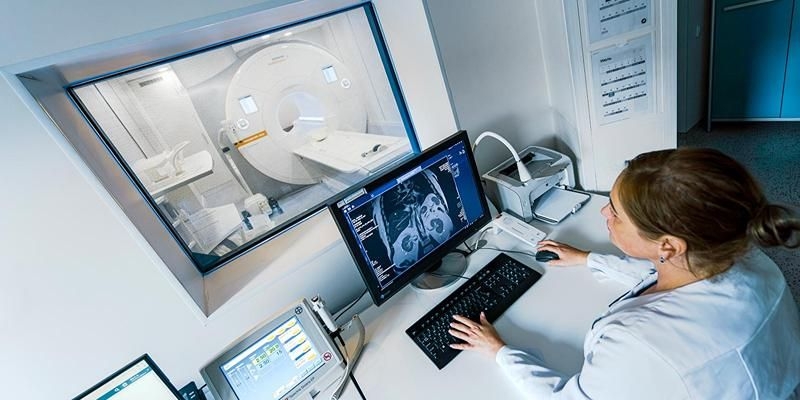
Advances in computer vision now enable earlier detection of diseases that are not yet visible to the human eye. Modern algorithms highlight areas of potential pathology with color overlays and produce clinically relevant measurements that support physicians’ diagnostic decisions. According to Anastasia Rakova, Deputy Mayor of Moscow for Social Development, AI services have helped radiologists across the country analyze more than 35 million imaging studies.
“The use of computer vision technologies in medicine improves the efficiency of medical imaging diagnostics,” Rakova said. “AI allows us to process a larger volume of studies without sacrificing quality – and in many cases improving it. To date, AI has processed a total of 35 million studies. This result comes from three sources: about 18 million imaging studies processed through the Moscow Experiment, 5 million through compulsory medical insurance, and another 12 million via the MosMedAI platform.”
Since 2020, the Moscow Experiment on Computer Vision has been successfully conducted. Led by the Moscow Social Development Complex and based at the Center for Diagnostics and Telemedicine, with support from the Moscow Department of Information Technology, the project has established both advanced diagnostic infrastructure and a regulatory framework. Following the Experiment, 28 national standards for the use of AI in healthcare were developed and approved. Over the past 6 years, more than 200 AI-powered services have participated in the program; currently Moscow radiologists have access to more than 60 services. Neural networks assist in identifying pathologies across more than 40 clinical areas by analyzing mammograms, CT scans, MRIs and X-rays. Comprehensive AI solutions can detect as many as 14 pathologies simultaneously in a single image.
Since 2023, AI analysis of breast cancer screening has been officially included in Moscow’s list of reimbursable medical services under a special tariff. Moscow is the first region to finance this AI-powered service from the compulsory medical insurance fund.
“Moscow has not only implemented advanced diagnostic practices but has also begun scaling them to other regions via the MosMedAI platform, expanding access to high-tech medical care across Russia,” said Yuri Vasiliev, Medical Director and Chief Officer of Radiology at the Moscow Health Care Department. “This step gives regional specialists new opportunities to develop AI application scenarios addressing local challenges, including workforce shortages and quality improvement.”
The Center for Diagnostics and Telemedicine of the Moscow Healthcare Department, established in 1996, is a leading scientific and practical organization within the Moscow Social Development Complex. It specializes in implementing AI technologies in medicine, developing radiology, management of radiology departments within healthcare institutions, conducting scientific research, and educating medical professionals.