


From Our Business Bureau
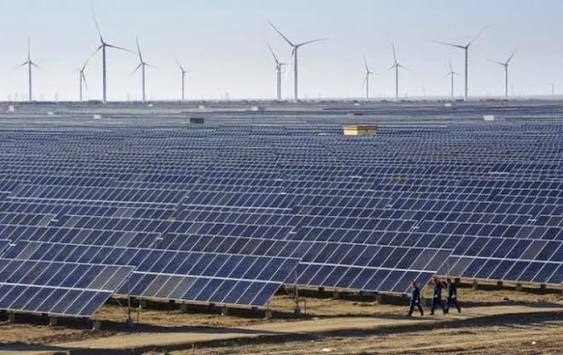
Assam is poised for a significant energy transformation, backed by substantial renewable energy potential and a landmark private investment that bridges reliable baseload power with the infrastructure needed to scale clean energy. Official estimates place the state’s renewable energy potential at approximately 14.4 GW, with solar accounting for the bulk at 13.76 GW. Independent reassessments suggest the actual ground-mounted solar potential could be substantially higher—exceeding 27 GW when suitable wasteland is factored in—while floating solar and rooftop capacity add further upside. Despite this, Assam’s current solar installed capacity stands at only around 200 MW, highlighting both the scale of the opportunity and the critical need for enabling infrastructure.
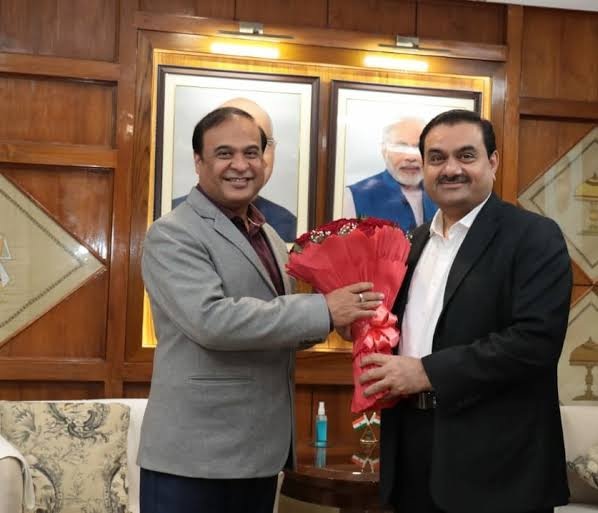
In this context, the Adani Group’s ₹63,000 crore investment, announced in November 2025, emerges as a strategic catalyst. The package comprises a ₹48,000 crore ultra-supercritical thermal power plant and ₹15,000 crore in pumped-storage hydro projects. Together, they address Assam’s power deficit while creating a robust platform for renewable integration.
Adani Power will develop a 3,200 MW (4×800 MW) greenfield ultra-supercritical thermal plant in Chapar, Dhubri district. Secured as the lowest bidder at a tariff of ₹6.30 per kWh, the project operates under the Design-Build-Finance-Own-Operate (DBFOO) model with coal linkage under the SHAKTI policy. This structure delivers strong revenue visibility through a long-term Power Supply Agreement with Assam Power Distribution Company Ltd (APDCL). Ultra-supercritical technology ensures higher efficiency and lower operating costs over the asset’s life, with phased commissioning planned between December 2030 and December 2032.
Complementing the thermal asset, Adani Green Energy is investing ~₹15,000 crore in two pumped-storage hydro projects with a combined capacity of 2,700 MW, offering 500 MW of energy storage. These facilities will generate revenue through energy arbitrage, peak power supply, and ancillary services. In a state targeting rapid solar growth under the Integrated Clean Energy Policy 2025 and facing rising Renewable Purchase Obligations (nearly 4,000 MW by 2029–30), pumped storage becomes a high-value asset that enables greater renewable penetration while earning premium returns during high-demand periods.
From a business perspective, the investment offers a balanced risk-return profile. The thermal component provides stable, contracted cash flows with tariff certainty and fuel supply security. The storage projects add growth optionality tied to Assam’s renewable ambitions and India’s broader push for grid flexibility. For Adani Power, which is expanding toward a national target of approximately 42 GW by 2031–32 from its current 18.15 GW, the Assam project diversifies its portfolio geographically and establishes early leadership in the Northeast’s emerging energy market.
The projects are expected to generate around 30,000 jobs during the construction phase, with the thermal plant alone sustaining roughly 3,500 operational roles. Beyond direct employment, the investment will stimulate local supply chains, skill development, and ancillary economic activity in Dhubri and surrounding regions. This ecosystem effect enhances the long-term business environment and supports Assam’s industrial growth agenda.
Adani’s commitment aligns with and exceeds the group’s earlier pledge of ₹50,000 crore for the Northeast’s development. It also complements state-level initiatives, including the recent MoU with Tata Power for up to 5 GW of renewable projects. By combining firm thermal power with large-scale storage, the investment creates a foundation that can accelerate Assam’s clean energy transition while delivering reliable power for households and industries.

As regulatory processes advance and construction timelines firm up, this ₹63,000 crore package positions both Adani and Assam advantageously. It locks in long-term revenues from essential power infrastructure while unlocking the state’s vast renewable potential through enabling storage capacity. In an era of rising energy demand and accelerating decarbonisation, the project stands as a compelling example of how strategic private investment can drive regional energy security and economic progress in India’s Northeast.