


From Our Correspondent
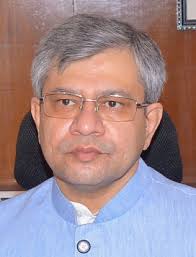
A recent Comptroller and Auditor General (CAG) audit of Indian Railways’ finances for the year ended March 2025 has highlighted an unhealthy reliance on Gross Budgetary Support (GBS) for IRFC lease repayments and significant delays in completing safety infrastructure projects. With Ashwini Vaishnaw serving as Railway Minister since July 2021, the findings covering FY 2024-25 and related periods under his charge constitute an independent assessment of financial discipline and project delivery efficiency in the ministry.
The Ministry spent approximately ₹22,699 crore from GBS on the capital component of IRFC lease charges in FY25. The CAG observed that such repayments should ideally have been met from the Capital Fund, sourced from revenue surplus. Inadequate surplus led to the use of budgetary grants, a trend the auditor termed unhealthy as it reduces funds available for fresh capital works.
On safety, over 20,304 safety-centric works under the Rashtriya Rail Sanraksha Kosh (RRSK) remained unfinished in 2024-25. Of 22,350 fully funded works, 14,016 (62.71 per cent) were completed; of 28,340 partially funded works, 16,370 (57.76 per cent) were finished. The CAG attributed the backlog to deficiencies in planning and execution, noting inefficient utilisation of the dedicated safety fund. Internal contributions to RRSK reached only ₹5,324.62 crore against a ₹25,000 crore target in the first five years (21.30 per cent). Between 2022-23 and 2024-25, ₹3,397.60 crore of RRSK funds went to non-priority works such as computerisation, research, staff welfare and customer amenities. Unsanctioned expenditure stood at ₹19,458.25 crore across 1,321 cases.
As of August 14, 2026, no formal official rebuttal or detailed clarification from Minister Ashwini Vaishnaw or the Railway Ministry specifically addressing this CAG report has been issued. In recent parliamentary replies and public statements, however, Vaishnaw has consistently emphasised the sharp decline in consequential train accidents (from 135 in 2014-15 to much lower levels in recent years) and the multi-fold increase in safety-related expenditure—from around ₹39,200 crore in 2013-14 to over ₹1.20 lakh crore in 2026-27. He has highlighted technology interventions such as Kavach, electronic interlocking at thousands of stations, elimination of unmanned level crossings, and large-scale track and infrastructure upgrades as evidence of prioritised safety and systemic transformation.
These official talking points form the ministry’s broader counter-narrative of improved outcomes despite the CAG’s focus on incomplete works, fund prioritisation shortfalls and financing patterns. The audit does not contest the reduction in accident numbers but underscores gaps between budgetary allocations, dedicated safety corpus utilisation and on-ground completion of critical projects. For a minister who has repeatedly projected efficiency and modernisation, the report places the burden of demonstrating tighter financial control and faster execution of pending safety works squarely on the political executive.