


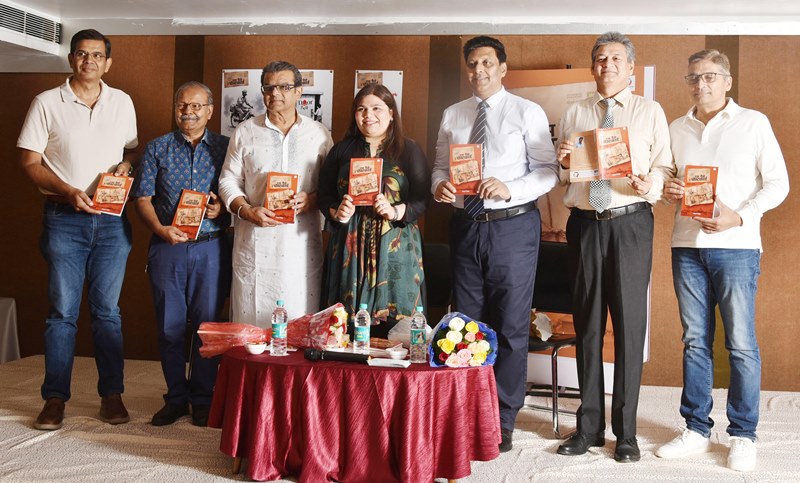
Hyderabad: The book, Das Paise ka Postcard – a tribute to an era when postcards were the only means of communication; authored by Capt. SN Ahmed, a Retired Army Officer, Author & Theatre enthusiast; was released by the Chief Guest Mr Vinay Varma, Actor & Director and Guest of Honour Ms Sanjana Shah, Executive Director, BNI Hyderabad; today at The Plaza Hotel, Begumpet. “Das Paisa Ka Postcard” is a poignant tribute to that forgotten era when postcards were the only thread that tied hearts together. They were awaited with bated breath, read over and over, and held close as treasures of connection.
In an era dominated by instant messaging and fleeting emojis, the new story, to be staged as a play titled “Das Paise Ka Postcard” rekindles the warmth, nostalgia, and human connection once delivered by handwritten letters. Penned by Capt. Ahmed, this evocative theatrical work transports audiences back to the 1960s, when letters were lifelines, and the postman was more than just a government employee; he was family.
Speaking on the occasion Mr Vinay Varma said, when Capt. Ahmed spoke about his book, it instantly transported me back to the days of postcards and handwritten letters. I was reminded of my grandmother, who would ask me to write letters to her brothers, simple notes asking about their well-being, filled with warmth, longing, and love. She would sign them at the end. That’s how I first learnt the art of letter writing, those moments remain some of my most cherished memories. Das Paise Ka Postcard is deeply relevant to our times. Unlike today’s quick WhatsApp messages, letters once bridged hearts across miles. Ironically, in this age of instant communication, emotional distances have only grown. In a world where book reading and theatre are fading passions, it takes rare courage to bring out a book like this. The title itself stirs forgotten emotions. While digitisation has made life faster, it has also diluted the depth of our connections. This book is a gentle reminder of what we’ve lost—and what we must try to hold on to.
Ms Sanjana Shah said, Capt. Ahmed’s writing has a rare charm, it brings the past alive, allowing us to relive moments from an era we never actually experienced. His stories are not just nostalgic; they carry strong social messages that resonate deeply. This book is a delightful collection of stories, each layered with meaning. The narrative is so vivid, it feels ready to be adapted for the stage. I’ve always had a habit of posting letters to myself from wherever I travel. On a recent trip to Norway, I sent one to my Hyderabad address, it arrived two months later, but the joy of receiving it was timeless. In our family, we still write letters, it’s our way of staying rooted in the habit of writing. I remember when my father used to send letters in envelopes to his brothers, we’d sneak in a folded paper labelled “Confidential,” only to reveal a Mickey Mouse sketch inside. Small joys like these define a time we often long for something this book captures beautifully.
Capt. SN Ahmed said, the story shines a spotlight on a forgotten era when the arrival of a postcard was an emotional event, a bearer of love, longing, concern, and joy. Das Paise Ka Postcard reminds today’s “WhatsApp generation” of the tactile and heartfelt charm that letters held, a time when the “Daak Babu” on his squeaky bicycle was awaited with eager anticipation in every village.
Capt. Ahmed brings alive the characters of yesteryear, depicting how the postal system once served as the only bridge between people separated by vast distances. Letters from loved ones were read repeatedly, treasured, and preserved for life. They were symbols of hope, celebration, and comfort—unlike telegrams that spelled urgency or money orders that signalled good news.