


From Our Correspondent
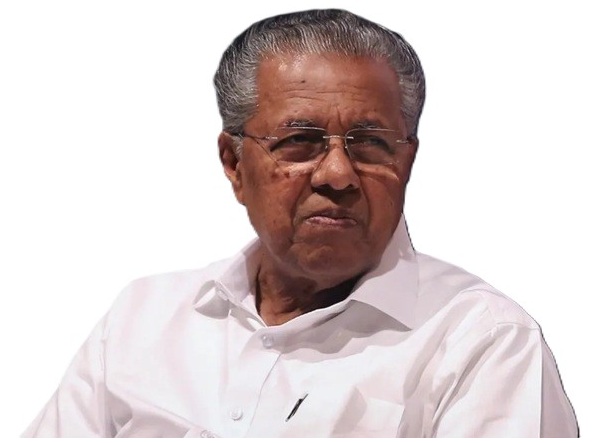
Thiruvananthapuram: In a major escalation of a multi-year financial and corruption scandal, the Enforcement Directorate (ED) on Wednesday conducted simultaneous raids at approximately 10-12 locations across Kerala and Bengaluru. The targets included the rented residence of former Chief Minister Pinarayi Vijayan near Bakery Junction in Thiruvananthapuram, his ancestral home in Pinarayi village in Kannur district, premises linked to his daughter T. Veena and son-in-law P.A. Mohammed Riyas in Kozhikode, the Aluva office and residence of CMRL Managing Director Sasidharan Kartha, and other related sites.
The searches are being carried out under the Prevention of Money Laundering Act (PMLA), 2002, just one day after the Kerala High Court dismissed CMRL’s petition to quash the ED investigation. This multi-agency probe — involving the Serious Fraud Investigation Office (SFIO), Income Tax Department, and ED — has exposed serious allegations of corruption, bribery, quid pro quo arrangements, and environmental violations by Cochin Minerals and Rutile Limited (CMRL) during the previous LDF government’s tenure.
Origins and Evolution of the Scandal
The controversy first surfaced with Income Tax Department raids on CMRL in 2019. The I-T investigations uncovered massive alleged bogus expenditures, with the company reportedly inflating costs by over ₹133 crore between FY 2012-13 and 2018-19, primarily under heads such as transportation and sludge handling. A significant portion of these unaccounted funds was allegedly diverted as illegal payments to politicians, public servants, police officers, media houses, trade unions, and others to “ensure smooth running of business” in Kerala’s mineral sector.
Among these transactions, payments totalling between ₹1.72 crore and ₹2.73 crore made by CMRL to Exalogic Solutions Pvt Ltd — an IT firm promoted by T. Veena Vijayan — between 2017 and 2021 stood out. Investigators suspect these were sham transactions for purported software development, management, and consultancy services, with little or no actual deliverables. The probe has alleged that such payments may have constituted bribery to secure undue favours from the LDF government headed by Pinarayi Vijayan.
In January 2024, the Ministry of Corporate Affairs directed the SFIO to investigate under the Companies Act. The SFIO’s probe resulted in a prosecution complaint filed in April 2025, naming Veena Vijayan, Exalogic Solutions, Sasidharan Kartha, and others as accused in corporate fraud amounting to nearly ₹197 crore. The Kerala State Industrial Development Corporation (KSIDC), holding a 13-14% stake in CMRL, has lent a public interest angle to the case.
Pollution and Environmental Violations Linked to CMRL
CMRL’s operations have long been mired in environmental controversies, particularly in the Edayar industrial belt near Kochi, where the company has been repeatedly blamed for contributing to the severe pollution of the Periyar River. Environmental activists and local communities have accused CMRL of discharging industrial effluents and waste that have degraded water quality, affected fisheries, and harmed public health in the region.
Reports indicate that CMRL allegedly made illegal payments to regulators, local authorities, and other entities to secure environmental clearances, bypass pollution control norms, and continue operations despite complaints. These payoffs are believed to be part of the broader pattern of ₹185 crore in alleged corruption uncovered in the I-T probe. Protests such as the “Save Alappad” movement in Kollam district in 2018-19 also highlighted accusations of illegal mining practices linked to CMRL, raising further environmental and regulatory concerns.
Critics argue that the alleged bribery network helped CMRL navigate stringent environmental regulations and secure favourable treatment from the government during the LDF regime. Environmental activists who raised voices against the pollution reportedly faced criminal cases, adding to allegations of suppression of dissent.
PMLA Legal Framework in the Probe
The ED’s role focuses on the money laundering angle under the Prevention of Money Laundering Act (PMLA), 2002. The Act defines money laundering under Section 3 as any process or activity connected with proceeds of crime, including concealment, possession, acquisition, use, or projecting illicit funds as untainted. A predicate offence — here, the SFIO’s corporate fraud and alleged bribery/corruption cases — is essential.
Proceeds of Crime under Section 2(1)(u) cover properties derived from scheduled offences like fraud under the Companies Act or Prevention of Corruption Act. The ED can provisionally attach properties (Section 5), conduct searches and seizures (Section 17), and arrest with stringent bail conditions under Section 45 (twin conditions: accused must prove innocence and low risk of reoffending). Punishment ranges from 3-7 years rigorous imprisonment plus fine.
In this case, the ED is tracing whether payments to Exalogic and others were proceeds of alleged bribery for favours, including environmental relaxations, and if funds were laundered through layered transactions.
Political Reactions and Broader Implications
The raids have sparked intense reactions. The CPI(M) and LDF have termed the action “political vendetta” by the Centre, especially after the LDF’s defeat in the April 2026 Assembly elections. Protests erupted in several districts.
Opposition parties, including Congress and BJP, have welcomed the probe. Notably, Sasidharan Kartha’s brother, Ajith Kartha, holds a senior position in the BJP’s Kerala unit, adding intrigue to the business-political dynamics.
Pinarayi Vijayan, Veena, and CMRL have denied all allegations, maintaining that transactions were legitimate, taxes paid, and services genuine. They assert no quid pro quo existed.
Significance of the Case
This saga, spanning from 2019 I-T raids to today’s ED actions, highlights alleged systemic cronyism and environmental compromises for business interests. The combination of financial fraud, bribery, and pollution violations involving a company with public sector stakes raises serious questions about governance.
As searches continue, the ED is expected to seize documents and analyse trails. Parallel SFIO and PMLA proceedings could lead to asset attachments and prolonged trials. The case may have lasting impacts on Kerala’s political landscape, business-government relations, and environmental accountability.