


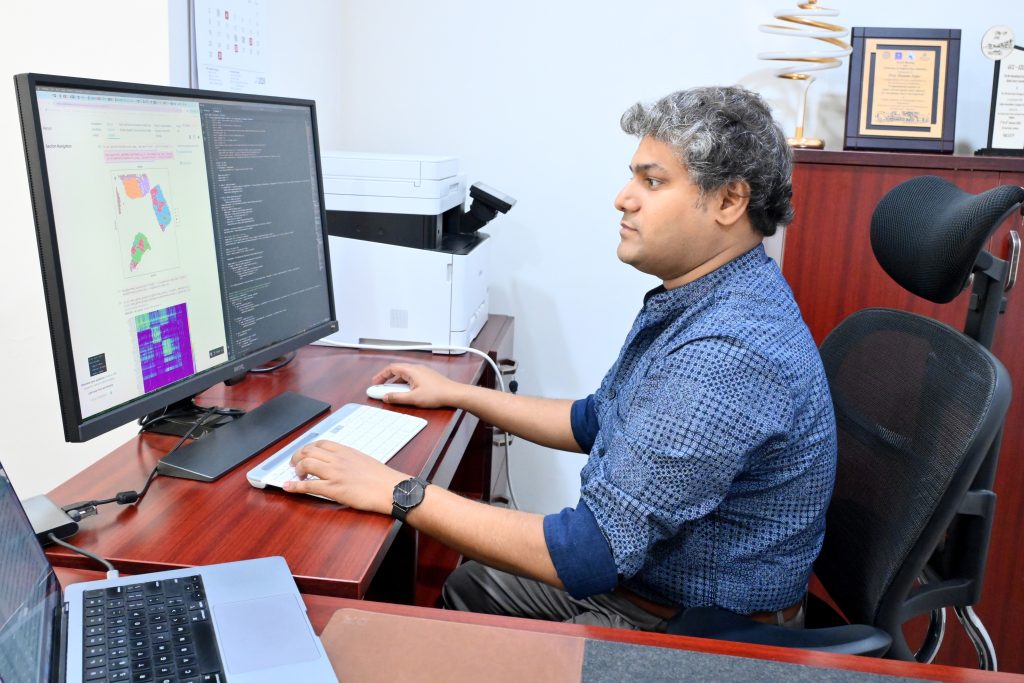
Kanpur : Researchers at the Indian Institute of Technology Kanpur (IIT Kanpur), led by Prof. Hamim Zafar, have developed an advanced computational tool, Renoir, that enables researchers to decode how cells communicate within complex tissues. Published in Nature Communications, the study introduces a new way to map how signals between cells influence gene activity in specific spatial contexts, addressing a long-standing challenge in biomedical research.
Every organ in the body depends on constant communication between cells. Cells constantly exchange signals to coordinate essential processes such as tissue development, immune responses, and disease progression. While recent technologies can measure gene activity across tissues, it has remained difficult to understand how signals from one cell actually influence the behavior of another—especially within the complex spatial organization of tissues.
Renoir addresses this challenge by utilizing spatial transcriptomics data, high-resolution snapshots of gene activity that preserve the location of each cell, and maps not just which cells are “talking” to each other, but how these signals affect downstream genes in specific locations within tissues. This allows researchers to identify “communication niches” where particular signaling pathways are active.
“With Renoir, we can now determine how a specific signaling interaction influences gene activity in the receiving cells”, said Prof. Hamim Zafar, Associate Professor at IIT Kanpur, who led the study. “This opens up new possibilities for identifying disease-driving communication networks and discovering more precise therapeutic targets, especially in complex conditions like cancer.”
“We named our tool Renoir after the French Impressionist artist, as it effectively ‘paints’ the activity of interacting genes across the two-dimensional tissue landscape,” said Narein Rao, former MS student at IIT Kanpur and the first author of the study.
The study was conducted in collaboration with Prof. Ankur Sharma’s laboratory at the Garvan Institute of Medical Research, Australia, where spatial transcriptomic datasets from fetal liver and liver cancer were generated to evaluate Renoir. The method successfully uncovered biologically meaningful interactions, including those associated with tumor progression and developmental processes.
Spatial transcriptomics is one of the fastest-growing technologies in modern biology, and Renoir works across the major spatial-profiling platforms used by laboratories worldwide. By revealing which cell-to-cell signals are active in which regions of a tissue, Renoir could accelerate discoveries in cancer biology, developmental research, and precision medicine, ultimately supporting the design of more targeted and effective therapies. The software is freely available to the research community at github.com/Zafar-Lab/Renoir.