


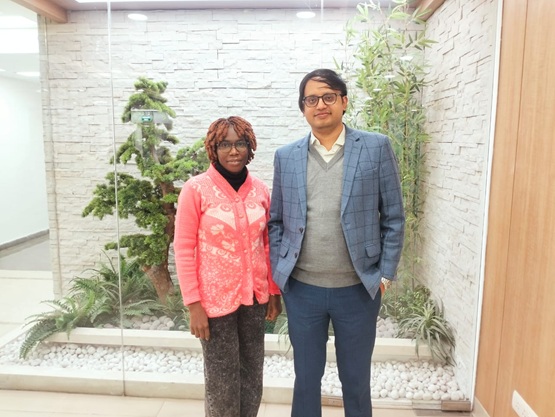
Delhi – In a significant medical achievement, doctors at Paras Health Gurugram successfully performed a highly complex living donor liver transplant on a 42-year-old international patient diagnosed with Hepatitis B Virus (HBV)-related end-stage liver disease, HIV infection, and multifocal hepatocellular carcinoma, a form of liver cancer. The procedure was led by Dr Vaibhaw Kumar and involved a multidisciplinary transplant team at the hospital.
The patient, a resident of Liberia, had been living with Hepatitis B for nearly five years and was diagnosed with HIV around three years ago. Over time, her health deteriorated considerably, leading to severe liver failure accompanied by jaundice, abdominal fluid accumulation and multiple liver tumours. Seeking advanced treatment options, she travelled to India for specialised care.
Following a detailed evaluation at Paras Health Gurugram, doctors diagnosed her with HBV-related decompensated chronic liver disease along with multifocal hepatocellular carcinoma. Managing liver transplantation in an HIV-positive patient itself remains medically challenging because of the higher risk of infections and complications after surgery. The presence of multiple liver tumours and advanced liver disease made the case even more complex, requiring extensive planning, close monitoring and coordination across specialties.
The treatment journey involved another challenge when the donor accompanying the patient was found to be Hepatitis B positive and unsuitable for donation. As a result, the patient continued treatment in India for nearly four months, during which the transplant team managed her worsening liver condition through multiple admissions while carefully monitoring tumour progression to ensure the cancer had not spread outside the liver. Simultaneously, her HIV and Hepatitis B status were medically optimised to improve the chances of a successful transplant outcome.
Eventually, her 50-year-old brother came forward as the donor and underwent a thorough medical evaluation before being declared fit for liver donation. The transplant team then performed a Right Lobe Living Donor Liver Transplant (LDLT), during which approximately 57% of the donor’s liver was transplanted. The surgery lasted close to nine hours and involved a coordinated team of surgeons, anaesthetists, critical care specialists, nursing staff and transplant coordinators.
Despite the complexity of the case, the patient recovered well after surgery. She was extubated on the first post-operative day, spent nearly five days in the intensive care unit and was discharged within two weeks. She remained in India for follow-up care for around three months before returning to Liberia. More than a year after the transplant, she continues to remain stable, infection-free and has resumed her normal personal and professional life.
Speaking about the case, Dr Vaibhaw Kumar, Director – LIVER TRANSPLANT & GI SURGERY at Paras Health Gurugram said, “This was one of the more challenging transplant cases because the patient was simultaneously dealing with HIV infection, advanced liver failure caused by Hepatitis B, and multiple liver tumours. In HIV-positive patients, maintaining the balance between immunosuppressive therapy and infection control becomes extremely important after transplantation. Every stage of the treatment required careful planning, from selecting the right donor to monitoring tumour progression and managing post-operative recovery. What is encouraging is that more than a year later, the patient is doing well and has been able to return to her normal routine.”
Doctors at Paras Health noted that while liver transplants in Hepatitis B patients are routinely performed, transplantation in HIV-positive individuals with multifocal liver tumours remains relatively uncommon globally because of the medical complexities involved. The successful outcome reflects the progress made in transplant medicine, infection management and multidisciplinary patient care in India.
The treating team also highlighted the importance of early diagnosis, timely referral and access to specialised transplant expertise in improving outcomes for patients with advanced liver disease, particularly those considered high-risk because of multiple co-existing medical conditions.