


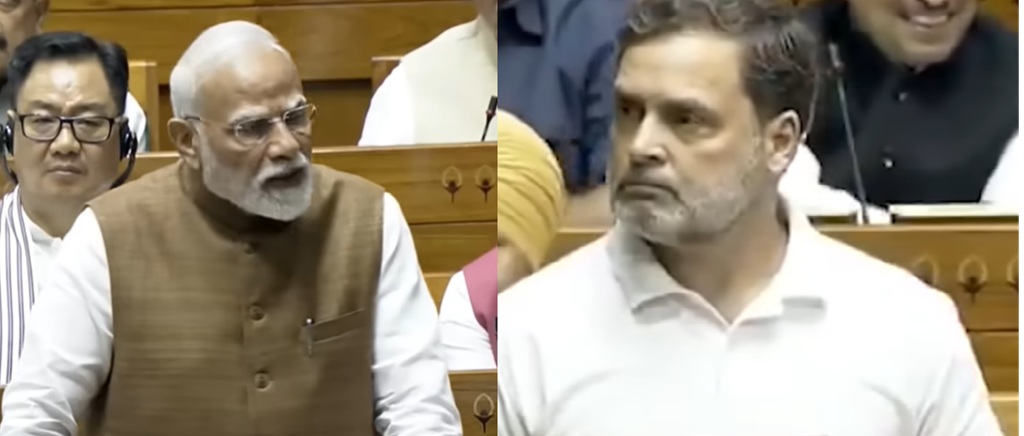
New Delhi: In a fiery video message released on Monday, Leader of the Opposition in the Lok Sabha, Rahul Gandhi, launched a scathing attack on Prime Minister Narendra Modi, turning the tables on recent accusations of “shameful” politics by the ruling BJP.
Responding to criticisms directed at Congress workers’ peaceful protests, Gandhi urged BJP and RSS supporters to “look into your Prime Minister’s eyes—you will see fear.” He claimed Modi’s absence from Parliament stemmed not from unrelated issues but from mounting pressures linked to the Jeffrey Epstein files and the ongoing US legal case against industrialist Gautam Adani.
Gandhi outlined three key “matters of shame.” First, he condemned the recently signed Indo-US trade deal as a betrayal, alleging it handed over India’s data, devastated farmers, and destroyed the textile industry without benefiting the nation. “You sold the country to America—that is shameful,” he declared.
Second, he highlighted references in the Epstein files—associated with the convicted paedophile Jeffrey Epstein—where, he claimed, Modi’s name appeared alongside those of a Union minister and a close associate. “Your name, your minister’s name, and your friend’s name together in those files—that is shameful,” Gandhi asserted.
Third, he described the Adani case in the US as targeting not just the businessman but the BJP’s entire “financial architecture.” “The whole country knows the Adani case has robbed you of sleep,” he said, adding that no action had been taken for 14 months.
Defending India’s democratic traditions of non-violence and protest—exemplified by Mahatma Gandhi and Bhagat Singh—Gandhi questioned Modi’s fear of such expressions. He contrasted this with his party’s commitment to protecting farmers, workers, small industries, national data, and the Constitution.
Addressing Congress workers as “Babbbar Sheron” (brave lions), Gandhi urged them not to retreat or fear, vowing continued resistance against perceived threats to national interests.
The video has intensified political tensions, with opposition circles amplifying calls for transparency on the trade deal and related controversies, while the government has yet to respond formally to the specific allegations.