


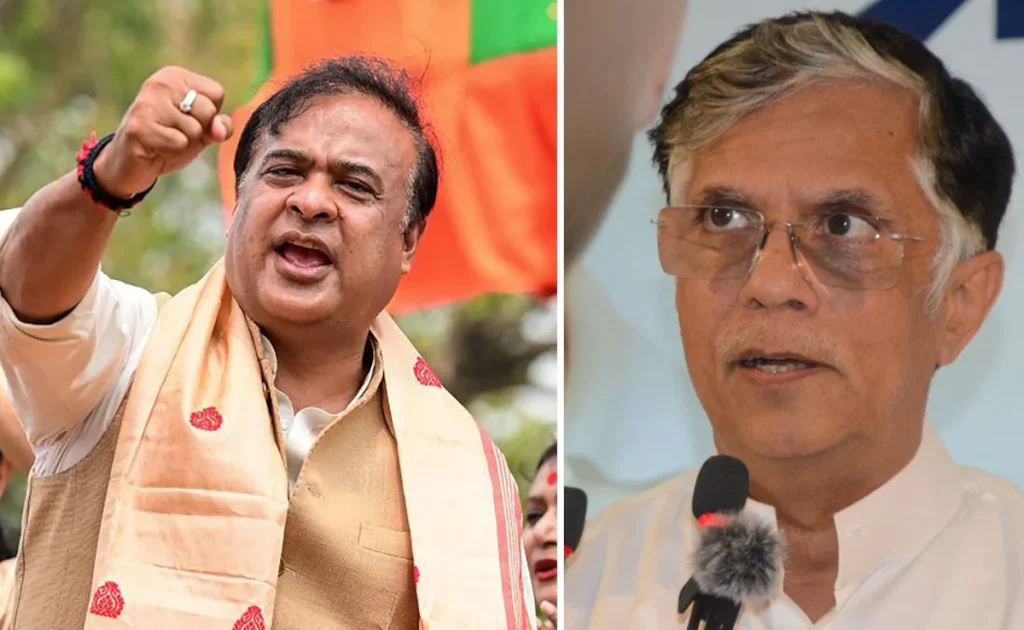
New Delhi: The Congress party on Thursday welcomed the Supreme Court’s decision to grant anticipatory bail to its leader Pawan Khera in a defamation and forgery case linked to allegations against the wife of Assam Chief Minister Himanta Biswa Sarma, describing the ruling as a victory for personal liberty and a reminder that the law stands above all.
Addressing a press conference at the AICC headquarters, senior Congress leaders Dr. Abhishek Manu Singhvi and Shri Jairam Ramesh highlighted the judgment as underscoring that arrest should be a last resort, particularly in politically motivated cases.
Dr. Singhvi, MP and Chairman of the AICC’s Law, Human Rights & RTI department, said the press conference was not intended to gloat over the victory but to reaffirm faith in the judiciary as the “ultimate bedrock of hope” when personal liberty is at stake. “Be you ever so high, the law is above you,” he emphasized.
The case stemmed from remarks made by Khera during a press conference in early April, where he alleged that Riniki Bhuyan Sarma, wife of the Assam CM, held multiple foreign passports and undisclosed overseas assets. This led to an FIR against Khera involving charges of defamation, forgery, and other offences. The matter saw rapid movement through courts: from a magistrate’s court in Assam’s Kamrup to the Telangana High Court for transit bail, the Supreme Court, the Gauhati High Court, and back to the apex court.
Singhvi detailed how the Congress and the litigant maintained unwavering faith in the judicial process across multiple forums in a short span. He pointed out that the Supreme Court applied the “triple test” for arrest—flight risk, tampering with evidence, and need for custodial interrogation—and found it not satisfied. “When reputational damage is alleged, arrest should not be the first but the last resort,” he said, adding that in a political context, the objective of arrest could amount to harassment or scoring political points.
He noted that most of the sections invoked against Khera were bailable and that the Gauhati High Court had added sections not present in the original FIR or complaint—an action the Supreme Court frowned upon. Singhvi also recalled the presumption of innocence and the need for latitude in political speech in a democracy, referencing the landmark Sibbia case on anticipatory bail.
A lower court magistrate in Kamrup had earlier rejected the state’s push for arrest in a reasoned order shortly after the press conference, describing the claims as speculative.
Singhvi made a direct appeal to the Assam Chief Minister. With “folded hands,” he urged Himanta Biswa Sarma to reconsider his stance and public statements—extensively quoted in the Supreme Court judgment (particularly in para 22)—regardless of the outcome of upcoming elections. He described some statements as “unrepeatable, unprintable,” and unparliamentary, noting that even the Solicitor General had not supported them. “This truly debases our democracy,” Singhvi remarked, suggesting that a genuine expression of regret would elevate the CM.
The senior advocate praised the promptness of the Supreme Court verdict and thanked the legal team and Congress colleagues for their support in navigating the multi-court journey at breakneck speed.
Shri Jairam Ramesh introduced the briefing, stating that “the light of justice is alive in the country.”
The Supreme Court, in its order, observed that the case appeared driven by political rivalry rather than a clear need for custodial interrogation, directing Khera to cooperate with the investigation while protecting him from arrest subject to reasonable conditions.
The development comes ahead of Assam Assembly election results, adding a political edge to the legal battle. The Congress party described the judgment as a reaffirmation of constitutional values and free speech in democratic discourse.