


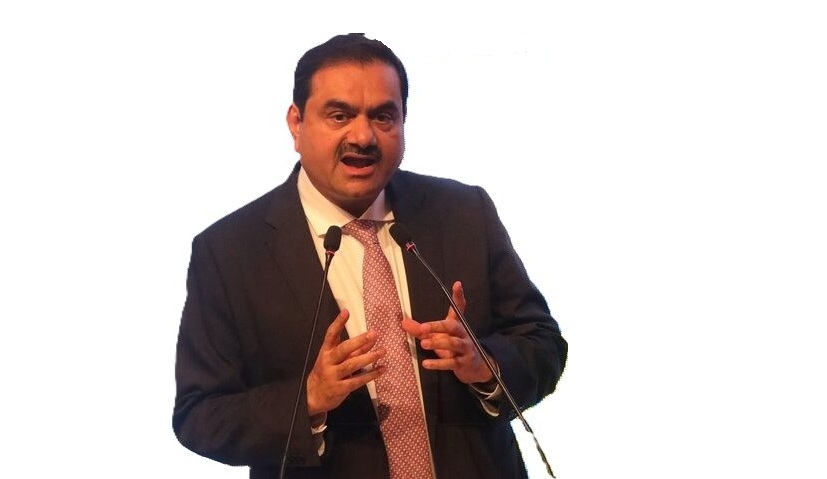
On the morning of 23 May 2014, Narendra Modi stepped off an Embraer jet at Delhi airport to be sworn in as Prime Minister. The aircraft belonged to Karnavati Aviation, an Adani Group company. The same jet and Adani helicopters had carried him across India for months during the election campaign, returning him to Gandhinagar almost every night. What appeared as campaign logistics marked the public beginning of a corporate expansion without parallel in contemporary India.
A group known mainly for Mundra Port and coal trading in 2014 became, within twelve years, the country’s largest private operator of ports and airports, a major cement and construction player, a significant media owner, and the home of India’s richest individual.
In September 2013, before Modi was named the BJP’s prime ministerial candidate, Gautam Adani’s net worth stood at roughly $1.9 billion on the Bloomberg Billionaires Index. By late 2014 Forbes placed him at $7.1 billion. By October 2026 the Adani family’s fortune stood at $112.7 billion on the Forbes India list, making him India’s richest person once again, and approximately $110 billion on Bloomberg’s index. The January 2023 Hindenburg Research report erased more than $100 billion in group market value and roughly halved Adani’s personal wealth. Recovery followed. By 2026 the ranking had been restored and large acquisitions had resumed.
The foundation included land allotments in Gujarat. Under Modi as Chief Minister, the group received substantial land for the Mundra Port and Special Economic Zone at rates of ₹1 to ₹32 per square metre. Government records and contemporary reporting documented allotments of wasteland, forest land, inter-tidal land and grazing (gauchar) land. A tranche of roughly 231 hectares of gauchar land in Navinal village was allotted in 2005. Later disputes reached the Gujarat High Court and the Supreme Court. In 2024 the state moved to reclaim 108 hectares; the Supreme Court set aside the High Court directions and the resumption order on procedural grounds. Adani has stated the land was barren and non-agricultural and that no special favours were granted. The scale and concessional rates remain on record.
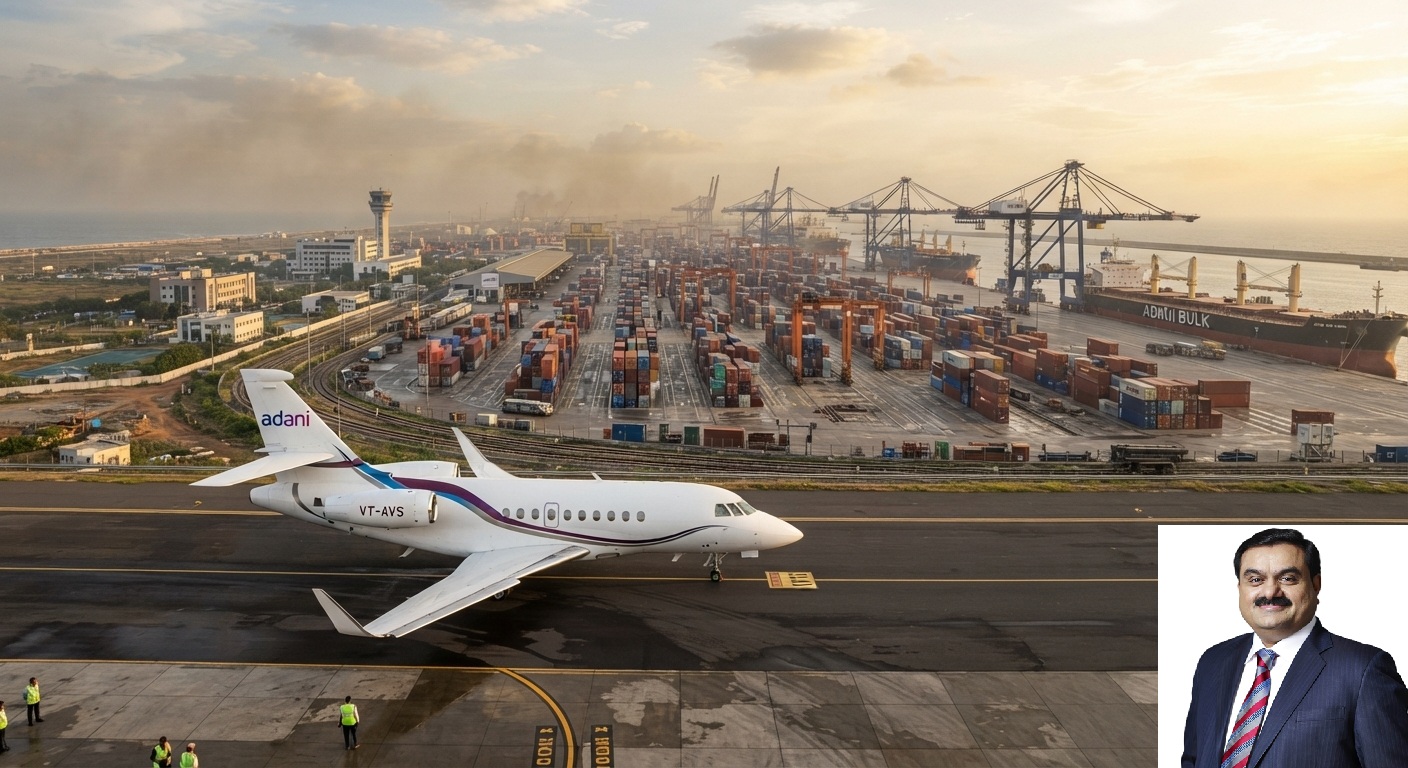
Expansion under the Modi government as Prime Minister relied on acquisitions of stressed or strategically located assets across ports, airports, cement, power, logistics, media and construction. In July 2020 the CBI and Enforcement Directorate conducted searches on GVK entities linked to Mumbai airport; within weeks GVK agreed to cooperate with Adani, which assumed debt and secured control of Mumbai International Airport and the Navi Mumbai project. The group also secured long-term concessions for six Airports Authority of India airports in 2019.

A distinct cross-border arrangement was the 1,600 MW ultra-supercritical thermal plant at Godda in Jharkhand. Declared a Special Economic Zone, it was built to supply its entire output to Bangladesh under a 25-year power purchase agreement signed in 2017 with the Bangladesh Power Development Board. Commercial supply began in 2023. By 2025 Adani Power accounted for a substantial share of India’s electricity exports to Bangladesh. Payment arrears arose and were later reduced. In 2024–25 the Indian government amended cross-border power guidelines and permitted the plant to connect to the Indian grid, allowing domestic sales under specified conditions of non-scheduling or payment default.
Internationally, confirmed operational port assets are held in Israel (majority stake in Haifa Port), Sri Lanka (Colombo West International Terminal), Tanzania (container terminal at Dar es Salaam) and Australia (North Queensland Export Terminal). Domestic airport operations cover eight airports. Earlier explorations elsewhere did not result in completed airport concessions.
Major Acquisitions and Takeovers under the Modi Regime (2014–2026)
Ports & Logistics
- Dhamra Port (2014, from L&T/Tata Steel)
- Krishnapatnam Port (2020–21)
- Dighi Port (2021)
- Gangavaram Port (2021)
- Ocean Sparkle (2022)
- Karaikal Port (2023), Gopalpur Port (2024), Astro Offshore (2024)
- Dar es Salaam container terminal, Tanzania (2024)
- North Queensland Export Terminal (Australia, 2025)
Airports
- Long-term operating concessions for six AAI airports: Lucknow, Ahmedabad, Mangaluru, Jaipur, Guwahati, Thiruvananthapuram (2019)
- Mumbai International Airport (CSMIA) and Navi Mumbai International Airport (from GVK Group, 2020–21)
Cement & Construction / EPC
- Ambuja Cements and ACC Limited (from Holcim, 2022)
- Sanghi Industries (2023)
- Penna Cement (2024), Orient Cement (2024)
- Asian Concretes and Cements, Tuticorin grinding unit (2024)
- Controlling stake in ITD Cementation India / Cemindia Projects (~72%, ~₹5,757 crore, 2025)
- Significant stake in PSP Projects
Media & Broadcasting
- NDTV (majority control 2022; further subsidiary consolidation 2024)
- Quintillion Business Media / BQ Prime (stakes 2022–24; later integrated into NDTV Profit)
- IANS (majority stake December 2023; raised to 76% January 2024; full ownership completed March 2026)
Power, Energy & Other
- Multiple stressed power assets via NCLT/IBC (Lanco Amarkantak, Vidarbha Industries, Coastal Energen and others)
- Jaiprakash Associates Limited / Jaypee Group assets including power stakes and Churk plant (resolution plan approved and implemented 2026)
- HDIL BKC and Shahad land assets (via IBC)
- Indamer Technics (aviation MRO, 2025)
- Other logistics, real-estate, transmission and industrial assets
The 2023–24 Hindenburg controversy remains the sharpest market interruption. The short-seller report alleged stock manipulation, offshore structures, related-party opacity and excessive leverage. Shares collapsed. The group rebutted the allegations as malicious and baseless, completed a follow-on offer, and continued under SEBI scrutiny. In January 2024 the Supreme Court declined to order a special investigation beyond SEBI. Recovery followed, and the acquisition pace resumed.
The documented record shows rapid asset accumulation across ports, airports, cement, power, media and construction, enabled by land allotments in Gujarat, long-term concessions, acquisition of stressed assets, and cross-border contracts including the Bangladesh power arrangement. From a Gujarat ports and trading group in 2014 to India’s largest private infrastructure operator and the country’s richest individual by 2026, the scale of the transformation is a matter of public record.