


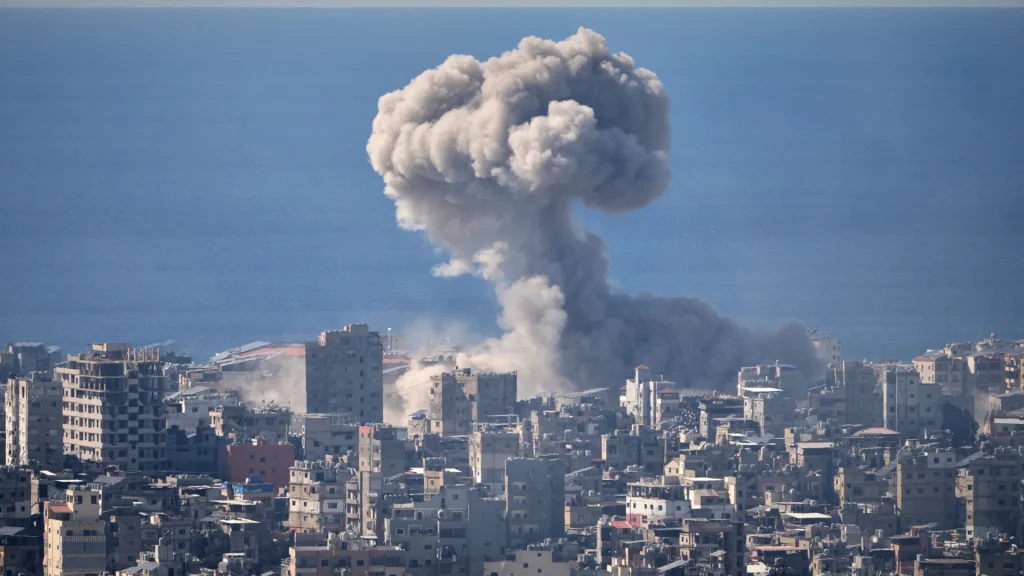
DUBAI: The United States military launched self-described “proportional” airstrikes against Iranian targets on Tuesday evening; hours after President Donald Trump accused Tehran of shooting down a U.S. Army AH-64 Apache helicopter patrolling near the Strait of Hormuz. The incident, which U.S. officials say occurred on Monday, has sharply escalated tensions in an already volatile region amid ongoing conflict dynamics involving Iran, Israel, and U.S. forces.
U.S. Central Command (CENTCOM) confirmed the strikes began around 5 p.m. ET at the direction of the Commander-in-Chief. “CENTCOM forces began launching self-defense strikes against Iran… in response to yesterday’s downing of a U.S. Army Apache helicopter. The mission is a proportional response to unjustified Iranian aggression,” the command posted on X. Explosions were reported in Iranian port areas, including near Bandar Abbas, with initial assessments indicating hits on naval bases, missile sites, and radar installations.
The Apache helicopter went down while on a routine patrol over the strategic waterway, which Iran has effectively contested during recent hostilities. Two U.S. Army pilots were aboard; both were rescued unharmed within hours by an unmanned sea drone off the coast of Oman and are reported in stable condition. President Trump broke the news on Truth Social, stating, “I have just been informed by our Great Military that last night the Iranians shot down one of our highly sophisticated Apache Helicopters while patrolling over the Strait of Hormuz. There were two pilots involved, both are safe and uninjured. Nevertheless, the United States must, of necessity, respond to this attack.”
U.S. officials, citing assessments, attributed the downing to an Iranian drone. The Strait of Hormuz, a critical chokepoint for global oil shipments, has been a flashpoint, with Iran threatening to disrupt maritime traffic in response to broader regional strikes.
Iran has pushed back against the accusations. Iran’s Deputy Foreign Minister told Al Jazeera that Tehran did not deliberately target the U.S. helicopter, suggesting the incident could have been unintentional amid the “highly tense situation” in the waterway. Iranian state media and the Islamic Revolutionary Guard Corps (IRGC) have vowed a strong response to the latest U.S. action, with reports emerging of Iranian missiles and drones launched toward U.S. targets in the region.
This latest exchange comes against the backdrop of a fragile and repeatedly tested ceasefire framework in the wider Iran-Israel-U.S. conflict that has simmered and flared throughout 2026. The downing marks a notable loss for U.S. aviation in the theater, echoing earlier incidents involving drones and aircraft. Trump described the retaliatory strikes as “very strong” and “very powerful,” signaling a firm stance on protecting U.S. assets and personnel.
Regional and Global Repercussions
The strikes risk further destabilizing oil markets, with concerns over potential disruptions to the roughly 20% of global petroleum that transits the Strait of Hormuz. Energy prices spiked in early trading following the news. Allies in the Gulf, including Oman and the UAE, are monitoring the situation closely, as the incident occurred near Omani waters.
Defense analysts note the Apache’s advanced capabilities make its loss significant, though the rapid rescue via unmanned assets highlights evolving U.S. military tactics. No U.S. casualties have been reported from the strikes, but Iranian sources claim civilian damage in targeted areas, a claim U.S. officials have not immediately confirmed.
The episode underscores the precarious balance in U.S.-Iran relations under the current administration. Trump has long taken a hard line against Iran, and these actions reinforce a policy of decisive retaliation. However, critics warn that tit-for-tat responses could derail any diplomatic off-ramps, especially as broader ceasefire talks involving multiple parties remain delicate.
As of early Wednesday local time in the Middle East, the situation remains fluid. CENTCOM has not released detailed target lists or battle damage assessments, but the operation appears limited in scope compared to earlier phases of hostilities. International calls for de-escalation are expected from the UN and European capitals.
This development will undoubtedly dominate global headlines, testing alliances, energy security, and the prospects for stability in one of the world’s most volatile regions. The Raising Nation will continue to monitor and provide factual updates as more details emerge from official sources on both sides.