


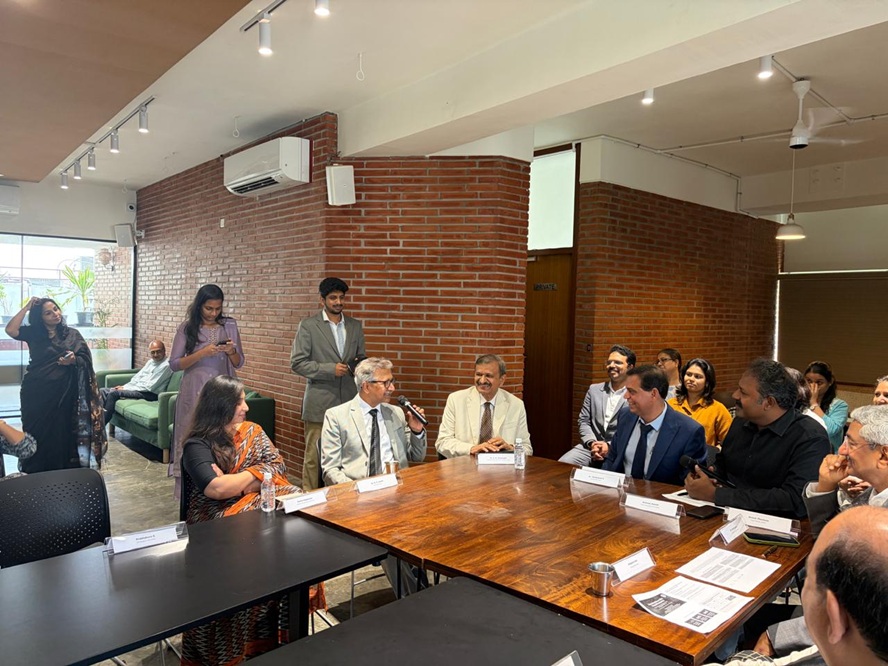
Bengaluru : The VAAYU Occupational & Environmental Respiratory Illness Clinic (VOERIC), an initiative of VAAYU Chest & Sleep Specialists and the VAAYU Respiratory Foundation, convened a multidisciplinary roundtable discussion titled “Protecting Those Who Protect Our City” at Samagata, Church Street, Bengaluru, on Monday.
The roundtable brought together healthcare professionals, researchers, public-health experts, policy practitioners, civic representatives and philanthropic organisations to discuss the health consequences of air pollution, particularly among frontline workers who experience prolonged occupational exposure.
The discussion focused on translating clinical and environmental evidence into practical interventions, strengthening preventive healthcare, and identifying opportunities for research collaboration and evidence-informed policy action.
VOERIC Screening Findings Reveal Significant Health Concerns
Dr. Ravindra Mehta, Founder and Medical Director of VAAYU Chest & Sleep Specialists, presented unique findings from VOERIC’s ongoing occupational health screening initiative, which has screened more than 11,000 frontline workers since November 2023, including Traffic police, BMTC personnel, construction workers and municipal sanitation workers (Pourakarmikas).
The findings highlighted a substantial burden of respiratory abnormalities and cardiometabolic health concerns among workers routinely exposed to traffic emissions, road dust, construction-related pollution and other workplace hazards. Ofnote, the study has detailed lung function test which were done for the first time.
The findings highlight the importance of regular respiratory screening, particularly because as some personnel may have abnormalities even in the absence of noticeable symptoms.
The screening identified reduced lung function in:
• 29.5% of BMTC personnel
• 28% of traffic police personnel
• 15% of construction workers
• 45% of municipal sanitation workers (Pourakarmikas)
The program also identified concerns with higher incidences of diabetes, uncontrolled blood pressure, overweight and obesity across occupational groups, reinforcing the need for a comprehensive approach to worker health including cardiometabolic screening
While the findings demonstrate a significant burden of health abnormalities, further longitudinal research is required to establish the extent to which occupational exposures contribute to specific respiratory and cardiovascular outcomes. VOERIC plans to start this as cohort along with government support.
Building a Collaborative Framework for Long-Term Impact
The roundtable, moderated by Mr. Srinivas Alavilli, Fellow – Integrated Transport and Road Safety at WRI India and Trustee of the VAAYU Respiratory Foundation, provided a platform for interdisciplinary dialogue on occupational and environmental health.
VOERIC aims to build on the roundtable discussions by exploring collaborative research opportunities, strengthening its occupational health screening and follow-up programmes, and engaging relevant stakeholders in developing scalable approaches to workplace health protection.
The meeting reinforced a shared message: protecting the health of those who keep Bengaluru functioning requires both awareness and action, supported by credible scientific evidence, coordinated efforts and sustained investment in preventive healthcare.
Air Pollution: An Emerging Cardiovascular and Respiratory Threat
During the discussion, Dr. C. N. Manjunath and Dr. Vivek Jawali highlighted the growing cardiovascular consequences of air pollution, drawing attention to the occurrence of heart attacks and strokes among younger individuals, including some without conventional cardiovascular risk factors.
The experts discussed air pollution as a major emerging health risk, with comparisons drawn to the harmful effects of tobacco exposure by Dr. K Satish. “Literally everybody is smoking.” They emphasised that the consequences of polluted air extend beyond respiratory disease and require a broader public-health response encompassing cardiovascular and metabolic health.
Dr. Gufran Beig highlighted advances in environmental monitoring, including drone-based vertical air-quality profiling. The discussion noted that pollutant concentrations can vary significantly with altitude and atmospheric conditions, raising important questions about exposure patterns in urban environments and multistorey buildings.
These perspectives reinforced the need to understand air pollution through an integrated approach that combines environmental measurements, clinical findings and population-level health data.
Moving from Scientific Evidence to Policy Action
A central theme of the roundtable was the importance of moving beyond awareness and translating scientific findings into measurable public-health interventions.
Participants emphasised that effective policy must be supported by scientifically rigorous evidence, reliable exposure assessment, robust clinical data and sustained collaboration between researchers, healthcare institutions and government agencies.
The group collectively emphasised that “Awareness and Action” must be the two key mantras in addressing the growing health impacts of air pollution. Participants highlighted that awareness of pollution-related health risks must be accompanied by meaningful preventive measures, community engagement, stronger workplace health protection and evidence-based policy action.
The discussion identified several important areas for future collaboration:
• Strengthening regular occupational health screening and follow-up care for high-exposure worker populations.
• Integrating clinical, occupational and environmental exposure data to better understand long-term health outcomes.
• Developing longitudinal research initiatives to assess changes in lung function and associated health risks.
• Exploring partnerships among government departments, research institutions, healthcare providers, industry and philanthropic organisations.
• Using scientifically validated evidence to inform workplace health programmes, preventive interventions and future policy discussions.
Taking Preventive Healthcare Directly to Workers
VOERIC’s approach was presented as a practical model for improving healthcare access among occupational groups that may otherwise have limited opportunities for routine screening. The programme follows the STEM model – Screen, Test, Educate and Medicate. Through workplace-based health camps at bus depots, construction sites and other occupational settings, VOERIC provides basic health assessments, Lung function (spirometry), Forced Oscillation Technique (FOT), chest X-rays, specialist consultations, initial treatment and health education.
By taking healthcare closer to workers, the initiative aims to reduce barriers to screening, facilitate timely clinical evaluation and connect individuals requiring further assessment with appropriate medical care.
****