


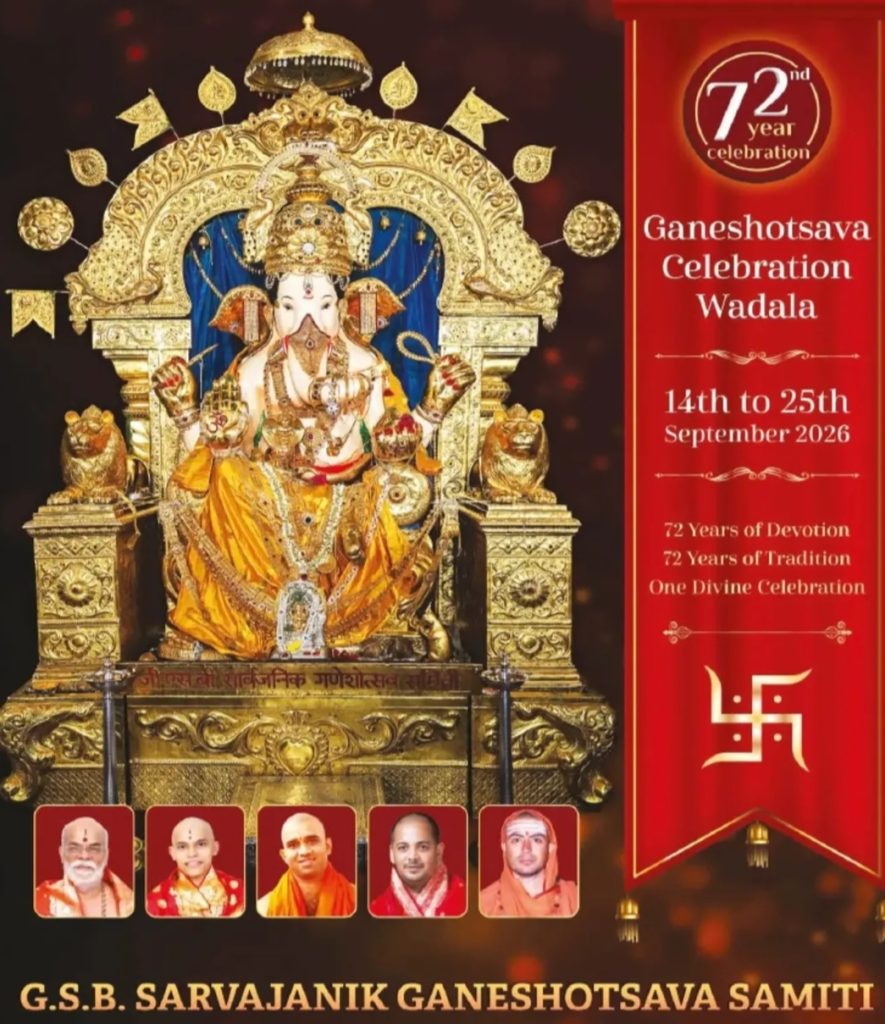
MUMBAI: The historic GSB Sarvajanik Ganeshotsava at Shree Ram Mandir, Wadala, is set to begin on September 14, with the 72nd edition of the celebrated festival scheduled to continue until September 25, Anant Chaturdashi.
This year’s celebrations come at a significant juncture for the institution, with Shri Anant P. Pai at the helm as Chairman of GSB Sarvajanik Ganeshotsava alongwith other Trustees and various committees. Under their leadership the temple and the Ganeshotsava committee prepare for one of their biggest annual gatherings. Shree Ram Mandir Committee and Ganeshotsava Committees both together continues to play an important role in the organisation of the festival and its various religious and community initiatives.

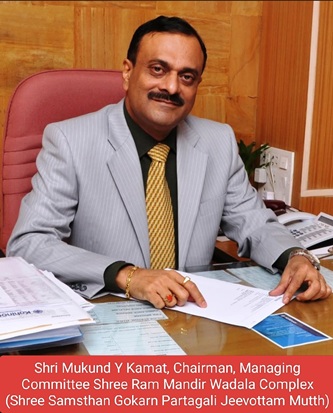
Another name worth mentioning is Shri Mukund Y. Kamat, Chairman of the managing committee of Shree Ram Mandir, Gokarn Math, Wadala in Mumbai and a senior office-bearer associated with the temple and the Ganeshotsava celebrations, who continues to play an important role in the organisation of the festival and its various religious and community initiatives. His experience and involvement in the temple’s activities are expected to support the smooth conduct of the elaborate celebrations this year.
The GSB Ganpati festival, held at Dwarakanath Bhavan in the Shree Ram Mandir Complex on Katrak Road, Wadala, has been a part of Mumbai’s religious and cultural landscape since 1955. As told to our Newsman Sachin Murdeshwar, The deity is revered by devotees as “Navsacha Suvarna Ganapati”, reflecting the deep faith associated with the annual celebration.
The festival combines traditional worship with an extensive programme of seva and community service. Daily pooja and aarti, special religious ceremonies and various devotional offerings will be conducted throughout the 12-day celebration.
Satya Vinayak Pooja, Mooda Ganapati Pooja, Ganahoma Seva, Ranga Pooja, Tulabhar, etc. remains the main attraction. Among the distinctive traditions of the Wadala Ganeshotsav celebrations is the Suvarna Durva Arpan Seva, through which devotees offer specially prepared golden durva to Lord Ganesha. The samiti has also announced several other seva options for devotees, including Sampoorna Ganeshotsava Seva, Suvarna Arpan Seva, Raupya Arpan Seva, Sarvalankar Seva, Doorvarpan Seva, Mahapooja and Anna Santarpana Seva.
These offerings have become an important part of the Wadala GSB Ganeshotsav festival, allowing devotees to participate in the celebrations through traditional forms of worship and service.
25,000 devotees expected for Mahaprasad – One of the largest logistical exercises of the festival will be the daily Mahaprasad programme. According to recent reports, the samiti expects approximately 22,000 to 25,000 devotees to partake Mahaprasad each day.
A team of around 60 to 70 cooks from Karnataka will prepare the traditional vegetarian food almost continuously to cater to the large number of devotees.
The menu reflects the GSB community’s South Indian culinary traditions and includes dishes such as rice, dal, rasam and vegetables, while breakfast preparations include idli, vada, sambar, chutney and dosa. Payasam & Kesarbhat is expected to remain a popular sweet dish amongst devotees. Other all-time favourites are Dalitoi, Saru, Mooga Ghashi, Upkari, Aluwatti, Gajbaje among other savouries.
The scale of the operation also means that food safety and hygiene will remain a key priority, with the mandal preparing to comply with regulatory requirements during the festival.
Seven decades of faith and community service- What began as a public Ganeshotsav in 1955 has grown into one of Mumbai’s prominent GSB religious gatherings. Over the decades, the Wadala celebration has brought together devotees not only from the GSB community but from across Mumbai and neighbouring areas.
The festivities at Shree Ram Mandir are characterised by a strong emphasis on tradition, discipline, seva and community participation. Volunteers, qualified professionals, play a crucial role in managing darshan, religious programmes, Mahaprasad and the various seva activities during the Ganeshotsav celebration. As told to our Newsman Sachin Murdeshwar, “Every year, according to the festival calendar, major celebrations are held at the Shree Ram Mandir Wadala Complex—also known as the Ayodhya of Maharashtra. These major occasions include Ram Navami, Vasant Utsav, Sutta Punav, Nag Panchami, Mahalaxmi Vrat, Durga Namaskar, Ganeshotsav, Navchandi Havan, Kakad Aarti, Vanbhojan, Punyatithi, and Vardhanti Utsav.”
The Shree Ram Mandir complex itself is an important spiritual centre for the GSB community in Mumbai and is associated with the Shree Samsthan Gokarn Partagali Jeevottam Math.
Festivities to conclude on Anant Chaturdashi – The 2026 celebrations will conclude on September 25, coinciding with Anant Chaturdashi. Special religious observances, including Ananta Vratotsava, are also scheduled as part of the concluding day’s programme.
With Shri Anant P. Pai taking charge as Chairman alongwith his team of Trustees and committee members, this year’s Ganeshotsav is expected to combine the continuity of a 72-year-old tradition with renewed organisational leadership.
For thousands of devotees, however, the essence of the celebration remains unchanged — seeking the blessings of Navsacha Suvarna Ganapati and participating in a festival where devotion, seva, tradition and community come together under one roof.