


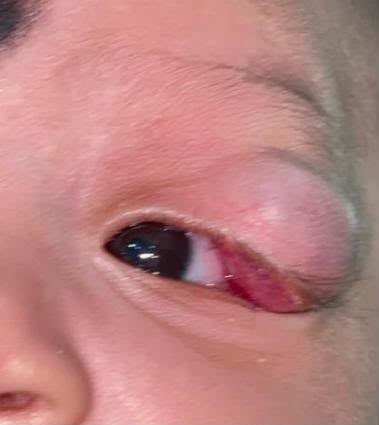
Mumbai: Specialists at Narayana Health SRCC Children’s Hospital, Mumbai, recently treated an infant with an eyelid haemangioma successfully using propranolol, an established systemic treatment for problematic infantile haemangiomas. The case was managed collaboratively by Dr Himika Gupta, Consultant – Paediatric Ophthalmology and Dr Supratim Sen, Senior Consultant and Clinical Lead – Paediatric Cardiology.
Infantile haemangiomas are benign vascular tumours that can grow rapidly during the early months of life and, when located around the eye, may interfere with vision and normal visual development. What may initially appear to parents as a harmless red mark or ‘strawberry swelling’ on a baby’s eyelid can sometimes have consequences far beyond appearance.
Since the case was managed together by Paediatric Ophthalmology and Paediatric Cardiology departments, it ensured the child received medical treatment while being monitored for potential cardiovascular side effects.
Infantile haemangiomas are among the most common benign vascular tumours seen in infancy. They can occur on different parts of the body, including the face, scalp and eyelids. While many small and uncomplicated haemangiomas may not require active treatment, lesions involving the eyelid require particular attention because their growth can obstruct the child’s visual axis.
An eyelid hemangioma can cause ptosis (or drooping of the eyelid), and may prevent the eye from opening normally. If the eye remains partially covered during a critical period of visual development, it can interfere with the development of vision and potentially lead to long-term visual problems in the child. This makes early recognition and appropriate treatment vital.
In the present case, the team opted for propranolol therapy rather than surgical intervention. Propranolol has become an important first-line systemic treatment for infantile haemangiomas that require treatment. It can reduce the size, colour and vascularity of the lesion, and helps to relieve complications caused by its location and growth.
Dr Supratim Sen, Senior Consultant and Clinical Lead – Paediatric Cardiology, said the treatment requires careful monitoring because propranolol can affect cardiovascular parameters.
“Propranolol is a medicine that we commonly use in paediatric cardiology as an important first-line treatment for problematic hemangiomas and also for various cardiac conditions. For hemangiomas, it acts on the blood vessels within the lesion and helps reduce its size and colour. However, whenever we initiate propranolol in an infant, appropriate monitoring is important because the medicine can lower the heart rate and blood pressure. In this case, the child responded very well to treatment. We plan to continue therapy for approximately six to twelve months, depending on the response and clinical assessment,” Dr Sen explained.
The involvement of paediatric ophthalmology was particularly important given the location of the haemangioma. Unlike haemangiomas appearing in areas where they may primarily present a cosmetic concern, an eyelid lesion can affect the functioning and visual development in a child.
Dr Himika Gupta, Consultant – Paediatric Ophthalmology, said the approach to eyelid haemangiomas has evolved significantly over the years.
“Eyelid hemangiomas are not simply a cosmetic blemish. They can cause ptosis, or drooping of the eyelid, which may interfere with vision and overall visual development in a young child. Traditionally, eyelid haemangiomas in selected children were considered for surgical correction. However, surgery in infants has its own challenges, particularly because of their age, the location of the lesion and the vascular nature of the tumour,” Dr Gupta said.
Over the past decade, there has been a shift towards effective, non-invasive medical alternatives. Propranolol has provided an important treatment option, with appropriate cardiovascular assessment and monitoring. “The results can be very gratifying when treatment is initiated appropriately,” Dr Gupta added.
The shift from surgical management towards medical treatment has been particularly significant in infants, where avoiding an invasive procedure can be beneficial when an effective alternative is available. However, the decision to treat comes only after doctors assess several factors, including the lesion’s location, size and potential to cause functional complications.
For an eyelid haemangioma, the primary concern is to preserve the child’s visual development. A rapidly growing lesion can obstruct the pupil or alter the position of the eyelid, potentially affecting the visual input reaching the developing brain. Early specialist evaluation therefore becomes important, particularly when parents notice a rapidly enlarging or increasingly prominent lesion around the eye.
The Importance of Multidisciplinary Treatment
This particular case highlights the value of multidisciplinary paediatric care, particularly when treatment involves medicines with cardiovascular effects for a condition affecting another organ. In this instance, paediatric ophthalmology and paediatric cardiology worked together to address both the visual implications of the eyelid lesion and the safety considerations associated with propranolol therapy as an effective non-invasive treatment option.
It also underscores the efficacy of non-invasive management of infantile haemangiomas with timely diagnosis, appropriate patient selection, specialist collaboration and careful monitoring.
For parents, the key message is that not every red mark or swelling on an infant’s skin is simply a cosmetic issue that will go away on its own. While infantile haemangiomas are benign, their location can determine whether they require treatment. Lesions around the eyes particularly, should be evaluated promptly by a paediatric specialist.