


New Delhi : Nari Shakti 3.0, a two-day national level conference organized by Mediways Health Foundation on the theme “Women’s Preventive Healthcare: Intelligent Systems & National Action for Viksit Bharat,” concluded with a strong recommendation to advance women’s preventive healthcare beyond mere awareness and periodic screening.”
The conference was held at The Leela Palace, New Delhi, which invited eminent personalities from healthcare, governance, public policy, industries, technology, CSR and the civil society for deliberations on building robust preventive healthcare systems for women in all phases of their lives.
The conference was inaugurated by Hon’ble Smt. Vijaya K. Rahatkar, Chairperson, National Commission for Women, who stressed on the importance of women’s health being an integral part of India’s developmental efforts. She remarked, “By putting the women at the centre of healthcare, not only the individual gets empowered but also her family, community and nation as a whole. Prevention is not only about screening, awareness needs to be linked to early diagnosis, proper referrals, treatment and follow-ups. Every single woman should get the access to the health care system with dignity and confidence.”
Shri Kishor Makwana, Chairman, National Commission for Scheduled Castes; Smt. Sunita Duggal, Member of Parliament from Sirsa, former; and Padma Shri Nalini Asthana and Padma Shri Kamalini Asthana were also present at the inauguration of the conference.
This conference was commenced with a theme of early diagnosis and prevention of cancer. Prof. (Dr.) Goura Kishor Rath, renowned radiation oncologist and former Head of National Cancer Institute, AIIMS, New Delhi, laid emphasis on the importance of prevention, HPV vaccination and screening. He said that prevention should start even before getting affected by the disease.
‘Strengthening Early Detection Pathways’, which was chaired by Dr. Prakhar Singh, consisted of Dr. Sudarsan De, Prof. (Dr.) Anurag Srivastava, Prof. (Dr.) Tanuja Manoj Nesari, Prof. (Dr.) Majid Ahmed Talikoti, Dr. Rini Vohra Shrivastava and Dr. Manisha Arora. The session analyzed the journey from screening and diagnosis to referral and treatment and post-treatment management while also emphasizing lifestyle, nutrition and awareness as the factors in prevention.
One of the major aspects emphasized during the conference was the inclusion of preventive healthcare within institutions or organisations. The session ‘Prevention as Institutional Policy’ focused on how organizations can provide an environment that promotes prevention of illness among women at various life stages such as menstruation, pregnancy, menopause and parenthood. The session was moderated by Harsh Srivastava and included Udaya Agarwal, Arvind Kumar, Monieka Khera, Megha Ahuja and Shilpa Narang Jerath.
Another point of discussion was that health programs at the workplace must not be limited to screening programs. Confidently, flexibility, timely consulting, referral, and follow-up were seen as some of the crucial aspects of a preventive healthcare program.
CSR was seen as an important topic for discussion. Dr. Bhavani Nair, Aditya Mishra, Ritesh Sinha, Neha Agarwal, and Anushka Bonia, during a panel discussion moderated by Roch Ferreira, felt that there was a need to move from health camps to need-based health programs that are continuous.
According to Dr. Bhavani Nair, the CSR initiatives should be linked with awareness, consultation, and treatment along with screening, whereas Aditya Mishra felt that the continuum of prevention, diagnosis and care needed to be created. According to Ritesh Sinha, neglected areas such as anaemia, malnutrition, mental health and menstrual health needed to be addressed through long term project-based initiatives.
Day Two brought about the topic of technology, AI, and the public health system. Ms Pragya Sharma, Director of Maharishi Ayurveda, emphasized the possible combination of preventive healthcare and traditional medicine with AI to make more efficient healthcare systems.
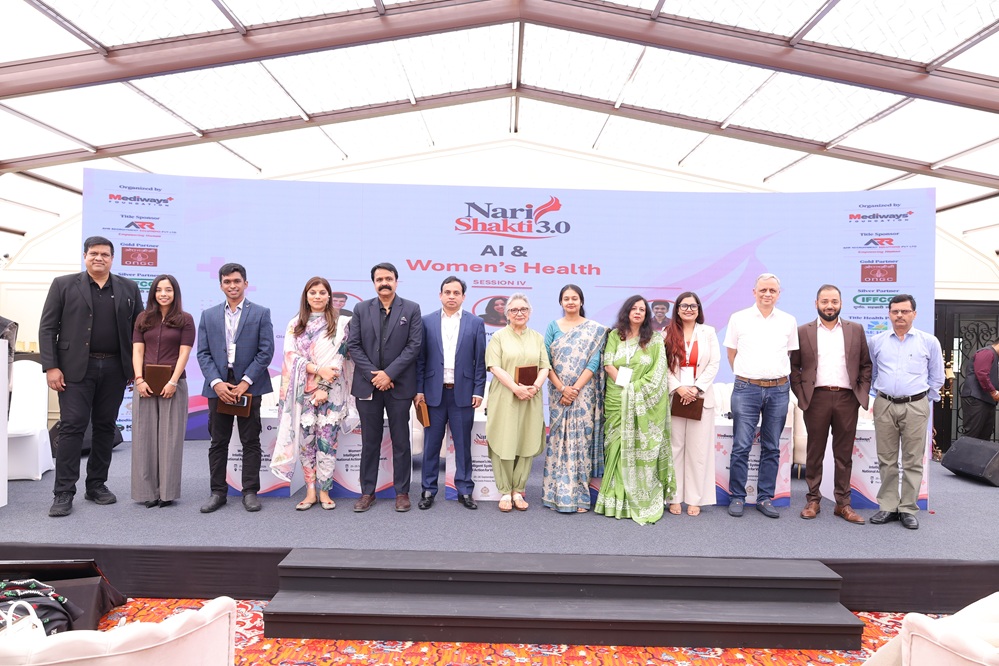
‘AI and Women’s Health’, moderated by Varuni Trivedi, featured Roch Ferreira, Nandini Goel, Sarvesh Sudhan P, Rahul Puri, and Vishal Sinha. They discussed the need for proper data and how technology can aid in personalizing care, early detection, portable testing equipment, and AI to empower doctors and healthcare systems, not undermine them.
The session ‘Public Health Systems for Women’ further expanded the debate into last mile healthcare delivery. The experts in this forum included Dr. Meera Khanna, Dr. Priya John, Sanchita Vaish, Mittal Gohil, Lt Col (Dr) Shweta Bhardwaj, Sujeet Ranjan and Prabhakant Jain emphasized the need for primary health care, community involvement, family involvement, early detection and continued treatment.
Ektaa Rathi COO Mediways Health Foundation says, “We propose that one leave day be given to all women professionals for mammography and other health checkups. ” From the two-day conference, a clear theme emerged that women’s preventive healthcare had to evolve from individual measures to comprehensive systems involving awareness, screening, diagnosis, treatment and follow-up. There was also a strong emphasis on the role of work place, corporate social responsibility, technology, public sector and communities in preventive healthcare.”
The Nari Shakti 3.0 initiative ended on a high with a National Action Synthesis, reminding us of the importance of working together between healthcare professionals, the government, the industry, CSR organizations, and the civil society, in order to put women’s health at the center of Viksit Bharat.