


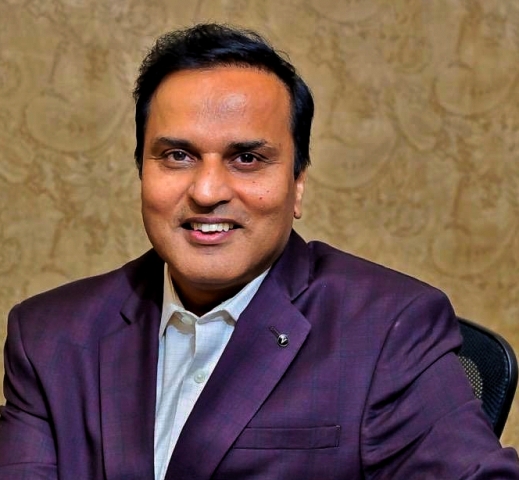
By Gaurav Sharma, CHRO, True Balance
Today artificial intelligence is no longer just a futuristic concept, it has turned out to be a workplace reality. From analysing data, generating software code to automating workflows, drafting reports, AI is bringing a transformation in the way organisations operate. Recent advances in generative AI have quickened productivity gains, allowing businesses to complete tasks within minutes, that once needed hours, months, or days.
Yet, among all these, an important question remains which is ‘Can AI truly collaborate?’.
The answer carries considerable value, since the most purposeful work does not just translate to completing or finishing tasks. It is a lot more also about collaborating with people, exchanging ideas with each other, influencing stakeholders, building and shaping trust, conflict resolution, navigating uncertainty, making the right decisions and others. AI can execute technical functions or tasks, whereas human skills help in understanding which tasks should be prioritised enough for AI to execute, require most focus and actually help to deliver a value or an impact. Human skills don’t just look at work as a set of tasks, but as problems to solve and objectives to fulfill. And human skills thrive on collaboration, teamwork, support and exchange of constructive ideas.
With organisations speeding up their AI adoption process, leaders must recognise one thing: The more mechanical and routine work machines can perform, the greater competitive advantage will be derived from unique human capabilities or human skills.
Importance of Human Collaboration in Enhancing Productivity
The transformative potential of AI is undeniable. Developers are utilising AI-powered assistants from writing and debugging code fast, analysts are using AI to summarise huge amounts of information and detect patterns that would otherwise be overlooked, marketers are utilising AI to generate campaign concepts within seconds.
For several organisations, AI presents a vital opportunity for reducing costs, improving efficiency, and speeding up innovation. Employees learning to work effectively with AI tools, are often able to produce exceptional outputs in lesser period of time.
However, productivity alone does not guarantee business success.
Lacking or having access to the necessary information, is rarely the cause of organisational failure. The latter is often the result of people being unable to communicate in an effective manner, align around goals, implement together, or adapt to change.
How Human Collaboration is More Than Coordination ?
Many AI systems are good at coordination, since they can track tasks, schedule meetings, manage workflows, summarise conversations or meetings. However, collaboration goes well-beyond administrative efficiency. Real collaboration concerns comprehending context that is often not expressed. It necessitates perceiving emotions, reading between the lines, identifying power dynamics, adjusting communication in alignment with the needs or requirements of various stakeholders.
For instance, if a product or campaign launch is delayed, obstacles are faced not just in detecting the reason behind the delays or in devising a project plan, but also it can result in disappointment or frustration among the team members, conflicting priorities of departments, disagreement among leaders on strategic direction to take, and customers may be having evolving expectations. In order to successfully navigate these complexities, capabilities which are deeply human such as judgement, persuasion, relationship-building, and empathy are required. In the midst of uncertainty about the project outcome and the steps to undertake to help it to progress, humans help in bringing people together for moving forward, offering a direction to the team members and showing perseverance in the face of challenges.
The Rising Value of Human Skills
Traditionally, technical expertise has been considered as one of the most trustworthy predictors of career advancement. Though technical skills remain important, AI integration is changing the scenario, with technology automating routine or manual tasks, human skills such as influencing people, connecting ideas, and leading through uncertain situations, are becoming more important in organisations.
Some of the human skills which are highly valued at present are as follows:
Emotional Intelligence
One of the most valued skills for effective human collaboration is the ability to understand and manage our own and other’s emotions. Leaders who exhibit empathy, help in building trust, motivate or become a source of inspiration for team members, navigate difficult conversations or uncertain situations, create environments where innovation flourishes and ideas flow freely. Emotional Intelligence plays an important role in collaborating with team members, since it helps individuals in sensing emotions, reading the overall sentiment in a room, have an idea about the level of motivation team members are having for a particular project and take steps accordingly. In times of crises, emotional intelligence helps leaders to look beyond the existing problems and see challenges as opportunities for growth, to redirect negative situations in a positive way, benefitting the entire organisation by taking team members along with them in fulfilling that objective. With an enhanced EQ, humans can analyse team, customer sentiment, analyse patterns, connect the dots and take the necessary decisions for the betterment of both the organisation and its stakeholders. EQ helps to see the big picture, instead of focussing on unnecessary details.
Effective Communication
In the era of AI generated content, effective communication plays a significant role. Be it while managing a crises, negotiating on a partnership, presenting a strategy to executives, effective communication is required to understand the needs of the other members involved or the project requirements and devising strategies or plans accordingly to ensure a smooth completion of project objectives. With effective communication, individuals can tailor their messaging as per the audience needs, establish greater trust, and craft a clear and coherent flow of operations which can be comprehended by all the members. These skills cannot be easily automated, since they require human intervention, understanding of context and human relationships.
Critical Thinking
Humans have the power to determine if AI generated content makes sense. In the age of information overflow, the ability to evaluate evidence, question assumptions, flag errors or discrepancies, undertake sound judgements, turns out to be a very important skill. Critical thinking assists organisations to avoid relying too heavily on AI generated content or automated outputs, ensuring that technology helps in better decision making, rather than being a substitute of it.
Ethical Judgement
With organisations employing AI across critical functions, ethical decision-making plays another important role. Algorithms cannot be entrusted with questions surrounding transparency, societal impact, privacy, accountability, judgement. Leaders must take decisions balancing business objectives with wider human considerations.
Innovation and Creativity
Numerous ideas can be generated by AI on the basis of existing patterns, however human creativity often is a result of human experiences, curiosity, intuition, and the ability to establish a connect between apparently unrelated concepts or ideas.
Innovations which are regarded as breakthrough ones, do not emerge from just having a prediction about the future based on historical data or by analysing past patterns, but from having out-of-the box ideas or imagining possibilities that have never been there before. Innovation is not a result of routine or monotonous thinking and technical know-how, but often stems from creative problem solving, curiosity and observation, critical thinking, experimentation, all of which humans are capable of.
With AI taking over routine tasks, leaders will spend less amount of time in managing processes and invest more time in managing people. Employees are facing rapid technological transformation which comes with uncertainty surrounding job security, the requirement to upskill, changing job expectations. Leaders who have effective human skills, know how to address such concerns by offering support, purpose, amd clarity. Since technology can automate tasks, however it cannot inspire or motivate which human leaders are capable of doing.
Organisations thriving in the era of AI will not just invest in technology, they will also invest in people and nurture human skills, requiring a shift in the way companies approach talent development. For a long period of time, corporate learning programs have focussed on technical competencies. Though technical skills are important, organisations must also emphasise skills such as adaptability, communication, emotional intelligence, creative-problem solving, effective leadership skills. Employees who are able to utilise AI while bringing human strengths and qualities to their roles will be valued a lot in the future.
The greatest opportunity lies in human-AI collaboration, since AI delivers the best results in data processing, speed, scale, and pattern recognition, while humans are great at judgement, empathy, ethics, creativity, and relationship building. When both work together and collaborate, only then teams can get their desired results. The most successful organisations are those which help to empower people with AI skills, while strengthening the human skills which cannot be replicated by AI.
Collaboration is not just a technical process, as it is a human endeavor that is built on communication, trust, understanding, shared values and purpose. With AI becoming more advanced, the value of these human skills will only become stronger. In a world where AI and machines can perform any task, the ability to influence, collaborate, connect and lead will turn out to be the biggest competitive advantage. The future of work will not just belong to those who are technology or technical experts, but will belong to those who develop expertise in human skills while leveraging the power of AI.