


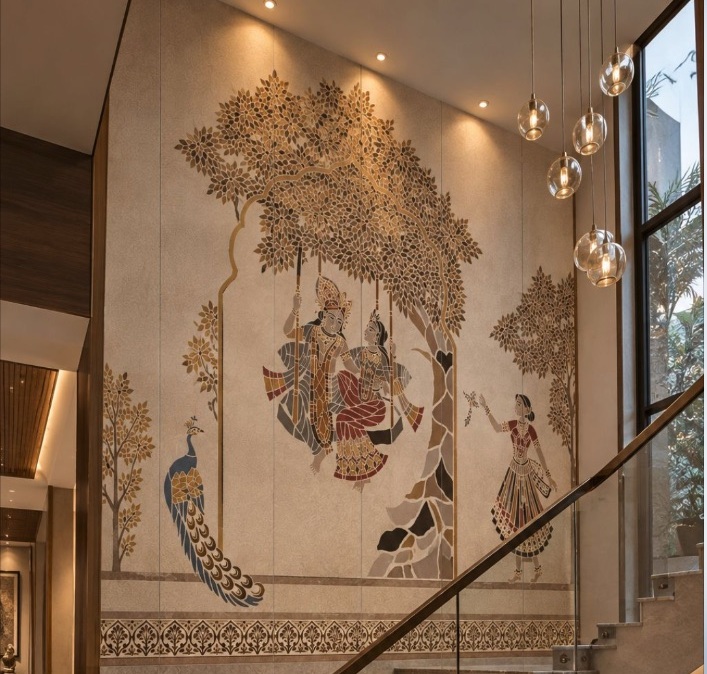
India : In contemporary architecture and interior design, staircases and double-height walls offer some of the most compelling opportunities to create visual impact. Yet, these expansive vertical surfaces are often treated as transitional spaces or left with minimal detailing. Antica Ceramica explores the potential of CNC stone art to transform them into expressive architectural features, bringing together precision, material richness and artistic detailing.
With computer-controlled cutting and carving techniques, stone can be developed into intricate patterns, geometric compositions, sculptural reliefs and layered surface designs. These details introduce a play of light and shadow, creating depth and movement across walls that would otherwise remain visually understated. The result is a surface that functions as more than a backdrop, becoming an integral part of the architectural experience.
For architects and interior designers, CNC stone art offers an opportunity to approach large-format vertical surfaces with greater creativity and design intent. A staircase wall, for instance, can become a continuous visual feature that connects different levels of a residence, while a double-height wall can accommodate a striking stone composition that establishes the character of the entire space. Depending on the design language, the treatment can range from restrained geometric detailing for contemporary interiors to elaborate patterns that lend themselves to more artistic and statement-led spaces.
The versatility of stone art also allows designers to create a stronger relationship between architecture and interior styling. Coordinated with materials such as wood, metal, glass and textured plaster, carved stone can introduce contrast without making a space feel visually crowded. In double-height settings, where conventional artwork may struggle to establish sufficient scale, a thoughtfully designed stone installation can create a sense of proportion and continuity. Along staircases, it can turn an everyday circulation area into a carefully composed design feature.
For homeowners and decor enthusiasts, the appeal extends beyond aesthetics. Stone brings a sense of permanence, tactile richness and material authenticity to interiors. A distinctive stone-art wall can become a focal point around which lighting, furniture and other decorative elements are planned, giving the space a more individual identity. Its visual character can also contribute to the perceived design value of a property, particularly when the treatment is integrated into the architecture rather than added as an afterthought.
Through its exploration of CNC stone art, Antica Ceramica highlights how technology can expand the creative possibilities of natural and decorative stone surfaces. By combining precision-led detailing with architectural thinking, the approach encourages designers to look beyond conventional wall finishes and consider the untapped potential of vertical spaces.
As homes increasingly incorporate open-plan layouts, dramatic staircases and double-height volumes, stone art presents architects, interior designers and homeowners with a way to make these spaces more meaningful, visually engaging and enduring in character.
***